
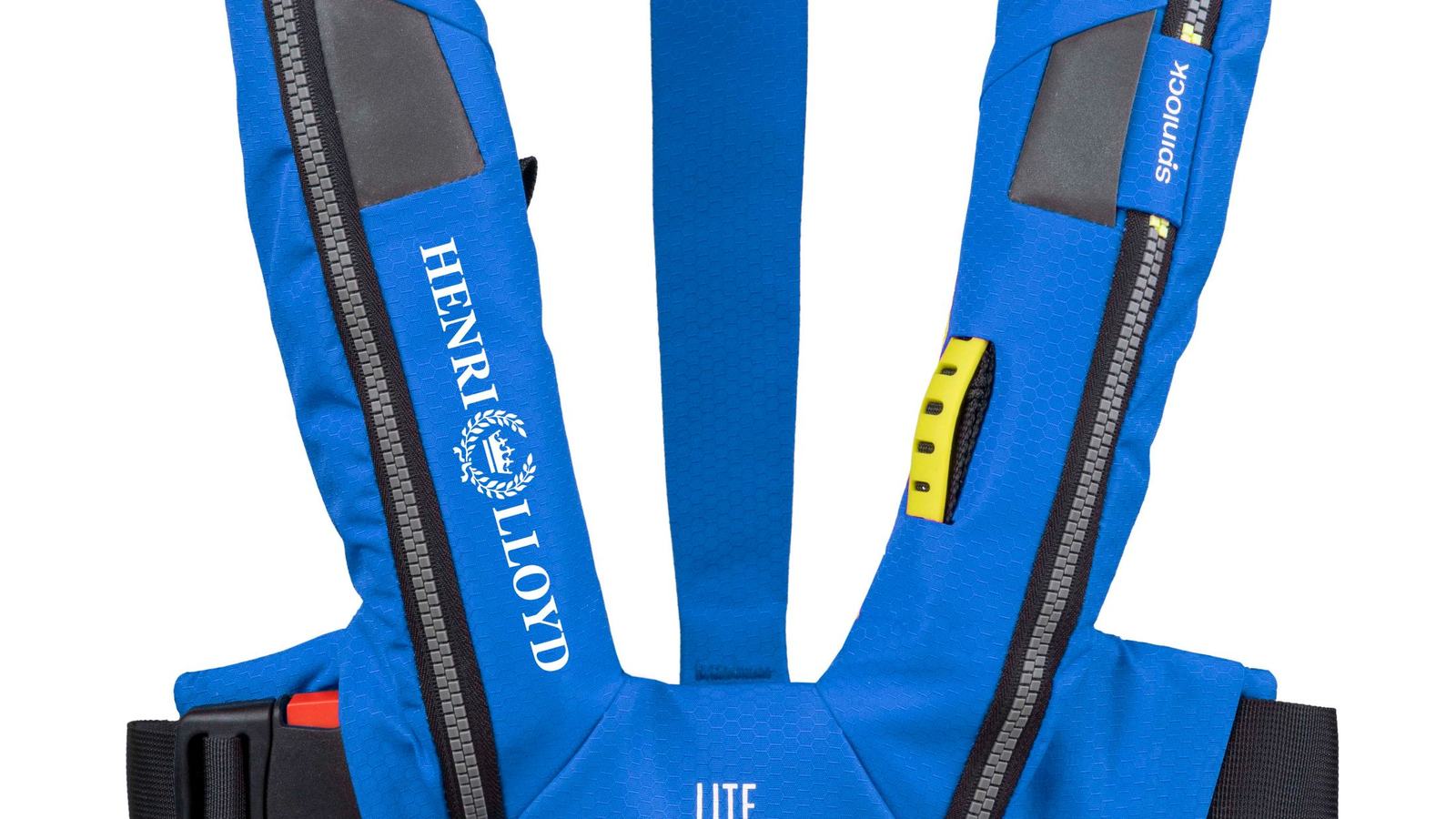
Henri-Lloyd and Spinlock have introduced branded Deckvest Lite, Lite + and junior Cento lifejackets. We examine the stated specifications, prices and safety considerations for boat owners.
A new partnership enters the safety-gear market
Choosing a lifejacket is one of the least glamorous and most consequential decisions made before a boat leaves its berth. A new collaboration between British sailing clothing specialist Henri-Lloyd and marine safety manufacturer Spinlock offers boaters a useful reason to revisit their own equipment: the companies have introduced a Henri-Lloyd-branded Deckvest range covering adults and younger sailors. The announcement is a product launch, not evidence that existing lifejackets have suddenly become unsafe, but it does put fit, everyday comfort and maintenance back into focus.
British Marine published details of the range on 22 October 2026, identifying three principal models: Deckvest Lite, Deckvest Lite + and Deckvest Cento. Spinlock supplies the specialist personal-flotation technology while Henri-Lloyd brings its long-standing experience in technical sailing clothing and retail distribution. For family owners, club sailors and crews on smaller cruising boats, the practical attraction is a coordinated choice of equipment rather than a single jacket intended to serve everyone aboard.
What the adult models actually offer
The standard Henri-Lloyd Deckvest Lite is presented as a lightweight automatic-inflation lifejacket with an adjustable fit, offered in Black or Pacific Blue. The Lite + adds an integrated deck harness and a soft-loop attachment point, a distinction that matters when someone may be clipped on while working or moving on deck. The official launch gives recommended retail prices of £139 for the Lite and £149 for the Lite +, so the harness-equipped model is only £10 more in the announced range.
Both adult jackets use a fully adjustable one-size arrangement intended for wearers weighing more than 50 kilograms. That weight threshold should not be mistaken for a universal guarantee of fit: body shape, clothing layers, the boat's activity and the way the harness sits all affect whether a jacket is appropriate. A buyer should try the jacket on and follow the maker's sizing and fitting instructions instead of relying only on the price or an attractive colour.
The brand describes reflective detailing and a conspicuous red lifting strap across the adult range. These elements address very different parts of an emergency: reflective areas are intended to improve visibility, while a lifting strap can support recovery procedures once a casualty is alongside. Neither feature substitutes for a working rescue plan, sufficient crew practice or the ability to recover a person from the water when conditions are difficult.
How automatic inflation is meant to work
The new jackets use Spinlock's UML Mk 5 automatic inflator, which relies on a water-sensitive compressed-paper capsule. When sufficient water reaches the inflator from the intended direction, the capsule dissolves and a spring is released to puncture the carbon-dioxide cylinder. The system is designed to respond to immersion while resisting unwanted activation from ordinary spray and rain moving down the outside of the jacket.
That description explains the principle but should not be treated as a promise that every encounter with water will behave identically. Owners still need to check the status of the inflator, the cylinder, the bladder and the jacket itself as specified by the manufacturer. An automatic lifejacket is only as dependable as its fit, its correct assembly and the inspection and servicing regime behind it.
The range also includes attachment positions for accessories such as a VHF leash, kill cord, personal locator beacon, man-overboard beacon and lifejacket light. These are attachment opportunities rather than confirmation that those accessories are included in the purchase price. Crews should decide which devices their own passage plan requires and ensure any added equipment does not restrict inflation or create snagging hazards.
A separate junior choice for family sailing
The third announced model is Deckvest Cento, aimed at young sailors in the 20–50 kilogram weight bracket, described by the brands as roughly eight to fifteen years old. It includes automatic inflation and an integrated harness with a soft-loop attachment, and the Henri-Lloyd edition is offered in Pacific Blue at a stated retail price of £119. Weight and fit remain the decisive checks: a child's age is a helpful guide but cannot replace actual sizing.
Family crews should resist the temptation to solve every seating, clothing and safety challenge with the same adult-sized jacket. Children may need assistance putting equipment on correctly, and adults need to understand how the harness and inflator work before an outing begins. A quick fit check at the dock is easier than discovering underway that a child cannot move comfortably or that the jacket interferes with a sailing manoeuvre.
The real buying question is what happens on your boat
For calm-weather days afloat, the everyday experience of wearing safety equipment matters because uncomfortable gear is more likely to be left in a locker. The new range therefore deserves assessment for how it sits over waterproof layers, whether buckles can be reached and adjusted without help, and whether movement at the helm and around the cockpit feels natural. Those considerations matter just as much on a family cruiser as on a racing boat.
Crews using a tether should examine the harness-equipped Lite + or Cento in the context of the boat's actual jackline and clipping arrangements. A harness is one component of a broader prevention strategy, not a guarantee against going overboard. Similarly, an inflatable device is not a replacement for appropriate equipment where a different flotation type, an activity-specific design or local requirements call for something else.
Price comparisons also need to include ownership rather than stopping at the checkout. Ask how rearming kits and replacement components are obtained, which inspections can be done by the user, when professional servicing is needed and how to store the jacket dry and protected between trips. The manufacturer's latest instructions should settle those points, because maintenance practices can differ among systems even when products look similar.
What the launch means for the leisure-boating market
Henri-Lloyd says the collaboration made its first public appearance at Cowes Week and that the branded range is available through its retail stores. This is a channel and equipment expansion rather than a new design of boat, and it gives sailing customers who already wear the clothing brand a consistent place to seek compatible safety gear. It also creates a choice in a market where established specialist lifejacket makers already offer several alternatives.
For boat owners, the strongest takeaway is not the badge on the front but the discipline the launch should prompt before the next passage. Check who will be aboard, choose a correctly fitted device for each person, confirm the inflators and cylinders are in date or in the condition required by their instructions, and practise the recovery plan. The new Henri-Lloyd and Spinlock range offers another option; the deciding factor remains whether the chosen jacket will be worn, maintained and used properly.