
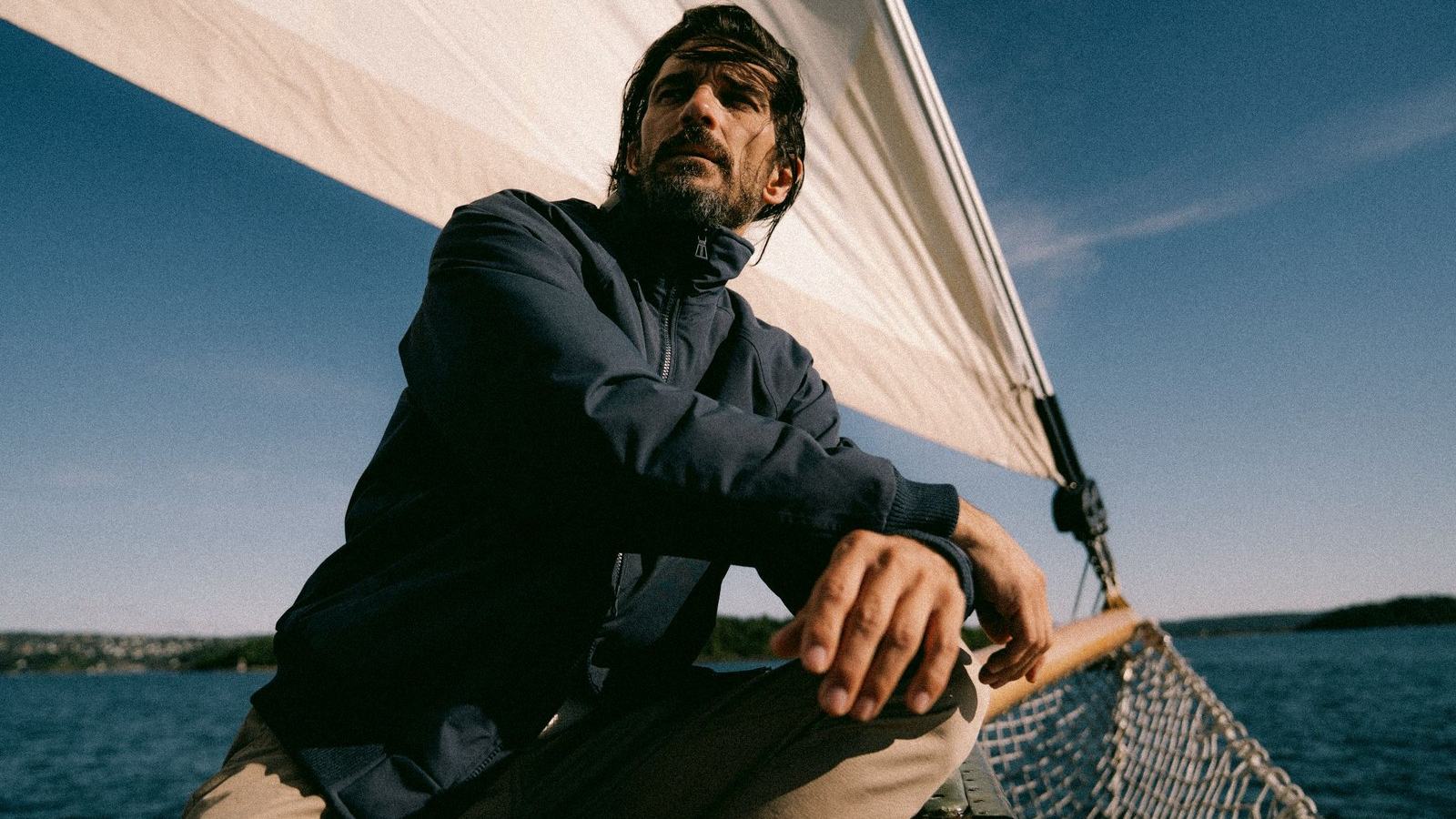
Henri-Lloyd's Originals AW26 line returns to some of the brand's best-known sailing clothing, modernising the Consort, RWR and Jib for everyday coastal wear.
Sailing clothing returns to a familiar silhouette
Henri-Lloyd has introduced Originals for autumn and winter 2026, revisiting garments associated with more than six decades of offshore sailing and coastal life. The range includes updated versions of the Consort, Consort RWR and Jib jackets alongside rugby shirts, knitwear and a shore smock. The company describes them as contemporary pieces informed by earlier designs, not simply replicas taken from an archive.
For leisure boaters, the appeal lies in clothing that moves naturally between a boat, a marina and everyday life ashore. A jacket worn on a calm estuary day needs comfort and weather resistance without necessarily looking like heavy ocean-racing equipment. The collection makes that crossover part of its visual identity, with restrained colours and silhouettes that feel familiar rather than seasonal novelty.
The Consort links modern materials to an earlier era
The Consort began as a technical garment made using Bri-Nylon, which was considered an innovative lightweight waterproof fabric in its day. Sir Francis Chichester was among the sailors associated with the design during his solo circumnavigation aboard Gipsy Moth IV. That history gives the jacket cultural relevance, although a modern customer should assess the latest product on its current specifications rather than its historical associations.
Henri-Lloyd says the new Consort includes diamond quilting and polyester insulation, a PFAS-free durable water-repellent finish, and a stated 10,000mm waterproof rating with 3,000g breathability. Those figures are useful starting points for comparing clothing, but performance also depends on construction, seams and how the garment fits over other layers. A wearer should not mistake a fashion-oriented heritage jacket for a specialist offshore survival garment.
RWR and Jib represent two different stories
The Consort RWR was created by Italian designer Olmes Carretti in 1987 as an expressive adaptation associated with round-the-world racing culture. The AW26 version uses recycled nylon and a PFAS-free water-repellent finish, with updated fit and details. Its appearance reflects the crossover between sailing performance and urban style that has long influenced maritime clothing.
The Jib jacket has a separate history dating to the 1970s, when the design emphasised freedom of movement and lightweight insulation. Henri-Lloyd has retained its recognisable outline while refreshing the materials. For someone spending time on a smaller sailboat, the most important characteristics remain the ability to move easily at the helm, handle ropes and stow layers when conditions change.
Knitwear and shirts widen the collection
Other Originals pieces include the Voyager and Hayling rugby shirts, Golant ribbed crew and quarter-zip garments, and Viking Shore Smock. These choices provide options for days when a substantial outer jacket is unnecessary. A combination of breathable base layers and a wind-resistant outer garment is often more useful on a leisure-boat outing than one heavy piece worn in all conditions.
Fabric composition, care requirements and the ability to dry equipment quickly should influence purchases. Salt spray, sunscreen and frequent laundering can affect different materials in different ways. Owners who spend hours aboard should check practical details such as pocket placement and cuff movement, even when a product's most immediate attraction is its familiar sailing heritage.
A campaign photographed aboard Eileen II
Henri-Lloyd photographed the collection in Norway aboard Eileen II, a yacht designed by Alfred Mylne in 1934. The choice connects the clothing with an older tradition of purposeful design and durability, reinforcing the theme that well-made objects can remain relevant across generations. The campaign itself is a presentation of the brand's ideas rather than a technical clothing test.
The Originals collection has been available online since 28 September, with individual stock and sizes subject to change. For LBG readers, the interesting story is how clothing once associated with serious sailing can be adapted to smaller-scale boating and shore life. Historical design is most useful when the new garment remains comfortable, functional and suitable for how its owner actually spends time outdoors.