
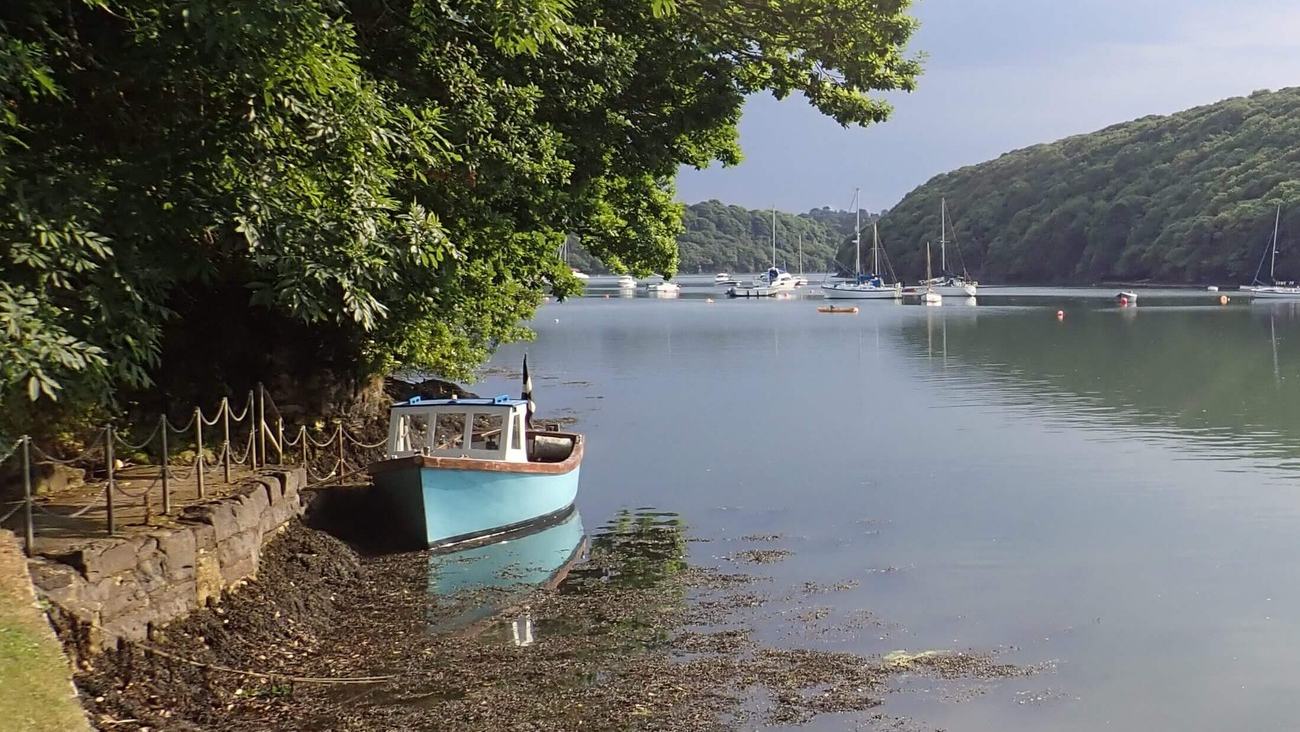
Cornwall's Helford River rewards small-boat visitors who prefer sheltered creeks, waterside villages and an unhurried approach to coastal exploration.
Why the Helford feels different
There is a particular kind of pleasure in turning off a busier stretch of coast and finding an estuary where woodland reaches down towards the water. The Helford River, south of Falmouth, offers that change of pace, with small settlements, wooded shores and a succession of creeks that ask visitors to slow down rather than cover distance.
The estuary is not a place that needs a long checklist of attractions to justify a day afloat. Its appeal is the changing view from the boat: broad water nearer the mouth, foliage beside the banks, and little openings that invite a closer look when depth and local access permit.
Visit Cornwall describes the Helford as a landscape shared by sailors, gardeners and people seeking a quieter side of the county. For a leisure boater, that means the best itinerary may involve very little mileage, provided the crew has enough time to enjoy the shore as well as the water.
Begin with the boat, not the destination
A sensible Helford day begins by matching the boat to the planned route and the competence of its operator. A small self-drive craft or locally skippered excursion gives a different experience from arriving in a faster coastal powerboat, and neither is automatically the best option for every part of the estuary.
Before setting off, review a current chart or local cruising guide, tide tables and the forecast, paying close attention to the relationship between channel depth and time of day. The wider mouth of the river should not encourage assumptions about every narrow creek farther upstream.
Pack lifejackets suitable for each person, a reliable means of communication, clothing for a cooler return journey and provisions for any waiting time. If a boat is hired, the operator's local briefing is especially valuable for moorings, restricted areas and parts of the river that are unsuitable at low water.
Landmarks worth arriving slowly
Helford village and Helford Passage face one another across the river, linked by a long-established passenger ferry. Their waterside setting makes them natural places to consider for a shore stop, although visiting boaters must confirm current landing arrangements rather than assuming any quay or mooring is freely available.
Farther around the northern bank, Trebah and Glendurgan are important names in the local landscape. These gardens help explain the subtropical appearance of the wooded valleys, but a garden visit needs its own access plan because not every attractive stretch of shoreline provides a public landing.
Visit Cornwall also identifies Gweek, Port Navas and Durgan among the communities connected to the estuary. Some make more sense as views from the boat than as guaranteed places to disembark, and the character of a creek can change dramatically between high and low tide.
The nature of a quiet day afloat
Wildlife adds another reason to keep the speed modest and the noise down. Wading birds work the mud, while the sheltered water and wooded banks create opportunities for patient observation; any sighting of seals or dolphins is a bonus rather than something a visitor should expect on demand.
An estuary also asks for care around its more fragile edges, where wildlife and other water users depend on a reasonably undisturbed environment. Avoid chasing animals, respect marked restrictions and keep well clear of moored craft, kayaks and working boats, even when the water seems uncrowded.
A picnic afloat can be just as rewarding as a restaurant reservation, but it is worth planning shade, drinking water and a secure place for rubbish. The most enjoyable small-boat days are often the ones in which the crew is comfortable enough to stop looking at the clock.
Return with time in hand
On the return leg, a familiar view can look new as the light and water level change. That is one more reason to allow an ample margin before a charter return time or an intended passage back into the wider bay, rather than treating every outward estimate as a fixed schedule.
Visitors unfamiliar with the river should seek advice from local operators or harbour authorities about navigation, weather exposure and where visitors may berth. The official destination information is an excellent starting point for choosing places to see, but it is not a substitute for navigational directions.
Above all, the Helford makes a case for restraint in boating holidays. Rather than promising every creek in one outing, choose a short route, allow a meaningful stop ashore and leave time for the best part of the day: simply watching this Cornish estuary unfold from the water.
What to decide before leaving home
Decide in advance whether the outing is primarily about seeing the wooded shoreline, reaching a particular village or spending time at anchor. Those goals point to different hire durations and boat types, and a clear priority makes it easier to adapt when the tide or weather changes.
Check whether any planned shore visit requires advance booking and how visitors are expected to reach it from the water. A garden, beach or attractive quay shown in tourism photographs may not have straightforward access for an independently operated boat, particularly at a different state of the tide.
Finally, talk through a simple alternative if the planned route becomes unsuitable. A shortened cruise, a stop in a more sheltered reach or even a shoreside walk can preserve a good day out without pressuring the skipper to continue simply because the family has travelled to Cornwall.
Source
Visit Cornwall