
Gulf Islands National Seashore offers waterways in Mississippi and Florida, but not every part of that shoreline suits the same boat. Sheltered bayous and coastal stretches can provide pleasant paddling for a properly equipped kayak, while the crossing to remote barrier
Two very different kinds of coastal outing
Gulf Islands National Seashore offers waterways in Mississippi and Florida, but not every part of that shoreline suits the same boat. Sheltered bayous and coastal stretches can provide pleasant paddling for a properly equipped kayak, while the crossing to remote barrier islands demands very different judgment and seaworthy equipment.
The National Park Service describes the seashore's boating, paddling and waterfront activities on its official visitor pages. Its boating guidance is especially firm about island crossings: it recommends craft of at least 20 feet and warns that inland-water boats such as bass boats and pontoons are not suitable for reaching the offshore islands. A kayak day in a protected area must therefore not be mistaken for permission or advice to attempt an exposed island passage.
Make the day about sheltered water
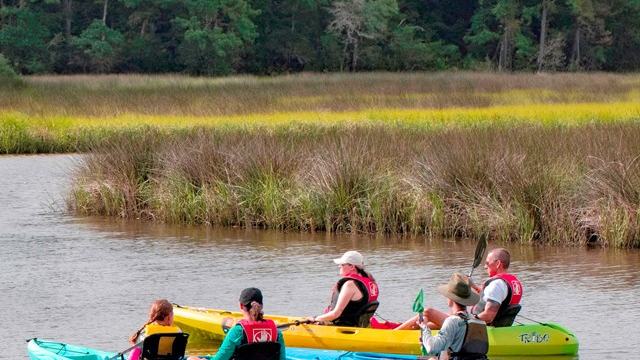
For leisure paddlers, the most attractive plan may be a short route close to a suitable authorised launch, where the aim is to enjoy shorebirds, marsh vegetation and the changing colours of the water. A local guide or outfitter can help choose a route appropriate to wind, tide, skill and current restrictions. The point is not to cover a particular distance but to explore without unnecessary exposure.
Even on a quiet morning, the weather can change rapidly near the Gulf. Assess the return route, stay aware of boat traffic and check park closures before committing to a launch. Each paddler should wear a properly fitted personal flotation device and have enough water and sun protection for a hot, reflective environment.
Treat the coast as living habitat
Shallow seagrass beds are more than green patches under the hull. They are habitat for fish and other coastal species and can be damaged by careless passage or landing. Follow established routes where possible, avoid disturbing feeding or nesting birds and resist the temptation to step ashore across vegetation just to take photographs.
The islands and beaches also have protected areas that may close to safeguard nesting birds. Offshore boat owners should study charts, shoals and tides and file a float plan, while the paddler planning a sheltered trip should still leave a clear route and return time with someone on shore.
Give yourself permission to take the easy trip
A boating holiday does not become more successful just because it is more adventurous. A calm bayou, a safe return and good wildlife sightings are worthwhile in their own right. A shorter trip may allow more time to notice a heron hunting, a change in the light on the water or the interaction between the beach and the marsh.
For families and less experienced paddlers, matching the waterway to the boat is the essential decision. Check the National Park Service's current activity and safety pages before travelling, respect any local access limitations and leave sensitive places exactly as they were found. Gulf Islands is best enjoyed by choosing the right stretch of water, not by assuming every island is within easy reach.
Source and photograph: US National Park Service — Gulf Islands National Seashore. See the official visitor information for current conditions and rules.