
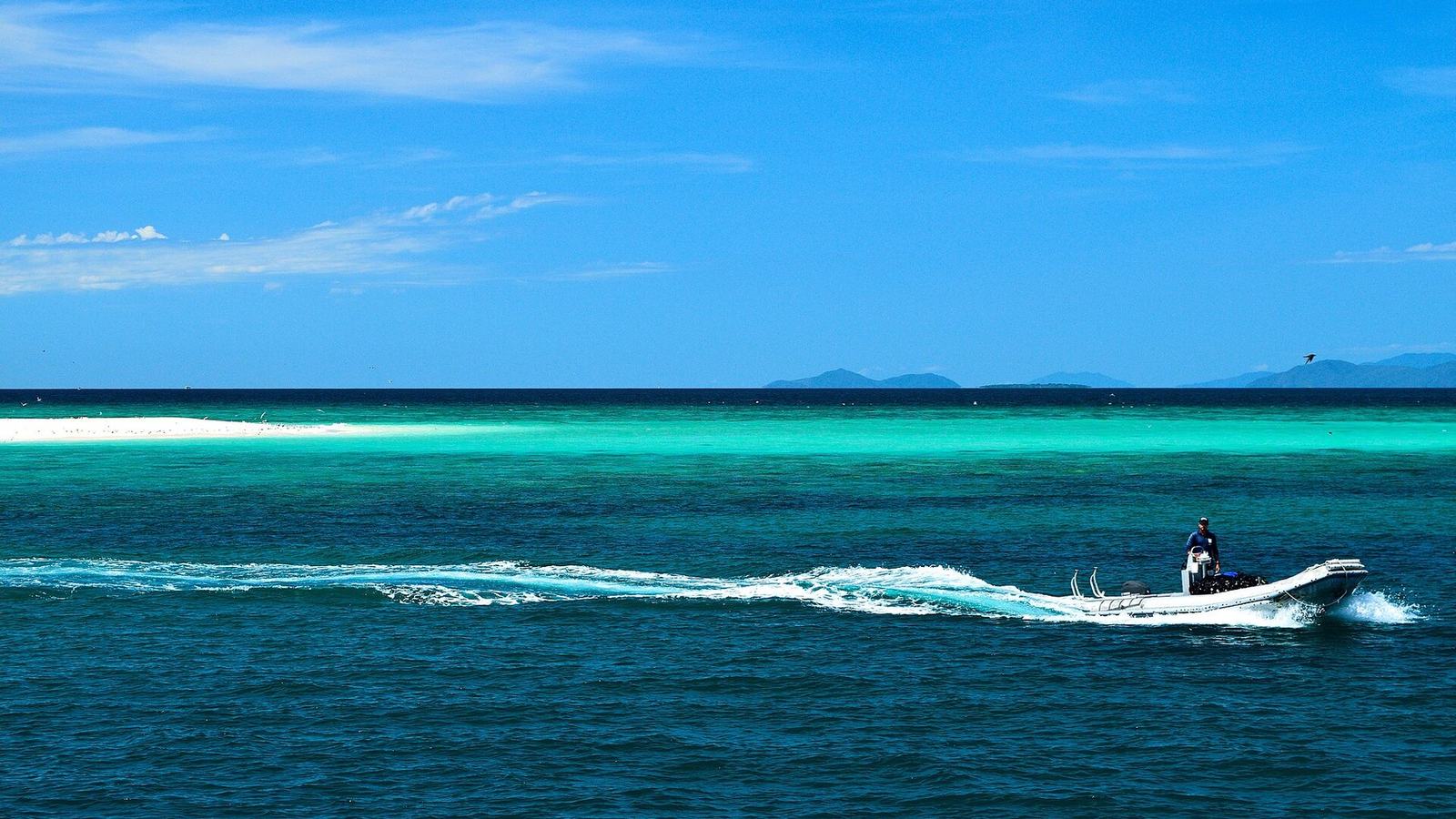
A responsible Great Barrier Reef day afloat starts with marine-park zoning, approved moorings, careful anchoring and realistic weather limits.
A remarkable place, with important limits
Australia's Great Barrier Reef is often pictured as a single immense open playground, yet the everyday experience of a small-boat crew is much more specific. The Marine Park contains zones with differing rules, sensitive coral communities, islands, reef protection areas and conditions that can change quickly. The Great Barrier Reef Marine Park Authority, known as the Reef Authority, gives visitors practical guidance on planning, zoning and responsible behaviour. For a compact trailer boat or small cruising craft, that guidance should shape the trip from the outset.
The first choice is not which photograph to recreate. It is whether the proposed outing suits the boat, crew and available weather window. A sheltered coastal day may be realistic while a more exposed reef site is not. Local advice, current charts and the marine forecast are indispensable. This is a destination where modest plans can still produce extraordinary memories: turquoise passages, fish beneath the surface and the quiet satisfaction of leaving a fragile place undisturbed.
Know which marine-park zone you are in
The Reef Authority explains that zoning determines which activities may occur in different parts of the Great Barrier Reef Marine Park. Fishing, collecting, motorised activities, anchoring and even access can be controlled in ways that vary by site. Do not assume that a recreational outing is exempt from local rules simply because the boat is small. Review the official zoning map and the relevant location information before setting a destination. Where restrictions are unclear, contact the responsible authority before departure.
Paper or electronic maps are useful only when they are current and understood. Save the relevant zone details for offline use, because mobile coverage may disappear as the boat leaves the coast. If the group hopes to fish, dive or visit an island, check each activity separately. A place suitable for swimming may not permit the intended fishing method, and a visible sandy area may lie within a no-anchoring restriction. Preparation prevents accidental harm and unpleasant surprises.
Find the right mooring, then confirm its conditions
Queensland's official guidance describes public moorings placed at selected sites to reduce the damage that anchors can cause to coral. It also identifies reef protection areas where anchoring is restricted. The existence of a public buoy does not mean every vessel may use it in every condition; check the published vessel-size, time and weather limitations associated with a particular site. A buoy already in use should be treated as occupied, not an invitation to raft casually alongside.
Approach slowly, brief the crew and prepare appropriate lines and fenders before entering the mooring area. Do not let an inexperienced passenger lean dangerously over the bow to grab a pickup. If there is no safe, suitable buoy available, use an authorised alternative location or return rather than assume the reef itself is a fallback. When anchoring is permitted, select a lawful place on suitable substrate, clear of coral and seagrass, and allow enough room for swing. Conditions and rules must be assessed together.
Anchoring without scarring the reef
A bright patch on the seabed can be misleading from a moving boat. Confirm depth and bottom type with appropriate information and observation, and avoid dropping an anchor where the chain may sweep across living habitat. Queensland's parks guidance explicitly encourages anchoring away from coral, seagrass and other fragile marine environments. Reef protection markers have particular meanings, so learn them before departing rather than trying to interpret their significance while handling the anchor.
The duty does not end once the anchor holds. Consider changing wind and tide, the direction of the boat's swing and how the ground tackle will be recovered. An anchor that drags across coral on retrieval can do damage even if the initial drop was clear. If the conditions do not permit a confident, low-impact stop, continue to a different destination. The experience of being afloat is not improved by leaving a permanent mark on the place the crew came to see.
Respect the weather more than the itinerary
For small craft, the distance between a protected island channel and an exposed reef crossing can represent a substantial change in risk. Obtain an appropriate marine forecast and assess wind, swell, visibility and storm potential for the entire time away, including the passage home. Consider how the boat rides in short steep seas and how comfortable the least experienced passenger will be. A very capable offshore boat and a simple inshore runabout should not share the same itinerary merely because both have engines.
Fuel planning should include a sensible reserve, the possibility of travelling slowly in rougher water and the need to detour around a restricted area. Communicate a passage plan to someone ashore and carry a dependable means of raising an alarm. Be ready to shorten or abandon the journey before the crew becomes tired. On the Reef, the safe decision to enjoy a sheltered nearby coast instead of a distant coral stop can still make a rewarding holiday day.
Wildlife watching from a respectful distance
Part of the Reef's magic is that the wildlife does not exist for visitors to direct. Watch turtles, birds and other animals without pursuing, crowding or feeding them. Allow plenty of space around animals resting at the surface or near an island shore. Avoid creating a wake close to vulnerable habitat or people swimming. If the boat is stopped, keep rubbish, food scraps and loose gear secure so nothing can blow overboard during an unexpected gust.
Snorkellers should observe marine life without touching or standing on coral. Even accidental kicks from fins can break fragile structures. Enter the water only where it is permitted and where the boat can be managed safely while people are swimming. Appoint a lookout aboard, stop propulsion when swimmers are close and establish a clear recall signal. Wildlife viewing is at its best when the observers remain quiet guests in an ecosystem, not participants trying to change its behaviour.
Choose a manageable island or coastal stop
A holiday does not need a far-off reef to feel special. A short passage to a lawful sheltered stopping point, followed by a beach walk or a view from the cockpit, may give a family more pleasure than hours spent pounding into chop. Check the rules for landing or beaching at the specific location; protected island areas can have separate access conditions. Never assume that a beautiful white beach automatically permits free access, an overnight camp or anchoring beside it.
Look realistically at the practicalities of a shore visit. How will the crew transfer safely, how will the boat remain secure and how long is the landing possible across the tide? Is there shade or drinking water, or must everything be brought aboard? If an overnight stay is intended, confirm the relevant permits and infrastructure before setting out. A well-chosen short stop is an exercise in matching ambition to a place, not exhausting every possibility in one afternoon.
Fishing requires a second layer of checking
The Reef Authority's zoning information and Queensland's fishing guidance should both be consulted before anyone wets a line. A marine-park zone may restrict fishing regardless of the vessel's size or the presence of other boats nearby. Species limits, seasons and equipment rules may also apply. Keep the relevant maps available to the helm and check the position rather than relying on a crew member's recollection. A recreational charter or hire arrangement can carry additional requirements that differ from a private trip.
Good conduct also extends to tackle and catch. Secure hooks during family swimming, prevent monofilament and packaging from entering the water, and handle fish carefully where release is required. If the trip's purpose is snorkelling and appreciating the reef, it is reasonable to leave fishing equipment ashore entirely. Fewer competing activities make it easier for the skipper to watch the weather, the mooring and other vessels.
Small-boat preparation for a big environment
A practical checklist begins with the vessel's seaworthiness and the skipper's competence for the intended area. Check propulsion, fuel or battery capacity, steering, bilge, communication equipment and navigational aids. Carry the required safety equipment and properly fitted personal flotation devices for the people aboard. Bring water, first aid, sun protection, dry layers and a way to keep valuables and communication devices protected from spray. In a small open boat, exposure and heat can affect judgement long before the crew recognises the problem.
Give every passenger a basic briefing: where to sit underway, how to move safely on deck, what to do if someone falls overboard and how to call for help. Children need clear, age-appropriate rules, while adults need to know who is responsible for watching them. Before approaching a mooring or anchorage, assign simple roles so nobody has to shout instructions at the last moment. Calm preparation helps keep the day focused on the scenery and wildlife.
Leave the Reef better understood
The most useful souvenir of a Great Barrier Reef outing is an appreciation of its complexity. A crew that understands zones, uses suitable public moorings and avoids disturbing habitat is better equipped for the next visit. Share that knowledge with friends rather than passing on unverified shortcuts or old anchoring locations. If a marker, mooring or access instruction seems different from the one shown in an older guidebook, follow the current official information and seek clarification.
For trip planning, use the Reef Authority's planning and zoning pages together with Queensland Government guidance on public moorings and reef-protection areas. Check location-specific restrictions, forecasts and notices immediately before departure. Rules and conditions vary, and this is a guide to responsible leisure boating rather than a pilotage guide to any reef. In a natural environment as remarkable as this one, a small boat offers a memorable vantage point; careful stewardship ensures the view remains worth seeking.
Sources and picture credit
Primary guidance: Great Barrier Reef Marine Park Authority. Further official information: reference 1; reference 2; reference 3.
Lead photograph: Jake Healy / Wikimedia Commons, CC BY-SA 4.0; image resized and recompressed for web publication, shared under the same licence.
