
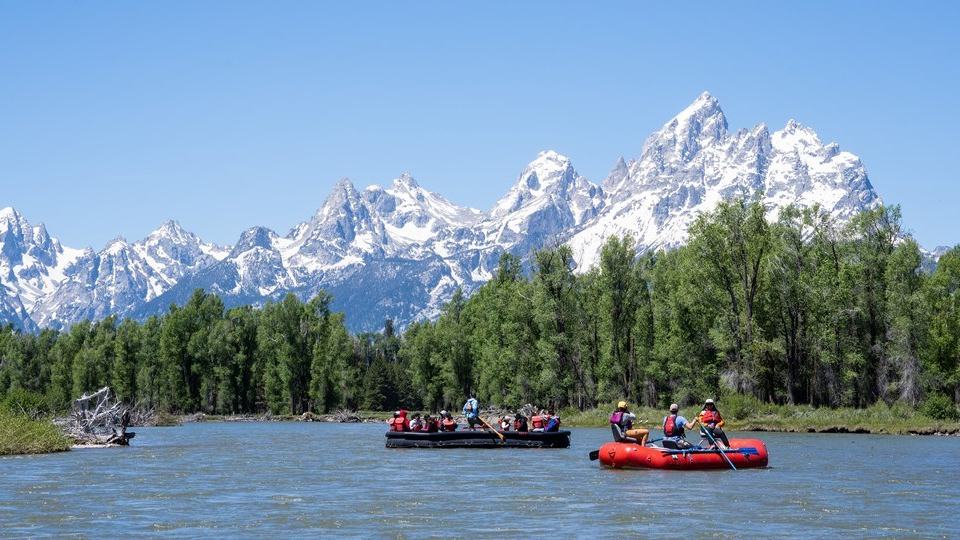
Grand Teton's Snake River provides memorable mountain scenery from small rafts, but shifting channels and wood debris demand experienced navigation.
The Tetons from the valley floor
Grand Teton National Park is famous for mountain scenery, but a raft on the Snake River reveals a different relationship between the peaks and the surrounding valley. The river winds across the landscape beneath the mountains, passing wooded banks and places where wildlife may be observed from a respectful distance. The National Park Service describes floating as a memorable way to experience this environment.
The difference from a conventional viewpoint is the slow movement of the raft and the shifting composition of the landscape. A bend may bring a mountain peak into view, while another section focuses attention on the riverbank. A guided scenic trip can be particularly attractive to visitors who want time to observe without the pressure of organising their own navigation.
A powerful river with changing channels
The Snake River is not a static waterway following one simple line. The Park Service warns that its channels shift and that logjams and other obstacles can appear or change position from year to year. A route previously used without difficulty may therefore require a different approach, and the person in charge of the raft needs to be able to read the current.
These conditions make local knowledge and practical river-handling skills essential. An inflatable raft may look forgiving, but strong current can carry it toward wood or shallow features where steering becomes difficult. Visitors should not attempt to reproduce a guided river trip independently without the necessary experience and a suitable boat.
Why a guided scenic float makes sense
Commercial river outfitters operate permitted excursions on certain stretches of the Snake River, giving visitors an opportunity to enjoy the scenery while a qualified guide manages the raft. Operators can explain local wildlife and landscape features and choose routes appropriate to the day's conditions. A guided tour also resolves many practical issues involving transport between the starting point and the take-out.
Not every operator offers the same experience. A scenic float may be designed for observation and conversation, while other sections involve faster current and greater technical demands. Customers should confirm the exact itinerary, the type of boat and any minimum-age or passenger restrictions rather than assume every Snake River trip will feel equally gentle.
The connection between current and wildlife
Moose, birds and other wildlife use the river corridor, making observation part of the appeal. A quiet raft can allow visitors to appreciate animals at a distance without the noise associated with a fast motorboat. Binoculars may be useful for seeing birds or other animals while remaining safely seated.
The National Park Service requires visitors to respect wildlife and their habitats. A raft should not be manoeuvred toward an animal for a closer photograph or pulled ashore in an unsuitable location. The guide's decisions about distance and landing protect the group as well as the animals that make the valley an important destination.
Small-boat safety begins before the launch
A person joining a raft trip should receive appropriate flotation equipment and an explanation of where to sit, how to move and what to do if someone falls into the river. The skipper or guide needs room to control the craft, and passengers should avoid shifting suddenly during narrow or difficult passages. Comfortable clothing is useful, but it should also suit the weather and the possibility of getting wet.
Water temperatures can be low, particularly during periods of snowmelt. An apparently warm day may disguise the consequences of immersion or prolonged exposure. Guests should check the operator's clothing recommendations and be willing to postpone the trip when conditions are not suitable for the passengers.
Planning around changing river conditions
The Park Service publishes an advanced river map and guidance for independent boaters, but these resources cannot account for every newly fallen tree or sudden shift in current. People planning a private float must examine the latest conditions and understand their own rescue capabilities. A map is a reference, not a guarantee of safe passage.
Water levels and weather forecasts can influence the route and operating schedule of commercial trips too. A professional operator may change the embarkation point or cancel when the water becomes unsafe. A flexible itinerary with time for other park activities makes such decisions easier to accept.
A slower holiday can be more rewarding
A scenic float can work as one part of a broader visit to Grand Teton, combined with walking trails, visitor-centre activities or an afternoon enjoying the view from shore. Unlike a long expedition, it may allow guests to experience a dramatic river landscape while returning to their accommodation the same day.
The opportunity to travel by raft should not be measured by how much ground is covered. The view of the peaks, the sound of the current and the chance to observe changes along the banks can make a modest journey memorable. There is value in letting the water set a gentle rhythm rather than trying to add as many activities as possible.
A real raft beneath a mountain backdrop
The official NPS photograph shows rafts travelling the Snake River with the Tetons rising beyond, closely matching the experience described here. It is a photograph of actual small craft in the park, not a stylised image or unrelated river. Its beauty does not remove the need for skilled handling, but it explains why the river is such an appealing setting.
For travellers, the Park Service's current floating guidance and authorised operator information provide the best starting point. Choosing a suitable trip and respecting the river's changing character allows the mountains to remain the focus. A well-run scenic float can offer an unusually personal encounter with Grand Teton without turning a holiday into an unnecessary test of endurance.