
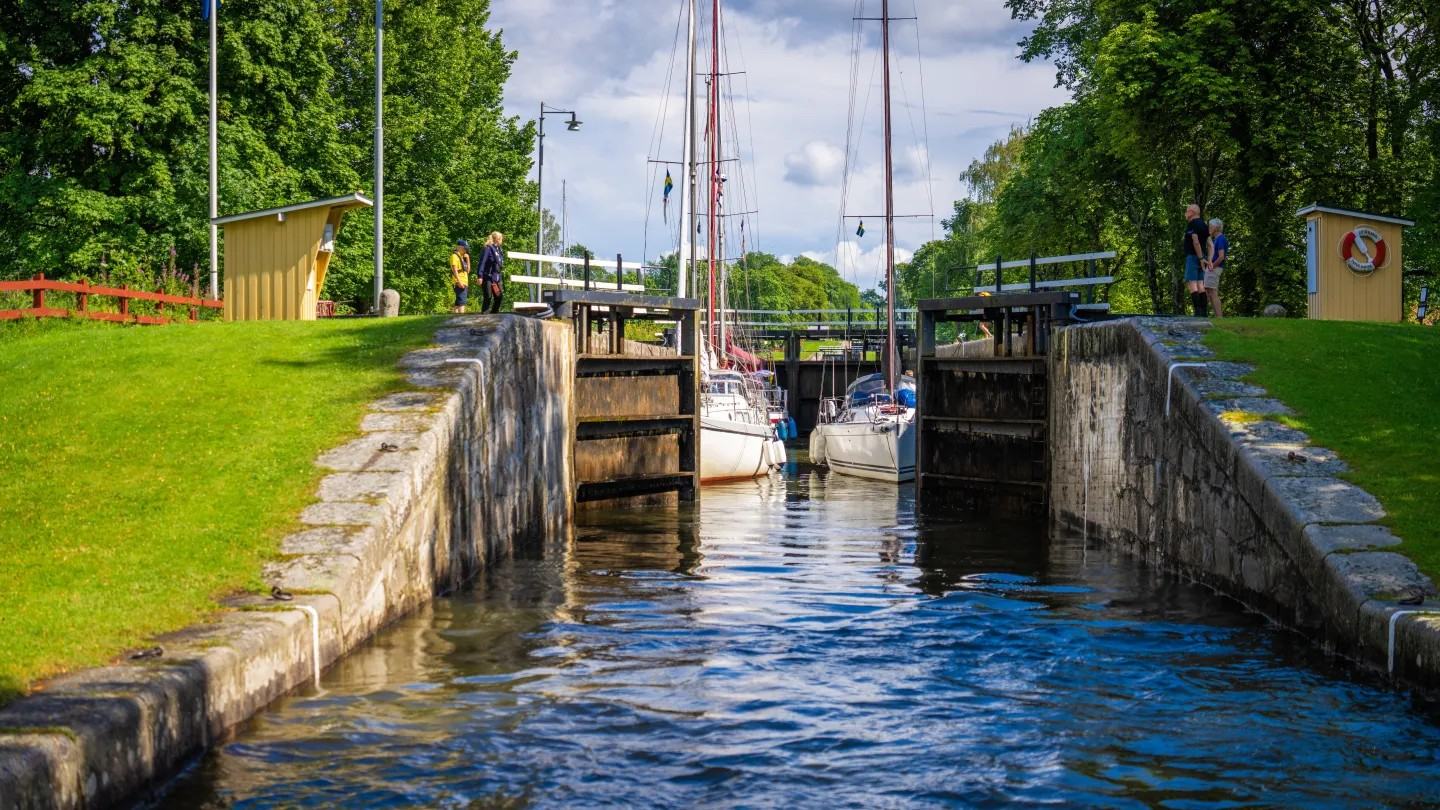
A practical guide to a Göta Canal boating holiday, with advice on lock handling, seasonal traffic, lake passages and making time for Sweden's canal-side towns.
Sweden's Göta Canal invites small-boat crews to exchange long offshore passages for locks, inland lakes and waterside villages. The attraction is the slow journey itself, but a memorable trip depends on sound planning and respect for a managed navigation.
A different way to cross Sweden
The Göta Canal turns a boating holiday into a journey through the heart of Sweden. Instead of following a coastline from harbour to harbour, a pleasure boat moves between lock chambers, lakes, tree-lined banks and waterside towns. The official Göta Canal operator presents the experience as a holiday in its own right, with marinas, practical navigation guidance and suggested ways to divide the route. It suits crews who appreciate the changing surroundings more than the satisfaction of logging a high daily mileage.
On a canal trip, the people onboard become part of the landscape. Cyclists may travel alongside the towpath, spectators stop to watch a lock operation and a quiet mooring can feel surprisingly close to a town square or a café. These ordinary encounters are part of the attraction, but they also change the pace of boating. The skipper must be comfortable sharing a managed waterway with other vessels and fitting a passage into the operator's arrangements for locks and bridges.
Begin with the official canal booking process
The first piece of equipment for a Göta Canal cruise is information. The operator's boating-holiday pages bring together its pleasure-boat guidance, ticket conditions, traffic regulations and Skipper's Guide, all of which should be checked before departure. Passage arrangements, operating periods and services vary by season, and it is unwise to use an old forum post as a substitute for the current rules. Confirm the boat's dimensions and the operator's requirements before making travel commitments.
A good plan leaves room for both the planned route and the unexpected queue. Canal staff operate the locks and open bridges, while leisure boats follow the applicable timing and traffic arrangements. In parts of the season the operator groups traffic into convoys, which makes an improvised arrival much less practical. Review the day's proposed section each morning, check any current traffic message and allow extra time if a road bridge or busy lock interrupts progress.
Lock handling as part of the holiday
Repeated locks can make an unfamiliar crew nervous on the first morning, yet they are manageable when everyone knows their role. Put suitable lines and fenders ready early, keep hands out of pinch points and follow the lock keeper's directions closely. A controlled approach is preferable to a showy one. The skipper should be able to hold the boat steadily while crew members remain in safe positions, and a first-time visitor should ask staff for clarification rather than pretend to understand.
Small tasks make a canal holiday satisfying for younger crew too, but responsibility must be matched to ability and adult supervision. One person can keep a written record of places visited, another can check the next stop on the chart, and everyone can help keep a tidy cockpit between locks. Where the canal approaches a larger lake, do not assume the same wind and wave conditions will apply. Assess the open-water forecast and the boat's capabilities separately from the tranquil cuttings.
Towns, shore walks and the pleasure of stopping
The old canal settlements are more than convenient places to buy provisions. Söderköping, with its waterside setting and historic streets, is a reason to allow time ashore rather than hurry through. Farther west, Sjötorp is strongly associated with the canal's connection to Lake Vänern and its traditional boating scene. The exact order of towns in your itinerary depends on the chosen entry point, direction of travel and available passage time.
At the end of a slow day, look for an authorised guest harbour with appropriate depths, power if required and access to everyday supplies. The canal operator maintains information on its marinas, but availability and facilities should be checked for the period of travel. A compact cruising boat is often easiest to enjoy when its crew regularly steps ashore: a bicycle ride, a short walk beside the canal or an unhurried meal breaks up the concentration that lock work demands.
Weather, bridges and the art of a flexible plan
Canals have a reputation for tranquillity, but weather still shapes an enjoyable passage. Rain can make lockside surfaces slippery, a crosswind can complicate a bridge approach, and conditions on the lakes can limit progress more severely than those in the sheltered reaches. Bring layers that work under a lifejacket, footwear with grip and a way of keeping charts and essential documents dry. A skipper should know where a sensible stopping point lies before weather begins to deteriorate.
The operator specifically warns that waits can occur at locks and bridges and advises crews not to construct an excessively detailed schedule. That is valuable holiday advice as well as sound seamanship. A plan with realistic daily objectives, a reserve day and alternative overnight stopping points feels calm even when traffic is heavy. If the crew finishes early, the reward is time to explore; if the day is delayed, no one needs to race the clock.
Choose the right boat and pace
A modest motor cruiser or small sailing boat with a suitable engine can be an excellent platform for this route, provided its dimensions and equipment meet the canal's rules. Reliable manoeuvring, visible deck cleats, accessible fender points and a comfortable sleeping arrangement matter more than maximum speed. Stow bicycles and other leisure gear securely before lock passages so that a relaxed holiday does not create unnecessary obstacles around the cockpit.
The Göta Canal is best approached as an active but unhurried boating experience. Check the official timetable, ticket and current notices for the exact season, plan a route that allows villages and lakes to be enjoyed and give the crew a predictable routine at every lock. Sweden's great inland waterway then becomes more than a way of getting from one body of water to another: it is a series of small, satisfying discoveries made at the speed of a pleasure boat.