
Glen Canyon offers two different kayaking experiences: sheltered coves on Lake Powell and a river journey below the dam requiring special launch arrangements.
A desert landscape best understood near the water
Glen Canyon National Recreation Area in the American Southwest provides an unusual setting for a small-boat outing. Kayakers travel beneath layered sandstone cliffs, with lake water or the Colorado River forming a narrow corridor through an otherwise dry landscape. The National Park Service identifies opportunities for excursions lasting only a few hours as well as more demanding journeys that require careful preparation.
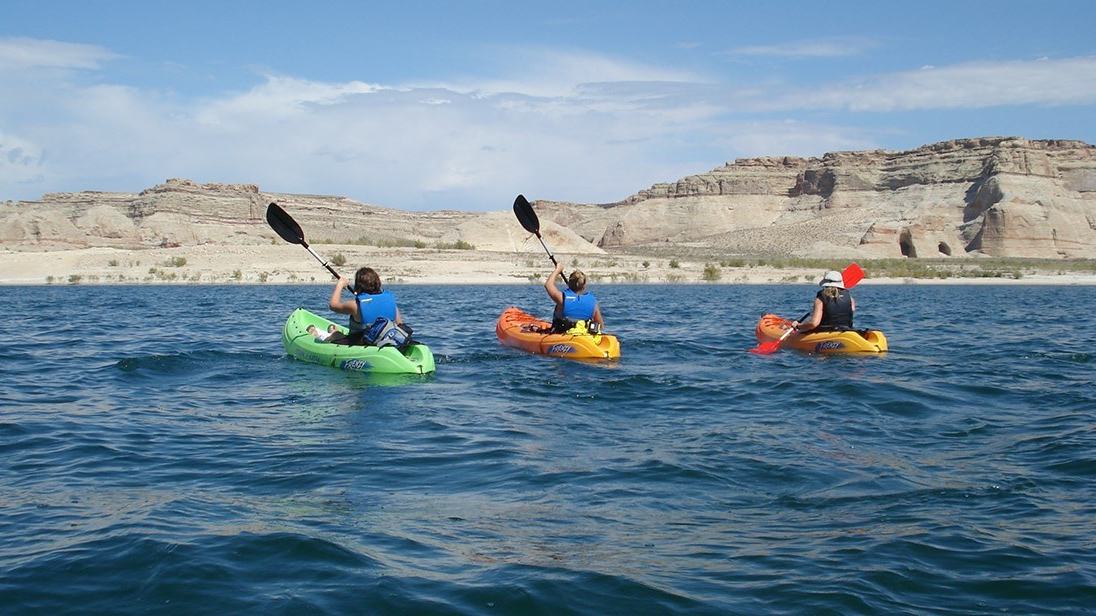
The photographs of colourful kayaks on Lake Powell illustrate how the scale of the canyon can make small craft appear modest against the rock formations. This environment is visually spectacular, but its exposed water, changing levels and occasionally difficult access arrangements mean that the choice of route is central to an enjoyable day. A quiet cove close to a launch can be just as rewarding as an ambitious longer passage.
Lake Powell offers several styles of outing
The broad waters of Lake Powell support recreational kayaking, including shorter trips around areas such as Wahweap and Lone Rock. The Park Service notes that local paddlers enjoy exploring coves where a small craft can travel at a gentle pace away from some of the busier boating areas. Visitors must still expect the possibility of wakes, wind and traffic from larger powerboats.
A sheltered-looking inlet may be some distance from the nearest safe exit, and rising wind can transform conditions on the return. Beginners should choose a launch and route with easy access to shore and avoid planning a long open-water crossing for their first experience. An experienced local guide or reputable rental service can help with equipment and suitable destinations.
Lake levels can alter familiar geography
Water levels on a large reservoir are not constant. They influence access to launch ramps, shorelines and the depth of passages that may appear navigable on older maps or photographs. In Glen Canyon, a visitor should confirm the current National Park Service notices before arriving with a kayak or trailer, because a previously convenient launch point may have changed.
A small boat's shallow draft provides some flexibility, but it cannot solve every access problem. Mud, steep banks or an extended carry from parking to the water may make a supposedly easy launch impractical. The correct equipment includes a way to transport the kayak safely to the shoreline without damaging the boat or sensitive surrounding terrain.
The Colorado River is a separate adventure
Below Glen Canyon Dam, the Colorado River offers a different experience from the relatively still waters of Lake Powell. The Park Service explains that there is no normal put-in immediately at the dam. Paddlers typically launch from Lees Ferry and arrange a tow or backhaul upstream with an authorised operator, allowing them to paddle downstream toward the launch.
That journey requires understanding the backhaul arrangements, current operating rules and river conditions. It should not be approached as a simple matter of driving to the dam and carrying a kayak to the water. A reservation with an authorised service, suitable equipment and a clear plan for the return are necessary before considering the route.
Water releases affect the speed of the river
Flows below the dam can vary according to releases managed through Glen Canyon Dam. The National Park Service advises paddlers to check current flow information through the Bureau of Reclamation, because conditions can range from a relatively calm float to a more demanding return. Such variation affects paddling effort, landing opportunities and the timing of a journey.
Even a visitor who expects to travel downstream should consider the need to manoeuvre around obstacles or reach a landing with accuracy. Wearing suitable flotation equipment and understanding the boat's control response are essential. The official regulations for hand-propelled craft in the section between the dam and Grand Canyon National Park must also be checked before departure.
Camping offers opportunities but brings obligations
The Park Service identifies designated camping areas along the river with basic facilities such as vault toilets and grills. These operate on a first-come basis, and travellers should not assume that every attractive beach is an authorised campsite. A multi-day outing requires an assessment of supplies, the weight carried by the kayak and what happens when a preferred camp is already occupied.
Waste must be taken away rather than discarded or burned. The official guidance emphasises packing out what has been brought into the canyon because the river and beaches do not provide an ordinary municipal rubbish collection service. Responsible camping is part of preserving the experience for people arriving later and for the surrounding ecosystem.
Weather in canyon country deserves respect
Desert heat can be intense while the water itself may feel much colder than the surrounding air, and wind can accelerate across open reservoir water. Clothing should respond to immersion risk and the day's forecast rather than solely to a photograph of clear blue sky. Drinking water, sun protection and a dependable method of communication deserve particular attention.
Weather may also change rapidly enough to alter the safety of a small-craft outing. Thunderstorms, strong gusts and waves caused by passing vessels can all create problems on a route without convenient landing places. An early return or a different day is a responsible decision when the intended conditions cannot be met.
Two settings, one thoughtful holiday
Glen Canyon allows a traveller to choose between a short, scenic lake paddle and a more involved Colorado River journey with specialised logistical arrangements. Neither experience needs to be measured by speed or total mileage. A group that moves slowly can appreciate the contrast of sandstone, water and changing light while remaining within a realistic plan.
The Park Service's kayaking page provides a foundation for selecting the route, understanding river backhauls and locating current regulations. Conditions and access should be rechecked before each outing, especially when reservoir levels or flows have changed. With suitable preparation, a modest kayak can reveal a sense of the canyon that is difficult to capture from a viewpoint above the water.