
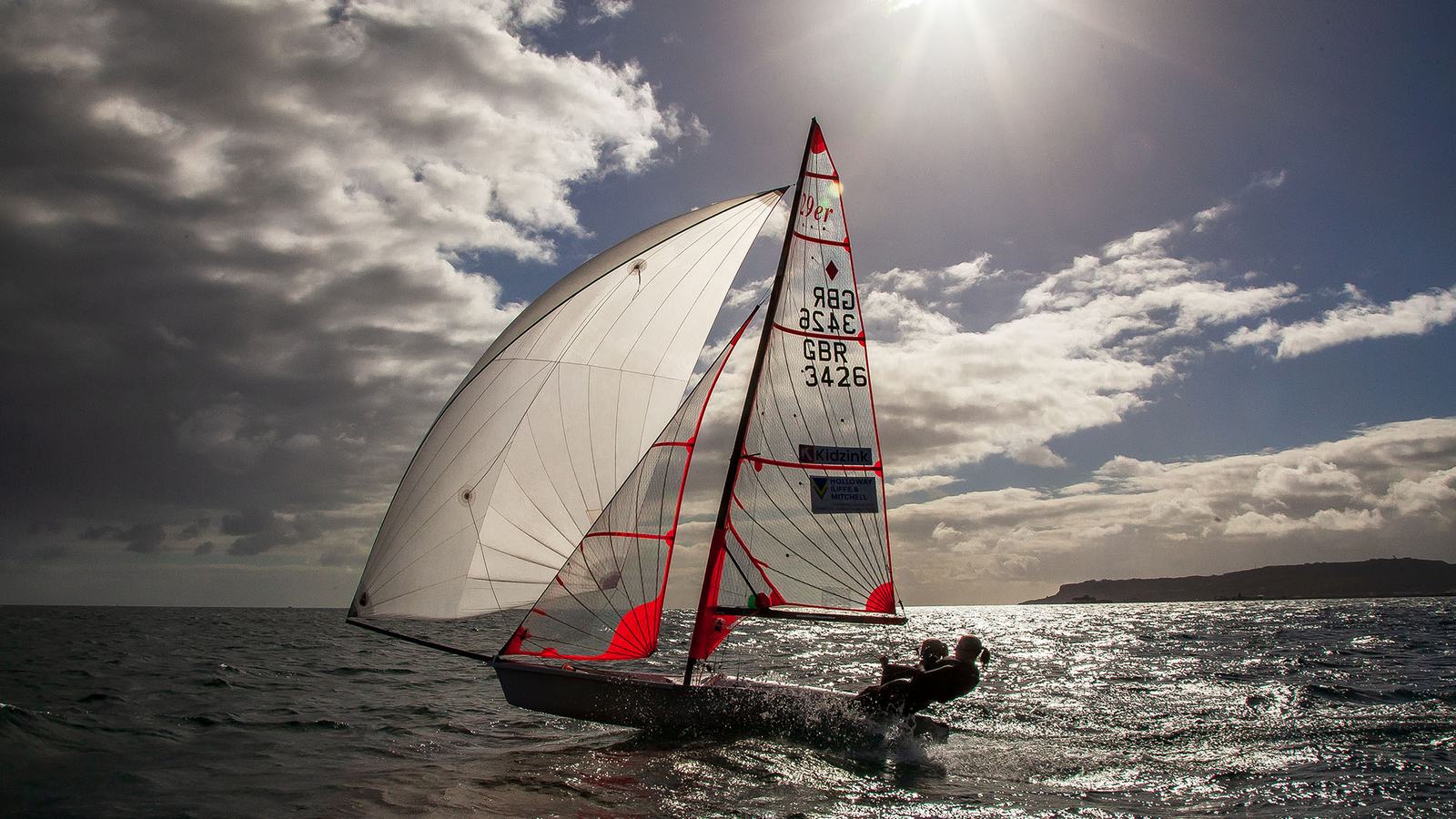
Fifteen British youth sailors met for a Weymouth training camp before December’s Youth Sailing World Championships in Portugal. Their mix of water sessions, performance workshops and team-building offers practical lessons for sailing clubs and junior racers.
The road to an international sailing championship begins long before the first start signal. Fifteen young sailors chosen to represent Great Britain came together at Weymouth and Portland National Sailing Academy on 10–11 October for a training camp ahead of the Youth Sailing World Championships. The Royal Yachting Association reported on 19 October that the gathering was the first opportunity for the full 2026 squad to train and spend time together. The championships are scheduled for Vilamoura, Portugal, from 15 to 19 December.
That timetable makes the camp interesting well beyond the national team. For young racers at ordinary sailing clubs, it demonstrates how much preparation happens off the water as well as in the boat. The RYA's account describes sessions on decision-making under pressure, nutrition, team culture, equipment and training goals alongside practical time afloat. These are ideas a club can adapt without pretending that a weekly junior programme needs the resources of a national performance squad.
One team spanning six very different disciplines
The selected sailors will race across iQFOiL, Formula Kite, ILCA 6, Nacra 15, 29er and 420 events. Those classes demand different physical skills, boat-handling techniques and approaches to speed, ranging from single-handed dinghies to boards, foiling kites and two-person boats. Bringing everyone together therefore does not mean imposing an identical technical plan on every competitor. It creates a shared environment in which athletes can compare their experiences while still preparing with specialists in their respective classes.
Around half of the British squad has competed at a Youth Worlds before, according to the RYA, while the rest are preparing for a first appearance. That mixture makes experience-sharing especially useful. Returning sailors can explain the routine of an international regatta, while newcomers can ask practical questions about travel, pressure and working with unfamiliar people. At club level, inviting older junior sailors to help younger members prepare for their first away event is a straightforward version of the same principle.
Training in changing wind, not perfect conditions
The academy offered notably different sailing conditions across the weekend. The RYA described breezier weather on Saturday and lighter wind arriving on Sunday afternoon, giving sailors and coaches an opportunity to practise in changing circumstances. That matters because a championship is rarely won in a single preferred wind range. A sailor may need to shift from confident high-wind boat handling to patient light-air decision-making over the course of the same event.
For a grassroots training group, that suggests keeping a record of conditions rather than simply marking each session as completed. Sailors can note what they tried in heavier breeze, what improved in the lighter patches and which manoeuvres need more repetition. A coach can then design the next session around a specific weakness. The point is not to chase dangerous conditions: junior activities must always stay within the club's safety procedures, coaching limits and local weather assessment.
Goals that identify the work behind a result
Before arriving at the camp, squad members had individual conversations with coaches to discuss both process and outcome goals. The RYA says those calls also helped identify support needs, including nutrition, sport psychology and possible help with equipment funding. An outcome goal describes where a competitor hopes to finish, but it cannot be achieved directly in a training session. A process goal identifies a behaviour the sailor can practise, review and gradually improve.
An aspiring dinghy racer might want a top-ten finish at a regional event, for instance, while their training focus could be on clean starts, consistent mark roundings or observing wind shifts on every beat. A two-person crew could agree how to communicate before a manoeuvre and how to recover calmly after a mistake. Those examples are general coaching approaches, not claims about the specific goals set by Britain's selected sailors. Writing down a few measurable actions can give young competitors something constructive to assess even when the final results do not go their way.
Why the shore sessions matter
The Weymouth programme covered much more than rigging and racing. RYA reporting lists media preparation, knowledge of the championship venue and information from the previous year's Youth Worlds among the workshop subjects. Performance Lifestyle Coach Tom Evans led work on team culture and anti-doping education. Sport psychologist Asshur Sinclair concentrated on competing under pressure and on how the squad could support one another. This recognises that performance also depends on habits, organisation and conduct away from the racecourse.
Not every sailing club can invite a sports psychologist or run a professional workshop series, but the underlying questions are accessible. Does a young sailor know what to pack for an event, when to eat, how to recover after a disappointing race and whom to approach when worried? Has the club explained fair competition and the responsibilities of sailors and supporters? A short discussion with coaches and parents can often remove avoidable uncertainty. Any specialised nutrition, safeguarding or medical questions should still be handled by appropriate qualified people.
Sharing equipment makes teamwork a racing skill
At the Youth Sailing World Championships, boats and equipment are supplied for competitors and shared between teams, the RYA explains. That introduces an extra test because crews cannot assume every fitting and handling characteristic will feel exactly like the equipment they normally train with. Good communication, organised preparation and a willingness to work with others are therefore practical advantages, not merely desirable sporting attitudes. Familiarity with one's regular boat is valuable, but adaptability is valuable too.
Clubs can borrow this lesson during carefully supervised coaching sessions. Crews might swap positions within a suitable training boat, practise checking unfamiliar control lines or learn to make a systematic inspection before launching. A coach can ask participants to describe an issue clearly instead of blaming equipment or a teammate. Such exercises should respect the boat's suitability, the sailors' abilities and the club's safety rules. The goal is to build confidence and responsibility, not create surprises on the water.
Managing expectations in a young team
The camp deliberately created time for the sailors to know one another outside formal training. The RYA describes shared accommodation at Portland House and a team dinner at which champion sailor Bettine Harris discussed her journey through youth sailing and into the Olympic 470 class. Her message, as relayed in the association's report, centred on persistence after targets are missed. For athletes approaching a major competition, that is a useful counterweight to an exclusive focus on medals or rankings.
Youth regattas can be intense for sailors and families alike. Expectations should encourage preparation without suggesting that every race outcome defines a young person's future in the sport. A club environment can reinforce that by recognising improved skills, consistent effort and supportive behaviour as well as results. When experienced sailors are willing to explain setbacks honestly, newcomers may find it easier to ask for help rather than hiding difficulties. Competition should remain challenging, but it should also be a place where young people want to keep sailing.
The final weeks before Vilamoura
After the October camp, the squad's sailors were due to resume training with their national class youth groups while remote support continued ahead of December. The RYA says the next full-team gathering would be at a UK airport before departure for Portugal. That leaves a period in which class-specific preparation, practical arrangements and individual routines must come together. The camp's value will be reflected not simply in what was discussed during one weekend but in how consistently the sailors put those lessons into practice.
For club sailors watching their progress, there is a broader message. Effective preparation combines time afloat, a realistic plan, trust between teammates and attention to the details that make an event run smoothly. The British team's Weymouth weekend offers a current example of those principles in action, without suggesting a guaranteed result in Vilamoura. Whatever the December scoreboard shows, the disciplined habits developed during the journey can remain useful through many seasons of recreational and competitive sailing.