
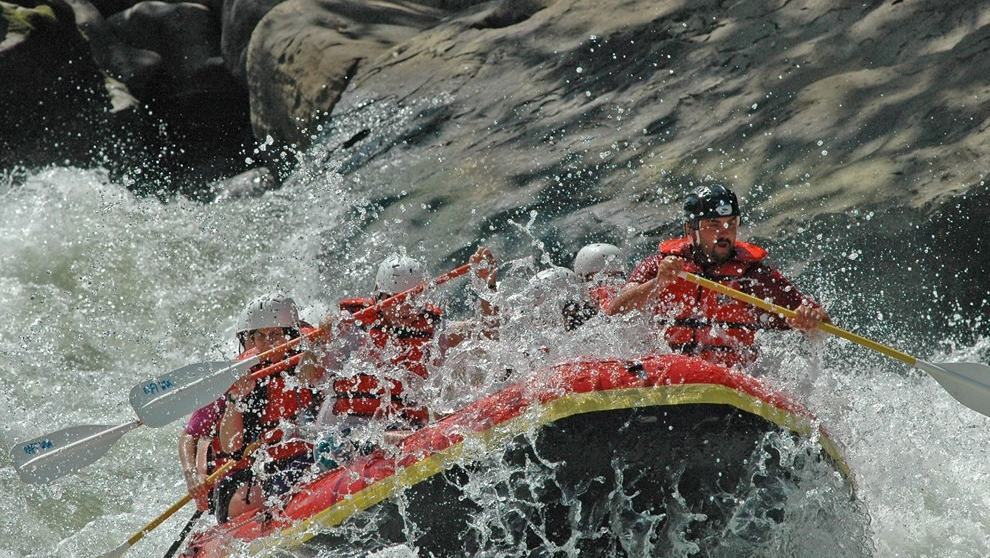
Gauley River National Recreation Area offers highly demanding autumn whitewater rafting in West Virginia, with scheduled dam releases and specialist guide services.
Autumn brings a distinctive whitewater season
The Gauley River in West Virginia has a reputation among experienced whitewater enthusiasts for steep rapids and powerful water. Its principal boating season is associated with scheduled releases from Summersville Dam during autumn. The National Park Service describes a river that demands serious preparation, not an ordinary floating excursion suitable for first-time canoeists.
The rugged canyon and changing flow create a dramatic setting, but scenery is only one part of the decision to visit. The conditions are strong enough that paddlers need to understand technical difficulty, rescue resources and the limits of their own experience before choosing a trip.
Dam releases create a published schedule
The Gauley River's autumn boating season is linked to release dates managed through Summersville Lake. For 2026, the National Park Service lists scheduled releases across September and October, including 17–18 October. The actual conditions on a given day still depend on operational decisions and other influences.
Visitors should consult current information from the relevant authorities instead of assuming that an old timetable guarantees a particular flow. A booking with an outfitter should include details of where the trip will operate and what happens if release conditions change. Water levels can alter difficulty and route choice.
Upper and Lower Gauley are not interchangeable
The National Park Service describes the upper river as including difficult Class III through V-plus sections, with major features such as Pillow Rock, Iron Ring and Sweet's Falls. The lower Gauley also contains challenging whitewater and should not be approached as a simple beginner route merely because it is called the lower section.
Difficulty ratings are useful broad indicators, but water level, individual rapids and the crew's skill all matter. The upper river is especially demanding and requires appropriate experience. Visitors should seek honest advice from qualified professionals rather than selecting a route according to the most exciting photographs.
Why an authorised outfitter can matter
Commercial rafting operators have local knowledge of access, equipment, scheduling and the conditions likely to be encountered. An organised trip can provide technical guidance and logistics for visitors who do not have the ability to assess a demanding river independently.
A commercial booking does not make whitewater risk disappear. Prospective guests should discuss age limits, physical requirements, medical considerations and what training occurs before the trip. Operators may decline participation or change an itinerary when conditions make the planned activity unsuitable.
Physical readiness and appropriate equipment
Whitewater rafting can require rapid responses and repeated exertion, even when a guide directs the boat. Visitors should understand whether they need to paddle, brace or assist with specific tasks. Proper flotation, helmets and other equipment must be suited to the route and fitted by people familiar with the activity.
Clothing needs to reflect water and air temperature, not simply the time of year. Autumn water can be cold, and immersion or prolonged exposure can create serious problems. Participants should follow the outfitter's instructions about protective clothing rather than improvising with unsuitable everyday garments.
River hazards can be difficult to recognise
Hydraulics, rocks, powerful currents and changing channels create risks beyond those encountered on flat water. A rapid that has been passed successfully before may behave differently under another flow level. The National Park Service warns that whitewater running can involve severe injury or loss of life.
Visitors without the necessary skills should not attempt to interpret a hazardous rapid from a photograph or a short description. A person on the bank may not see all of the forces that affect a boat in the current. Professional judgement and proper rescue capability are essential.
Plan the journey into the canyon
River access can require travel on narrower local roads and coordination with transport between launch and finish. Those details should be clarified before the trip rather than treated as trivial administration. An experienced operator can help guests understand meeting locations, timing and what to bring.
The planned duration may be affected by water conditions or safety decisions. Families should allow enough time around the trip and avoid scheduling an immediate commitment that would create pressure to rush. A demanding activity is easier to approach with patience and a clear plan.
Respect other users and the landscape
Autumn brings substantial visitor interest, making shared access points busy at times. Equipment should be prepared without blocking others, and group leaders should keep participants together during briefings. A calm approach on shore helps reduce unnecessary confusion before the trip begins.
The river corridor also supports wildlife and natural habitats. Visitors should pack out rubbish and use approved access points. The focus on adventure should not obscure the responsibility to protect a place whose scenic character is central to the experience.
Choosing whether to take part
Some travellers may prefer to view the landscape or choose a different activity rather than enter high-grade rapids. That is a sensible decision if age, confidence, health or experience makes the outing unsuitable. A challenging destination can still be appreciated without undertaking its most hazardous activity.
Visitors who are interested in paddling can work toward more difficult water through structured instruction and supervised experience. Skills should be developed progressively, with recognition that a strong rafting crew requires communication and familiarity with technical conditions, not merely enthusiasm.
The final checks before booking
Confirm current river levels, the release schedule, the outfitter's credentials and the route offered. Ask about equipment, transport, age and physical requirements, cancellation arrangements and the briefing provided. Read the National Park Service's whitewater safety information and follow any current alerts.
The Gauley deserves its reputation as an important American whitewater destination, but it is not an effortless leisure float. A good visit begins with choosing the right level of experience and ends with a group that has been able to enjoy the river responsibly.
Consider how the day fits the whole group
People who do not plan to enter the rapids may still want to enjoy the riverside scenery and learn about the area. Their plans need to remain separate from an organised rafting descent because access roads, meeting places and facilities are not identical to those used for launching boats. Before departure, clarify where non-participants can wait and how the group will reunite.
Photographs and social media often make a difficult whitewater route appear shorter and calmer than it feels to the people aboard. Visitors should resist pressure to book the most demanding trip simply because others have already done it. Choosing an outing appropriate to individual capabilities is a positive decision and helps the whole party enjoy West Virginia without needless risk.
Source
National Park Service