
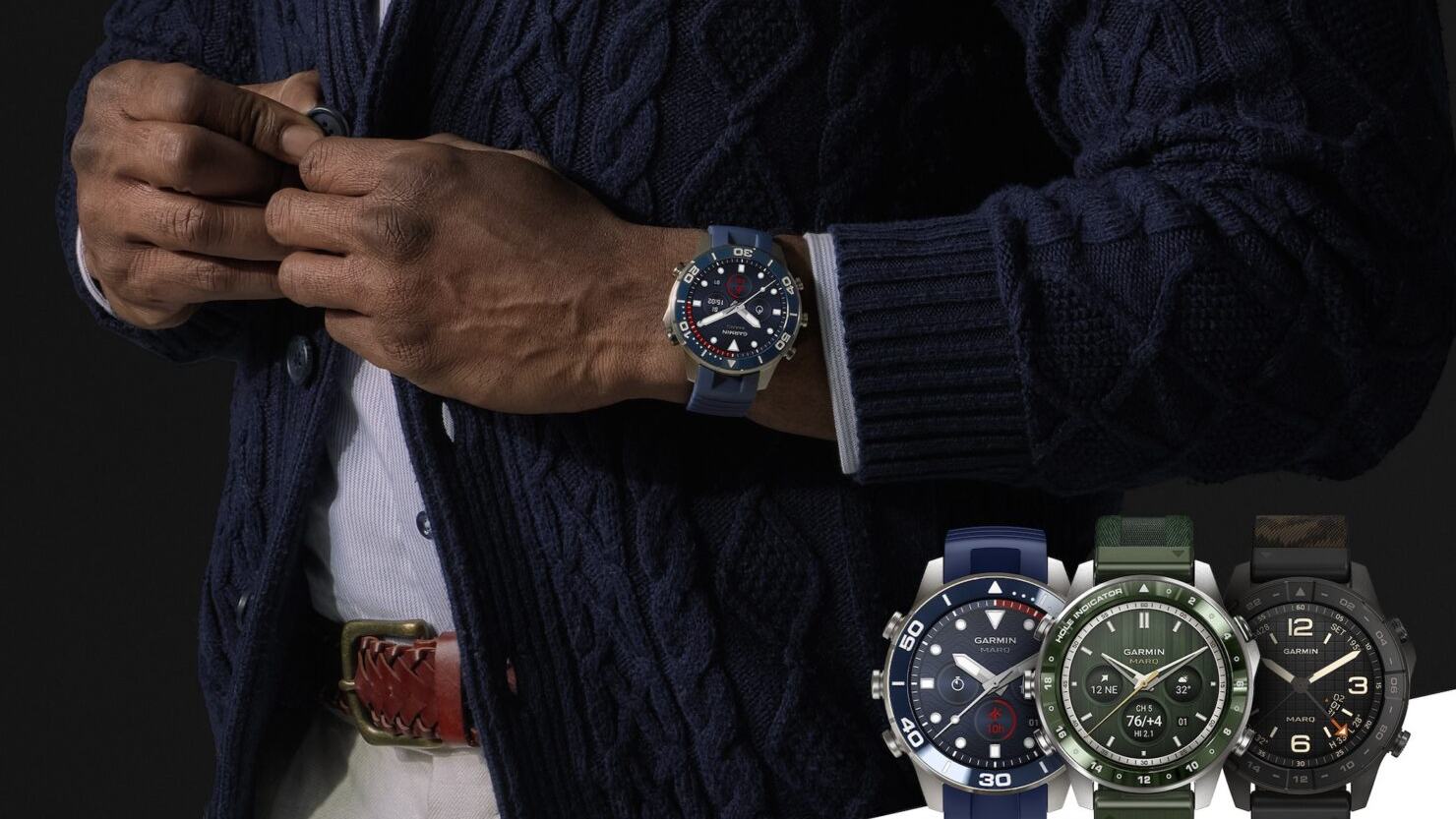
Garmin introduced MARQ Diver in October 2026, combining autopilot and tack-assist functions with diving features, a titanium design and connected tools for life afloat.
Garmin's new third-generation MARQ watches include a model made specifically for people who spend time on boats and underwater. Introduced on 13 October 2026, MARQ Diver combines a luxury titanium-and-ceramic design with scuba and snorkelling activity modes, plus features Garmin identifies for use at the helm, including autopilot control and tack assist. It is part of a six-watch collection with an updated display, mapping and communications features.
For a recreational sailor or motorboat owner, the launch raises an interesting question: how useful can an elegant wristwatch be when practical information is already available on a chartplotter, phone and vessel instruments? The answer depends on compatibility, personal routines and the care with which the watch is integrated into an existing safety system. Garmin's announced features offer genuine conveniences, but they should be evaluated without mistaking a wearable for replacement navigation or emergency equipment.
A marine-focused newcomer to the collection
The Diver joins five other third-generation MARQ watches announced on 13 October: Adventurer, Athlete, Aviator, Commander and Golfer. That range helps explain what Garmin is trying to do with this family. Instead of offering one general-purpose watch in different colours, it gives each model a visual identity and functions related to a particular activity. For owners who divide their weekends between a boat, swimming, snorkelling and everyday life ashore, the marine version is the most obvious member to examine first.
The manufacturer says MARQ Diver offers tactile leakproof buttons and a microadjusting strap with 15 millimetres of adjustment, details that matter when switching between bare wrists and equipment or operating in wet conditions. Garmin specifies use for scuba, freediving and snorkelling activities to 40 metres below the surface. It is important to check the exact activity modes, operating instructions and limits before treating any smartwatch as diving equipment. A premium appearance does not eliminate the need for suitable training and established underwater safety procedures.
Useful assistance at the helm
MARQ Diver's most intriguing promise for the small-boat owner is not its watch face but its onboard features. Garmin describes helm functions including autopilot control and tack assist, linking the watch to tasks that are normally managed through dedicated boat electronics. A sailor might value easily accessible tack-related information while moving between wheel, winch and deck. A motorboat owner could appreciate a wrist-based way to interact with compatible systems when circumstances permit, particularly during routine passage management.
Those functions should be approached as supplementary controls. Owners must verify compatibility with their particular Garmin marine equipment, software and any required connections rather than assuming the watch will operate an arbitrary autopilot. Dedicated steering controls, clear visual watchkeeping and the vessel's main instruments remain essential. It is sensible to practise with any new remote-control function in safe conditions and understand exactly what the device will do, including how to disengage it, before attempting to use it during a demanding manoeuvre.
The materials and display suited to life afloat
Garmin has given the third MARQ generation Grade 5 titanium cases, sapphire lenses and ceramic bezels with model-specific decorative details. The new 1.4-inch borderless AMOLED display is the largest the company has fitted to this collection, intended to make maps and information easier to see. The move makes sense for a piece expected to shift from cockpit to restaurant without needing to look like a dedicated industrial instrument. A prominent screen can be useful on a pitching boat, but owners still need to consider glare, battery state and the practical limits of reading detailed information at wrist size.
Across the family Garmin also offers an LED flashlight, built-in speaker and microphone and customisable faces inspired by traditional watch styles. The everyday convenience is real, particularly when hands are occupied with equipment or luggage, but it should not be confused with being an emergency signalling lamp. A proper waterproof torch, navigation lights and the safety gear required for the boat remain separate considerations. The watch is a personal convenience device that works alongside the boat's equipment, not a means of reducing the vessel's safety inventory.
Mapping and messages beyond the phone
Third-generation MARQ watches include preloaded worldwide TopoActive mapping and an address-search feature. For a mixed holiday of boating, walking and exploring a coastal town, having a quick personal map can be useful once ashore, and location functions may assist with orientation. These are not a substitute for official navigational charts when a vessel is under way. Marine pilotage calls for charted depths, obstructions, buoyage and current local notices, which a general-purpose watch map should not be presumed to provide.
The connectivity announcement also brings inReach functionality with satellite or LTE messaging, weather information and an SOS option, subject to active plans and service requirements. Garmin explicitly cautions that network availability varies by region and that this watch's satellite and emergency functions have significant limitations compared with other inReach devices. That caveat matters to offshore and remote-coast users. A watch can be a valuable additional way to communicate, but a properly installed marine VHF, emergency beacon and an agreed passage plan remain central to serious safety preparations.
What the broader MARQ upgrade adds
The Diver is part of a collection that shares many of the same updated everyday functions. Garmin lists health and recovery information, sleep analysis and other training tools as well as the new microphone, speaker and mapping platform. The company also states up to 18 days of smartwatch-mode battery life for the family, a manufacturer figure rather than a promise for every usage pattern. Continuous navigation, connectivity, bright screens and activity tracking can change real-world endurance, so owners should plan charging according to their own routine.
Garmin quotes suggested retail prices starting at $2,500 for the new collection, but that starting figure should not be interpreted as the confirmed price of every model or market. Availability, local taxation and exact specifications need to be checked with an authorised seller. For a boater considering an upgrade, the most important questions are practical: does the watch interact with the electronics already on board, are the desired coastal and offshore communication features supported where the boat is used, and will the extra functions justify the expense over an existing watch?
A sensible role in a coastal kit
Smartwatches have become capable enough to blur the boundary between a lifestyle accessory and a marine instrument. The MARQ Diver makes that overlap explicit by pairing a luxury finish with water-based activities and helm-related software. For people who enjoy the water on different kinds of craft, its appeal lies in bringing personal information into one familiar piece of equipment. Yet the value is greatest when its limitations are known in advance and its display is treated as a second source of information rather than the only one.
A good test before a first boating trip would include pairing the watch with any supported onboard systems, learning the layout of the marine screens, checking messaging permissions and subscription status, and confirming how quickly the battery drains during the intended activities. Keep the main navigation and safety routines unchanged while becoming familiar with it. Garmin's October launch is a compelling example of more specialised technology moving onto the wrist, but seamanship is still what turns information into safe decisions on the water.