
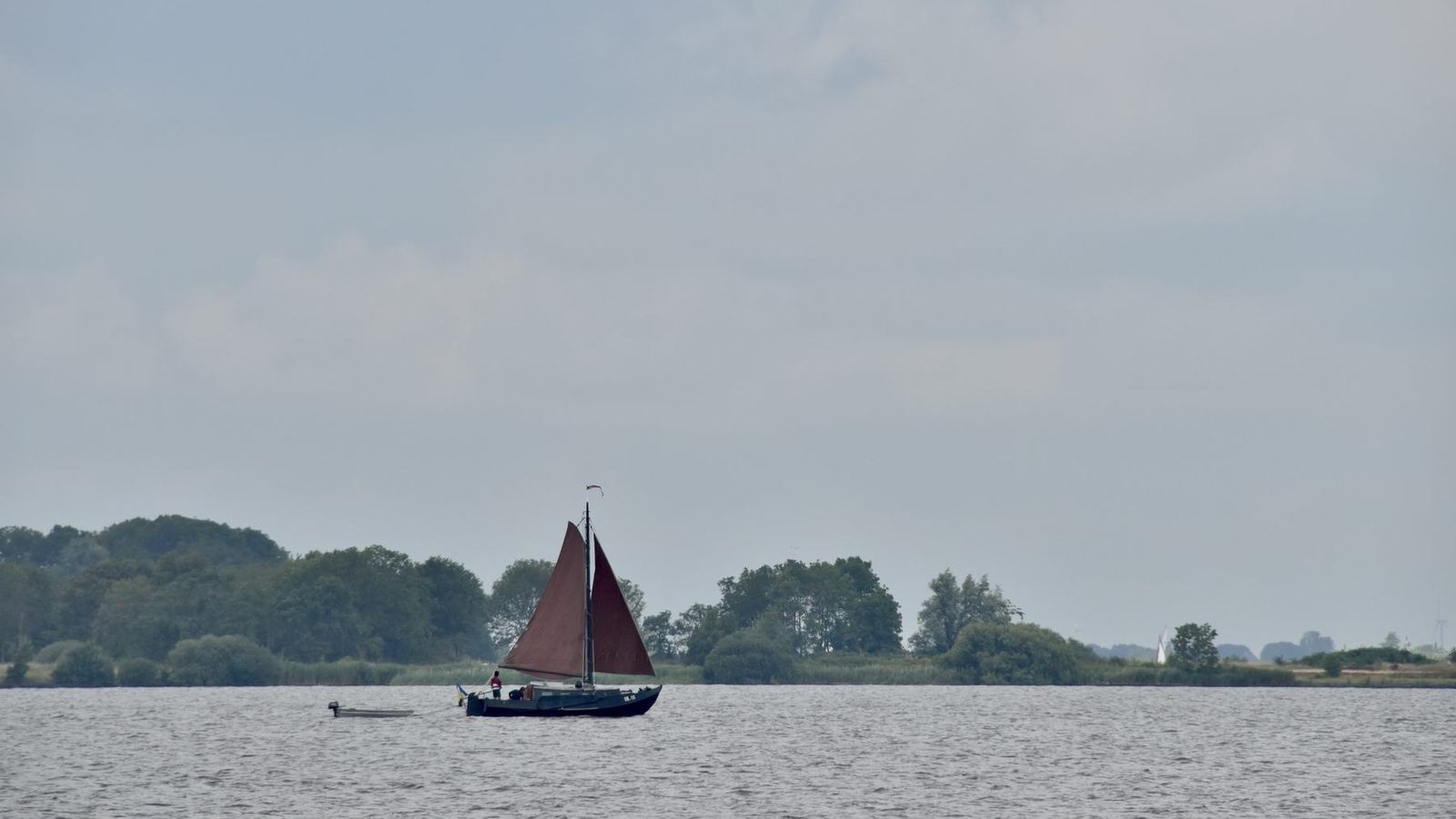
A gentle Frisian inland-waterway escape for small motorboats and sailing craft, with Sneek, Sloten, bridge opening checks, mooring etiquette and nature.
The pleasure of travelling by water
Friesland is a place where a small boat can feel like the most natural way to explore. Water threads between towns, broad lakes, reed-lined edges, farms and working locks, making a modest cabin boat, electric sloop or day cruiser unusually useful for a holiday. For sailors, the open lakes offer a contrasting sense of space before the rig has to be considered again at bridges. Visitors may encounter traditional Dutch sailing craft alongside contemporary hire boats, canoes and working vessels. The appeal is not raw speed; it is the ability to move from a waterside town to a peaceful rural mooring without leaving the water. Visit Friesland publishes a substantial collection of boating routes, and the Province of Fryslân maintains practical bridge, lock and water-sports information. Use these as starting points and adapt every leg to the actual draft, height and handling of your boat.
Choose a region rather than the whole province
A first visit is better spent in one area than on a rushed attempt to circle Friesland. The southwestern waterways are particularly attractive for a relaxed small-boat holiday: Sneek, Woudsend, Heeg, Sloten and the connected lakes offer a succession of different waterfront experiences. Visit Friesland describes a Southwest Friesland sailing route that includes Slotermeer and the historic town of Sloten, while its broader boating catalogue offers alternatives suited to various boat types. For a short break, make a loose triangle between two towns and one lakeside stretch, with time to linger. A compact electric sloop that performs well on canals may be less appropriate for a breezy open-lake crossing; a sailing boat may need a route that avoids low fixed bridges. Choose the water the vessel can handle comfortably, rather than choosing a famous name and hoping the route fits.
Sneek: a natural place to pause
Sneek is widely recognised in Friesland as a water-sports centre. It has the atmosphere of a place built around boats rather than simply receiving occasional visitors. This makes it a rewarding place to begin or interrupt a holiday, but popularity also means that moorings and approaches deserve a little patience. Check current visitor-berthing arrangements, lock access, waste disposal and any local charges before arriving. Do not assume every attractive quay is free for unlimited overnight use. Use the approach to practise tidy low-speed handling, with fenders and lines prepared well before the final turn. A shore walk, provisions and an afternoon spent looking at the boats may be more satisfying than immediately setting off for the next lake. The town's identity is part of the journey, and a small boat allows you to arrive in a way that feels connected to it.
Woudsend and Sloten reward modest itineraries
Smaller towns such as Woudsend and Sloten are useful reminders that a Dutch boating holiday need not chase big marinas or elaborate attractions. Sloten is one of Friesland's historic Eleven Cities, and Visit Friesland's suggested southwestern route reaches it by way of Slotermeer. The approach changes with the type of craft: a small motorboat can generally focus on low-speed canal handling, while a sailing cruiser needs to account for its rig and any movable structures. Leave time to check where a visitor may tie up, which shore facilities are available and whether a bridge will open at the hour you expect to travel. Rather than planning a particular restaurant as an inflexible destination, think in terms of a day that can end at either of two suitable towns. A slow approach along the water can be as interesting as the stop itself.
Bridges and locks are the real timetable
The Province of Fryslân publishes bridge and lock operating arrangements, including seasonal timetables and special conditions. Those schedules are essential: a boat can be mechanically ready for another ten kilometres while a closed bridge makes further progress impossible. In 2026 the province has published specific operating periods for some waterways, but those dates must never be assumed to carry forward unchanged into another year. Check the current information shortly before the trip and again on the day where possible. Note the air draft of the vessel including aerials, lights and folded or unstepped equipment; for sailing craft, the height of the mast is a decisive route constraint. Approach bridges and locks in good order, follow the operator's signals and avoid crowding other boats. Include a generous waiting allowance in the day's plan, particularly around popular holiday periods.
The lakes require their own weather judgement
A sheltered canal and an open Frisian lake can give entirely different experiences within the same hour. A strong breeze across shallow open water can create a steep, tiring chop for a small dayboat, while an experienced dinghy sailor may find the conditions stimulating until the gusts rise. Check the forecast for the intended lake crossings and set a conservative limit based on the craft and crew. Have an alternative canal route or a shorter stop if conditions deteriorate. Do not try to cross an open stretch simply because the previous canal felt calm. Navigation buoys and charts matter on lakes as much as in coastal waters, particularly around shallow edges, bathing areas and nature-sensitive zones. Secure loose items before a crossing and keep passengers seated where their weight does not affect safe handling. The goal is an enjoyable holiday, not a test of endurance.
The Eleven Cities dream is a larger undertaking
Friesland's Eleven Cities tradition is famous well beyond the Netherlands, and an itinerary linking the towns by water is immediately appealing. Visit Friesland publishes an Elfsteden boating route and categorises boat types for which it is intended, including smaller craft and motorboats. That information is a starting point, not proof that every bridge, depth or mooring is suitable for any boat. A full tour can require more time, careful route matching and attention to the passage through built-up waters. For a weekend, experiencing one or two of the towns is a more satisfying goal than trying to claim the entire circuit. The pleasure lies in noticing the individual character of each place and the rural water between them. A family that wants to return next year can gradually build a larger journey from several smaller, well-planned visits.
Speed limits and courtesy shape the experience
Frisian waters are shared by many kinds of users, and the Province of Fryslân publishes specific information on fast boating. Its guidance makes clear that higher-speed operation is limited to designated circumstances and areas; it is not a general right to accelerate on any quiet canal. Read the current rules for your boat, including local restrictions and signs. Keep wake low near quays, moorings, paddlecraft and reed beds. A wave that seems modest behind a small planing boat can rock a moored vessel or damage a vulnerable shoreline. In narrow passages, reduce speed early, communicate intentions clearly and avoid overtaking where there is insufficient room. Most of the best scenery is appreciated at displacement speed anyway. A motorboat that travels slowly and predictably often makes a more welcome guest than one that arrives at every bridge in a rush.
Moorings, shore access and overnight plans
Part of the freedom of small-boat travel is the possibility of staying in a new place each evening. Freedom, however, depends on finding an authorised berth and understanding the local facilities. Check visitor mooring rules, reservations, charges and any maximum-stay restrictions. Prepare fenders for low quays and have a safe way to step ashore in changing water levels. If the craft has overnight accommodation, verify shore power and waste arrangements rather than assuming a rural stop provides them. A hired electric sloop may need a reliable charging plan and confirmation from the operator about permitted range and overnight parking. Keep lines clear of walkways and public access, and never leave a boat blocking the bridge approach or lock waiting area. A well-matched berth makes the evening relaxing; a poorly chosen one can undo an otherwise splendid day's cruising.
A landscape with living edges
Friesland's reed beds, wet meadows and lakeside habitats are important parts of the scenery. Waterbirds may feed or nest close to routes used by boats, and marked conservation zones need to be respected even when they look inviting. Keep to permitted passages, observe seasonal closures and avoid pulling a boat onto sensitive banks for an improvised picnic. Quiet propulsion is an advantage only when it is combined with careful routing: an electric motor can still carry a boat too close to wildlife if the skipper ignores boundaries. Take rubbish back to an appropriate facility and use designated shore toilets where available. A simple notebook or bird guide can make a slow afternoon surprisingly absorbing. For children, watching an unfamiliar bird or a traditional vessel pass may become the holiday memory, long after the exact number of kilometres has been forgotten.
The case for an electric sloop
Small electric sloops suit the idea of a gentle canal holiday, especially where a hire operator has selected waterways and facilities for that type of boat. Their quietness can make conversation and wildlife observation easier, and slow-speed manoeuvring may feel approachable to new crews after proper instruction. They are not a free pass from seamanship, however. Battery endurance changes with speed, load, wind and reserve requirements; a boat intended for a sheltered canal may not be equipped for a large lake in rough weather. Hire operators should explain the actual range, charging points, handling characteristics, local limits and emergency arrangements. Read those instructions before departure and keep enough reserve to cope with a delayed lock or an alternative landing. A modest boat on the right route can deliver more holiday pleasure than an over-ambitious attempt to use its full technical capability.
Build a day with more pauses than miles
A comfortable day might begin in a town such as Sneek, follow an officially recommended route through connecting waters and include a quiet shoreside lunch before an afternoon return. On a longer break, spread the journey towards Woudsend or Sloten across days so that bridge waiting and town walks fit naturally. Check each day's bridge schedule and likely conditions on the open lakes, then set a latest-arrival time that leaves enough daylight to secure the boat. Include a fallback mooring and a route reversal if a bridge is out of service or a strong wind makes the next reach unattractive. This is a planning approach, not a charted track or a promise of navigable depth. The province's live notices and current charts must determine the actual passage.
Practical packing for small crews
Inland cruising may be peaceful, but the essentials are still those of good boating: correctly fitted lifejackets where required or appropriate, reliable communications, a weather forecast, suitable navigation information and enough fuel or charge with reserve. Carry a boat hook, gloves, fenders, mooring lines, drinking water and warm layers for exposed lake sections. Know how to stop and hold position safely near locks and how to contact the operator or emergency services if needed. If travelling with children, agree on seats and handholds before entering a busy marina. Secure bikes and bulky luggage so they cannot shift during a manoeuvre. Local shopping may be part of the fun, but a boat should remain uncluttered enough for people to move safely. A little preparation makes every bridge and berthing approach more relaxed.
Friesland's real luxury is time
A Frisian boat holiday is memorable because the landscape changes without the frantic logistics of moving accommodation by road. One moment the boat is passing a line of trees, the next it enters a town with a working bridge, and soon it is back on a quiet lake where the only obvious movement is in the reeds. The Province's bridge and lock information provides the structure; Visit Friesland's routes provide the inspiration. Neither removes the skipper's responsibility to verify the actual waterway, weather and permissions. Choose a boat suited to the passages, allow waiting time and keep wake and environmental impact small. Then let the journey unfold at the speed of the water. For a modest leisure boat, that may be a more convincing definition of a holiday than travelling far or travelling fast.
Sources and picture credit
Primary official guidance: Visit Friesland and Province of Fryslân. Further official references: reference 1; reference 2; reference 3; reference 4.
Lead photograph: FaceMePLS / Wikimedia Commons, CC BY 2.0. Image resized and recompressed for web publication; original licence retained.
