
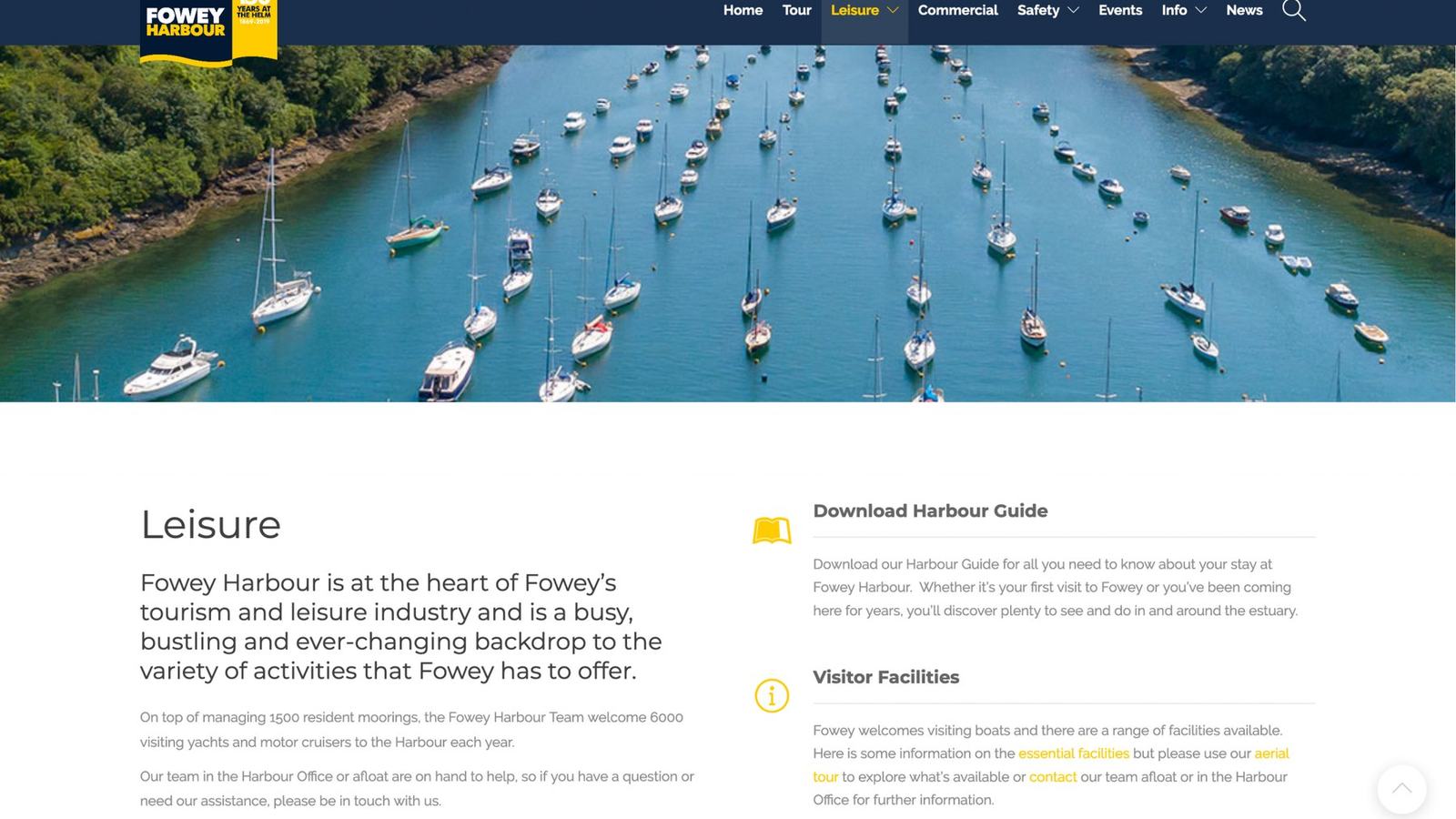
Fowey Harbour welcomes visiting yachts and motor cruisers to a busy Cornish estuary. Explore the authority's 2026 mooring and visitor guidance, shore-linked pontoons, launching services and practical ideas for enjoying the town.
A working Cornish harbour that welcomes visitors
Fowey on Cornwall's south coast combines a busy harbour with a town that rewards exploration on foot. Visiting by yacht or motor cruiser offers a different sense of arrival from travelling by road: the town, waterfront and estuary become the setting for a stay rather than a place seen only from a car park. The harbour's own leisure information describes a significant visitor operation alongside its resident boating community, making this a destination that is used to welcoming crews of different kinds.
Fowey Harbour says it manages around 1,500 resident moorings and welcomes approximately 6,000 visiting yachts and motor cruisers each year. Those figures indicate a substantial leisure boating presence, but they should not be mistaken for an assurance that a particular berth will be free on a chosen date. This guide is based on the harbour authority's 2026 visitor information and concentrates on how to think about a practical visit, from arriving safely to enjoying the waterside community and leaving the harbour in good order.
Start planning with the official harbour guide
The first useful step for a visiting skipper is to consult the harbour authority rather than relying on a general travel description. Fowey Harbour publishes a 2026 Harbour Guide and maintains separate pages for visitor facilities, safety, harbour notices, weather and tides. That collection of primary information is more relevant to a real passage than an attractive photograph or a list of recommended restaurants. It brings together the practical questions that can determine whether a visit is comfortable and safe.
Crews should check the latest navigation notices, tidal information and forecast before departing, and again as the arrival approaches. A leisure feature cannot provide a safe entry instruction for changing conditions, different vessel drafts or unfamiliar equipment. The harbour office and afloat team are available to help visitors; the authority lists telephone contact and VHF Channel 12. It is worth keeping these details accessible at the helm and using the most current official guidance rather than an old printed itinerary.
Moorings and the difference between visitors and residents
A harbour that accommodates many resident craft can have a varied pattern of moorings, pontoons and operating arrangements. Fowey Harbour explains that it maintains 1,500 resident moorings and has waiting lists for permanent berthing. That information is useful context for visitors: a busy local boating community shares the water with the people arriving for one night, a weekend or a longer stay. It is sensible to approach mooring plans with flexibility and an understanding that individual arrangements may depend on availability.
The authority's visitor facilities information should determine the correct option for a particular vessel. Draft, overall length, tender use, access ashore and the likelihood of needing services all affect the ideal berth. Rather than assuming a pontoon is available, visiting crews can contact the Harbour Office for advice and learn what to expect at the intended arrival time. Once moored, the reward is an opportunity to explore the estuary without needing to relocate accommodation each time the crew wants a different view.
Pontoons and practical access ashore
Fowey Harbour identifies shore-linked pontoons at Albert Quay, Berrill's Yard and Polruan, with published rules governing their use. This is a valuable distinction for anyone who prefers to walk ashore or needs an easy route for provisions. The presence of a pontoon is not, however, an invitation to occupy it without checking whether it is intended for the vessel and duration in question. The authority directs users to the applicable rules, and the purpose and availability of each facility should be confirmed.
For a crew, the practical conversation should include where passengers may embark, how luggage will be moved and whether the chosen arrangement requires a tender. Accessibility matters too: a family with young children, people carrying shopping or a guest with reduced mobility may have very different needs from a crew happy to use a dinghy. A convenient landing place can transform the experience of a short harbour visit, but responsible use means leaving access clear and following local instructions.
What the harbour charges cover
The harbour authority describes visitor costs as including elements such as harbour dues and a mooring fee. It directs boaters to its published schedule of current charges rather than suggesting that one flat price applies to every visit. That is a reminder to compare the full cost of a proposed stay, including the type of mooring and any services that may be required. Prices can change over time, particularly across seasons, so old figures quoted elsewhere should not be treated as binding.
Fowey Harbour also advertises a loyalty arrangement under which every seventh night is free for regular visitors, subject to the authority's current conditions. Its afloat harbour patrol team can take card payments, which may simplify the process for a visiting skipper. Still, the correct approach is to check eligibility, charges and payment procedures in advance, then follow the official instructions once on site. Paying the relevant dues contributes to the operation of facilities used by both visiting boats and the broader harbour community.
The appeal of Fowey and Polruan
Fowey is attractive as a boating destination because the harbour connects water and town so closely. A crew can make the vessel secure and then choose a walk, a meal or time simply watching the traffic on the estuary. Across the water, Polruan adds another perspective on the same maritime landscape. The harbour authority's references to facilities there underline that a visit need not be confined to a single stretch of quay, although all movements should be planned around local transport arrangements.
The most satisfying harbour days often contain very little formal sightseeing. Someone may want a long lunch, another a short walk and a third a quiet afternoon aboard watching ferries and working craft. A small-boat holiday makes those different interests easier to combine when expectations are discussed early. It is helpful to plan the shore outing around daylight, the crew's ability to return to the vessel and any constraints associated with the mooring, rather than treating the waterfront like a conventional city hotel.
A destination for boating groups and rallies
Fowey Harbour says it welcomes cruiser and motor-cruiser rallies and yacht races, which suggests an established relationship with sailing clubs and organised visiting groups. A rally can be an enjoyable way for newer coastal cruisers to discover a harbour alongside people with more experience. It also creates logistical demands. Several vessels arriving at once may have different sizes, drafts and arrival times, so early communication with the harbour team is especially valuable.
Club organisers should provide clear information about the number and type of boats, expected arrival window and any special needs within the group. Participants still have individual responsibilities for navigation and safe boat handling. A good rally programme leaves space for crews to enjoy Fowey independently rather than filling every hour with organised activity. The harbour's mix of facilities and a walkable coastal town can make it particularly suited to a stop where the social programme is as important as the passage itself.
Launching, storage and smaller craft
Not every visitor to Fowey arrives aboard a cruising yacht. The harbour authority offers information about launching and storage and identifies operating sites at Penmarlam Boat Park, Brazen Island and North Street Yard. At Penmarlam, it says packages can include launching and recovery by the harbour team, arranged in advance. That opens a different type of holiday: an owner may bring a small boat to Cornwall, store or launch it locally and use it for day trips instead of making a lengthy passage along the coast.
The same planning principles still apply. A trailer boat needs an appropriate launch arrangement, secure parking or storage, attention to tidal limits and an understanding of local safety rules. Kayakers and paddleboarders should consult the harbour's dedicated paddlesports information before using busy channels. Sharing an estuary responsibly requires awareness of other traffic, the limitations of smaller craft and changing weather. The pleasure comes from being able to enjoy the water at a pace suited to the vessel, not from treating all boats as interchangeable.
International arrivals and the paperwork
Fowey Harbour's visitor information includes a specific reminder for pleasure craft entering from outside the United Kingdom. It directs those responsible for such vessels to the relevant HM Revenue and Customs reporting arrangements and notes that the former downloadable C1331 form has been replaced by a digital process. That is not merely an administrative footnote for crews arriving across the Channel or from another overseas port. Reporting rules should be checked before the passage begins.
Because border, customs and immigration requirements can change, boaters should consult the current government guidance and verify which declarations apply to their particular voyage and crew. An ordinary coastal holiday within the UK raises different questions from an international arrival, and a generic online guide cannot determine the answer for every case. Working through the paperwork in advance is preferable to trying to resolve uncertainty after reaching a busy harbour. Harbour staff can explain local arrangements, while official government channels remain the authority for entry obligations.
Building a relaxed visit around sound seamanship
A successful stay at Fowey starts with sensible passage planning and ends with consideration for the harbour and people who use it every day. Crews should give themselves enough time to make the approach, secure the vessel and learn the practical arrangements before beginning their time ashore. Checking official notices, weather, tides, charges and availability may seem less romantic than browsing photographs, but these details create the conditions for an enjoyable holiday once the boat is safely settled.
For a first visit, the simplest plan may be to allow more than one day rather than hurrying on immediately. That gives everyone a chance to enjoy the town, look towards Polruan and appreciate the busy Cornish estuary without turning a stopover into a checklist. The figures published by Fowey Harbour show that thousands of cruising boats make a visit each year. The independent advice is to let the authority's current guidance shape the practical decisions, while leaving the rest of the stay open to discovery.
Source: Fowey Harbour — Leisure Information and Harbour Guide 2026.