
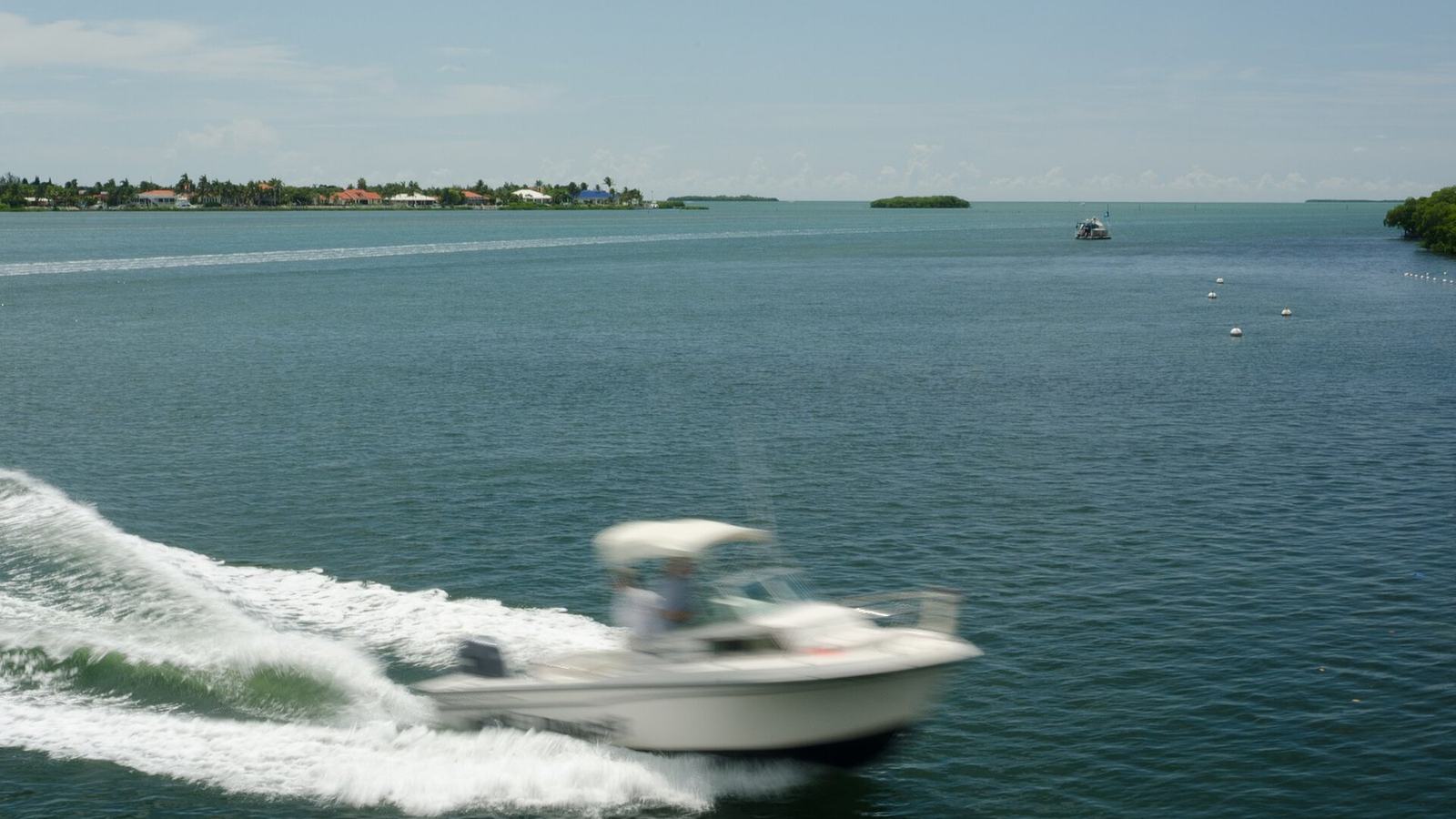
How to enjoy a Florida Keys small-boat reef outing with correct charts, sanctuary mooring buoys, seagrass protection and weather-aware planning.
The reef is the reason for the journey
A small boat can make a Florida Keys holiday wonderfully personal. A family can choose a quiet early start, a short crossing to an appropriate recreational area and time to watch the water change colour over sand and coral. The attraction is obvious, but so is the responsibility. Florida Keys National Marine Sanctuary protects a complicated seascape of reefs, seagrass beds and shallow banks, and its guidance warns that groundings can damage habitat and boats alike. An uncomplicated day therefore begins long before the first snorkeller enters the water.
For the owner of a centre-console, trailer boat or compact cruising craft, the best plan is rarely to chase as many spots as possible. Select one or two suitable areas, understand the rules applying to each, and leave ample time to return. Some popular reef locations have sanctuary mooring buoys, while others have stricter access or fishing rules. The scale of the sanctuary makes it especially important to treat a general holiday article as inspiration, not a navigational chart or a guarantee of permission.
Start with sanctuary maps and local rules
The National Oceanic and Atmospheric Administration provides official boating information and sanctuary regulations for the Florida Keys. Read them together with current nautical charts, Coast Guard information, local weather and Florida boating requirements. Marine protected areas are not identical: a practice permitted in one part of the Keys may be prohibited in another. Check whether the selected location is a sanctuary preservation area, a wildlife management area or an area with specific anchoring or activity limits.
This matters particularly for mixed days involving swimming, snorkelling and fishing. The existence of fish below the boat does not imply that fishing is allowed. Some reef zones protect sensitive life with restrictions that differ from nearby general-use water. Mooring, diving and the operation of watercraft can also be subject to local rules. If the day's party wants to fish as well as snorkel, choose the locations on the basis of the current regulatory map, not on memory of a previous season.
Mooring buoys protect the bottom
One of the sanctuary's most practical services is its mooring buoy programme. NOAA explains that the buoys allow boaters to visit popular reefs without dropping anchors into living coral. It maintains an online map showing buoy locations and publishes guidance on using them. Check that the intended buoy is suitable for your vessel and conditions, then approach slowly with the crew ready to handle a line. These are shared facilities, not private overnight moorings or substitutes for safe navigation.
If a buoy is occupied, do not crowd the vessel using it or improvise an attachment to another boat. Have an alternative site or a safe return route. NOAA advises that, where anchoring is permitted outside no-anchor areas, sandy bottom away from coral and seagrass should be used. That is not permission to anchor anywhere a sandy patch appears. The helmsman must still verify the zone, depth, conditions and surrounding traffic. A reef's apparent beauty should never override the protection that makes it worth visiting.
A shallow-water mindset
The Keys are famous for deceptively shallow water, flats and narrow passages. Sunlight and clear water can distort depth perception, while a colour change may indicate a habitat that a propeller or keel can easily damage. A vessel with modest draft is not immune to grounding. Build a route around dependable charted channels, mark the return and avoid using a high-speed run to test an uncertain shortcut. Watch the tide and daylight, especially where the margin under the hull is small.
Shallow-water navigation is also an exercise in patience with other users. Expect kayaks, small fishing skiffs, dive boats and swimmers near accessible shorelines. Respect idle-speed and no-wake areas, and reduce speed further whenever visibility or traffic calls for it. One vessel's wake can unsettle another's boarding ladder or make a person in the water difficult to spot. A leisurely cruise is successful when the reef, other visitors and the boat are all left unharmed.
The morning weather decision
Good visibility over a reef does not mean the boat will have a comfortable passage out and back. Check the marine forecast for wind direction, wave conditions, storms and any advisories, using the conditions expected at the time of return. Small craft can be particularly uncomfortable when a moderate breeze opposes a current. Consider the exposure of the destination and the number of sheltered alternatives available. If the boat will spend time at a buoy, assess whether it will lie safely there as conditions evolve.
An early start may offer gentler temperatures and leave a longer margin before convective afternoon weather, but it should never be treated as an assurance of calm. Thunderstorms, squalls and changes in visibility require respect in any season. Before leaving, share the plan and return time with someone ashore. Agree with the guests that the skipper will abandon the reef stop if the forecast or actual conditions are unfavourable. A postponed snorkel is cheaper than a rescue.
Snorkelling from a modest boat
Where swimming and snorkelling are allowed, a small boat can be a convenient base if the boarding arrangements are genuinely safe. Establish a lookout who remains aboard, stop the engine before anyone enters or leaves the water and make sure there is a practical ladder or recovery method for every participant. A person who can climb aboard easily at a dock may struggle after a long swim in moving water. Use appropriate flotation and stay within the comfort of the least confident swimmer.
Brief the group about current, boat traffic and the exact area in which they may swim. Nobody should touch coral, chase wildlife or stand on reef structures. Fins can damage fragile growth even when their wearer thinks they are floating clear. A well-managed snorkel visit is about watching, not collecting. If the current proves stronger than expected, end the activity promptly. The boat should remain a safe platform, not another complication for people already exerting themselves in the water.
Fishing is a separate plan
A fishing rod aboard a family boat does not automatically turn every reef into a lawful fishing spot. Review NOAA sanctuary restrictions and current Florida Fish and Wildlife Conservation Commission rules before selecting tackle or bait. Limits, methods, species protections and closed areas can change. If the day's main activity is visiting a protected reef, it may be simpler to leave fishing for a different stop with clearly permitted conditions. Trying to combine everything can make the crew rush and the skipper inattentive.
If fishing is part of the itinerary, designate a place to handle hooks and equipment so swimmers are never near exposed tackle. Keep fishing line, plastic and other waste secured for disposal ashore. Practise careful release when required, and make sure the person at the helm continues watching the surroundings. The best leisure boats are versatile, but versatility does not remove the need to separate incompatible activities in time and space.
What to bring for a reef day
Make the safety equipment fit the vessel and passage, including properly fitted personal flotation devices, reliable communication, navigation, signalling equipment and a way to summon help. Add sun protection that can be used without contaminating the water, drinking water, food, shade where practicable, and a first-aid kit. Bring an extra dry bag for phones, clothing and waste. Salt, glare and motion tire people more quickly than they expect, even when nobody is undertaking a strenuous activity.
For an outboard boat, inspect fuel supply, engine cooling, steering and the propeller before departure. Carry enough reserve for detours and slow running, and know the nearest practical refuge. Explain the boarding ladder, engine-off procedure and the location of all safety equipment to passengers. If children are aboard, assign an adult to supervise them rather than assuming the skipper can simultaneously watch the chart, handle a buoy and monitor every person in the water.
Treat the ocean as a shared place
Florida Keys reef tourism depends on the health of its marine environment. Avoid grounding on grass flats, never anchor in living coral and respect protected areas even if another boater appears to be ignoring the rules. Do not chase dolphins, turtles or other wildlife for photographs. Keep a safe distance and let animals choose whether to approach. Collect all packaging and discarded gear before the boat moves. A loose snack wrapper or length of fishing line can persist long after the day is forgotten.
There is also a social responsibility. Keep a respectful distance from divers, leave space around occupied buoys and use the radio appropriately. The reefs are visited by commercial operators, residents and people on their first small-boat outing. A low-wake, unhurried approach improves everyone's experience. When a location feels crowded, a decision to leave may protect both the reef and the family's enjoyment better than squeezing into a small opening.
A reef day worth repeating
The most satisfying Florida Keys itinerary may be almost minimal: a careful departure, a short cruise through known water, a properly used sanctuary mooring where allowed, a peaceful snorkel and a relaxed return. Plan an alternative activity ashore in case weather or mooring availability makes the preferred trip unsuitable. A reef visit is not diminished by prioritising good judgement. Often it is precisely the ease and confidence of a well-run day that persuades the family to go boating again.
Before every trip, consult NOAA's Florida Keys National Marine Sanctuary boating page, its current mooring-buoy map and the sanctuary regulations. Cross-check with the charts, marine weather, local notices and state requirements relevant to the boat. Conditions, rules and buoy availability may change; this feature is not an instruction to navigate to any particular reef. A small boat gives extraordinary access, but the lasting privilege is to enjoy the Keys while leaving their coral and seagrass intact.
Sources and picture credit
Primary guidance: Florida Keys National Marine Sanctuary (NOAA). Further official information: reference 1; reference 2; reference 3.
Lead photograph: EdoDodo / Wikimedia Commons, CC BY-SA 3.0; image resized and recompressed for web publication, shared under the same licence.
