
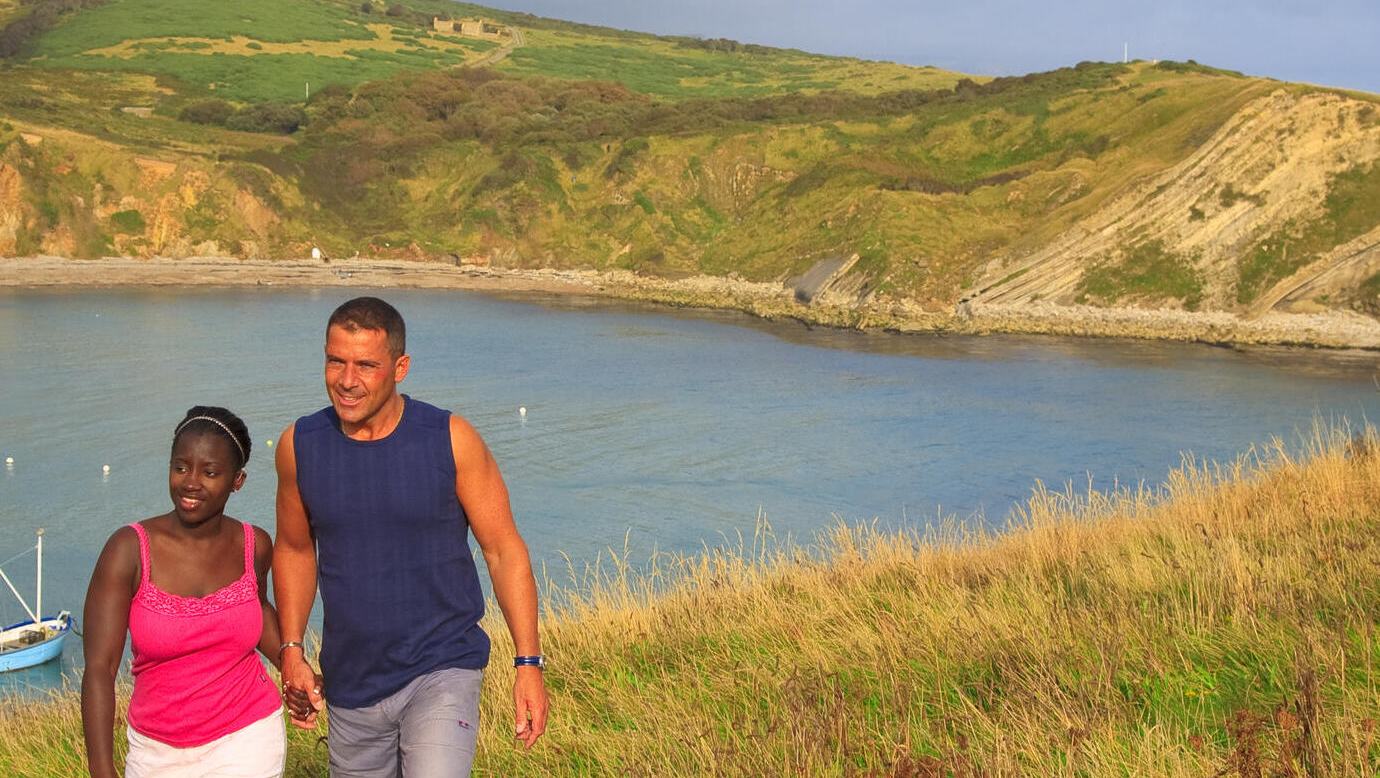
A voyage from Weymouth reveals Durdle Door, Lulworth Cove and Dorset's layered cliffs from a compelling new angle—but safe planning and MOD sea restrictions matter.
The Jurassic Coast looks different from a small boat
A Dorset boat trip offers a sense of the Jurassic Coast that even an excellent clifftop walk cannot quite match. From the sea, folded rock layers rise above the water, small beaches sit beneath high slopes, and Durdle Door becomes a landmark approached from a changing angle rather than a fixed viewpoint. The experience is about watching the coastline reveal itself gradually, with the skipper choosing distance and pace to match the conditions.
Weymouth provides a practical starting point for this kind of excursion. Its harbour, quayside and nearby bay are an enjoyable part of the journey before the boat turns towards Lulworth. Visitors who are interested in the working life of a harbour will find the departure as appealing as the headline scenery. The important choice is between an organised sightseeing trip, a private charter with a local skipper and taking one's own boat; the responsibilities are not the same.
Leaving Weymouth Harbour
A typical sightseeing route begins among the waterside buildings and harbour activity of Weymouth. Once clear of the entrance, the broad curve of Weymouth Bay opens up, with Portland visible behind and the coastline stretching east. Local operator Snapper Charters describes a passage past Ringstead and Osmington, towards the white cliffs of White Nothe and the celebrated limestone formations beyond.
That operator advertises an approximately two-and-a-half-hour Jurassic Coast sightseeing cruise, but its particular itinerary and availability should always be checked at booking. Autumn and winter conditions can shorten the useful cruising window, and not every scheduled departure will run. It is better to select a suitable weather day than insist on a particular date simply because travel and accommodation have already been arranged.
Travellers who value commentary or onboard refreshments should ask about them specifically. Some coastal trips are primarily scenic, while others offer different levels of interpretation or private-hire options. Families will also want to confirm the vessel's boarding arrangements, whether suitable lifejackets are provided for every passenger and how the skipper manages seasickness or reduced mobility.
Durdle Door as a view from the water
Durdle Door is a dramatic natural stone arch, but an enjoyable view does not depend on steering a boat through it. Seeing the arch in profile from an appropriate distance highlights the contrast between the curved formation and the straighter lines of the surrounding cliffs. A skipper can slow or hold position when conditions permit, allowing everyone aboard to appreciate the shape without unnecessary close-quarters manoeuvring.
The shore around Durdle Door should not be treated like a conventional sheltered landing. Swell, steep shores, changing weather and other traffic can make a close approach unsuitable even when a photograph looks inviting. The most responsible approach is to make the waterborne view the destination in itself. Anyone wanting time on the beach should plan a separate land visit and use the official access guidance from Lulworth Estate.
Photography is often better when the boat remains steady at a comfortable distance. A mobile telephone or small camera is easier to manage than elaborate equipment on an open deck, and a clear horizon can help capture the scale. Keep the skipper's sightlines unobstructed and secure loose objects. A good photo is never worth passengers leaning beyond the rail or demanding a risky position.
Lulworth Cove and the story in the rocks
Near Durdle Door, Lulworth Cove presents an entirely different coastal form: a near-circular inlet cut into the limestone and surrounding geology. The shape makes a striking comparison with the arch, demonstrating how waves and the different resistance of rock layers shape the shoreline. It is one of the reasons this section of Dorset has long attracted visitors interested in the Earth's history as well as boating.
A sightseeing cruise may offer a view into the cove, subject to marine conditions and the operator's route. This does not imply that every vessel can enter, anchor or put passengers ashore. The cove can be busy with swimmers, small craft and other visitors in suitable weather; responsible skippers should respect those using the water and maintain a safe separation from shore.
For travellers combining sea and land, the Lulworth Cove Visitor Centre provides another perspective on local geology and the landscape. The estate says it explains the history of the coastline and the way the coves were formed. A shore visit can therefore add real depth to what was seen from the boat, rather than becoming another photograph stop.
Why the military sea danger area matters
There is a serious planning issue east of Lulworth that casual sightseeing descriptions sometimes understate. The Ministry of Defence operates the Lulworth ranges, with an associated sea danger area when live firing takes place. Dorset Council's guidance for mariners explains that the affected waters extend offshore and that vessels must remain outside the danger area during firing. The MOD publishes current firing information and warning arrangements, including signals that should not be ignored.
The precise sea boundary and current status belong in the skipper's navigational planning using official notices, charts and live advice. A planned non-firing day is not permission to disregard warning signals, nor should an old timetable be assumed valid for a future outing. The safest sightseeing choice is a licensed local operator that monitors the restrictions as part of normal passage planning. An independent skipper must do the same work rather than rely on the route described by a travel article.
Snapper Charters explicitly notes that Mupe Bay may be unavailable on some journeys. That is a useful reminder that the route has genuine operational constraints rather than a fixed list of places guaranteed on every booking. No traveller should press a skipper to proceed into restricted water merely to complete an advertised itinerary.
Choose between a shared cruise and a private outing
A shared sightseeing trip is straightforward for visitors who simply want to enjoy the view. It can provide an introduction to the coastline without hiring a larger vessel or having to navigate unfamiliar waters. Before paying, check the departure harbour, trip duration, passenger limit, age requirements and the cancellation policy for weather. It is also worth asking how much of the route is outside the harbour and whether there is sheltered seating.
A privately skippered trip suits a group that wants to shape the pace around young children, photographers or people who prefer short periods offshore. The skipper can still decline requests when the weather, sea state or restrictions make them unsuitable. Private hire should be understood as a chance to tailor the experience within safe limits, not as a promise of access to every inlet or landmark.
Taking an independently operated leisure boat requires more preparation. Harbour procedures, tides, forecast sea conditions, charted hazards, communications and the MOD exclusion area all matter. The coastline is not a place to improvise a route from photographs or promotional maps. Local harbour authorities, current nautical publications and official notices should take precedence over visitor-oriented descriptions such as this one.
Wildlife, cliffs and a lighter footprint
The waters off Dorset may reward patient observers with seabirds and occasional marine mammals, but encounters cannot be guaranteed. Boats should neither pursue wildlife nor crowd cliffs where birds may be resting or nesting. The region's tourism guidance encourages respectful wildlife watching from boat trips and reminds visitors that a close encounter is not always the best encounter. Time spent observing quietly can be more satisfying than repeated high-speed passes.
Geological formations also deserve space. Rockfalls are a natural process along the Jurassic Coast, and the spectacular appearance of a cliff is no assurance that the water or shore immediately beneath it is safe. Passengers should resist requests to edge directly under unstable faces. Stay clear of debris and avoid treating the base of a cliff as an attractive impromptu landing.
The practical preparations are ordinary but worthwhile: layered clothing, non-slip footwear, sun protection even on cooler days, and a secure bag for cameras. A vessel's open deck can feel much colder than the shore, particularly after it accelerates. Guests who are uncertain about motion sickness can discuss suitable preventive measures with a qualified professional ahead of travel.
Make a memorable day without rushing it
The most enjoyable plan may begin with a relaxed arrival in Weymouth, a harbour-side coffee and time to meet the operator before boarding. A coastal cruise then becomes the day's principal activity, leaving room afterwards for a meal in town or a separate visit to Lulworth by road. Trying to combine several distant attractions before and after an unpredictable sea trip risks turning a beautiful outing into a timetable exercise.
Check the weather and provider's instructions on the day, bring enough time for parking or public transport, and accept a safe cancellation if conditions deteriorate. A knowledgeable local skipper can turn a short voyage into a rich experience of geology, maritime life and coastal conservation. Durdle Door and Lulworth Cove will still be there another day; the goal is to see them well, not to see them at any cost.
Official information before you go
Visit Dorset's boat-tour directory lists passenger trips and private options, while Snapper Charters describes its Weymouth route and the possibility of changes near Mupe Bay. For shore visits, consult Lulworth Estate and its visitor centre information. These are the starting points for bookings and land access, rather than an assurance that any service runs on a chosen date.
For navigation and range restrictions, the authoritative references are the Ministry of Defence Lulworth firing notices and Dorset Council's information for mariners. Check current notices and sea conditions immediately before sailing, and follow the skipper's instructions throughout the trip.