
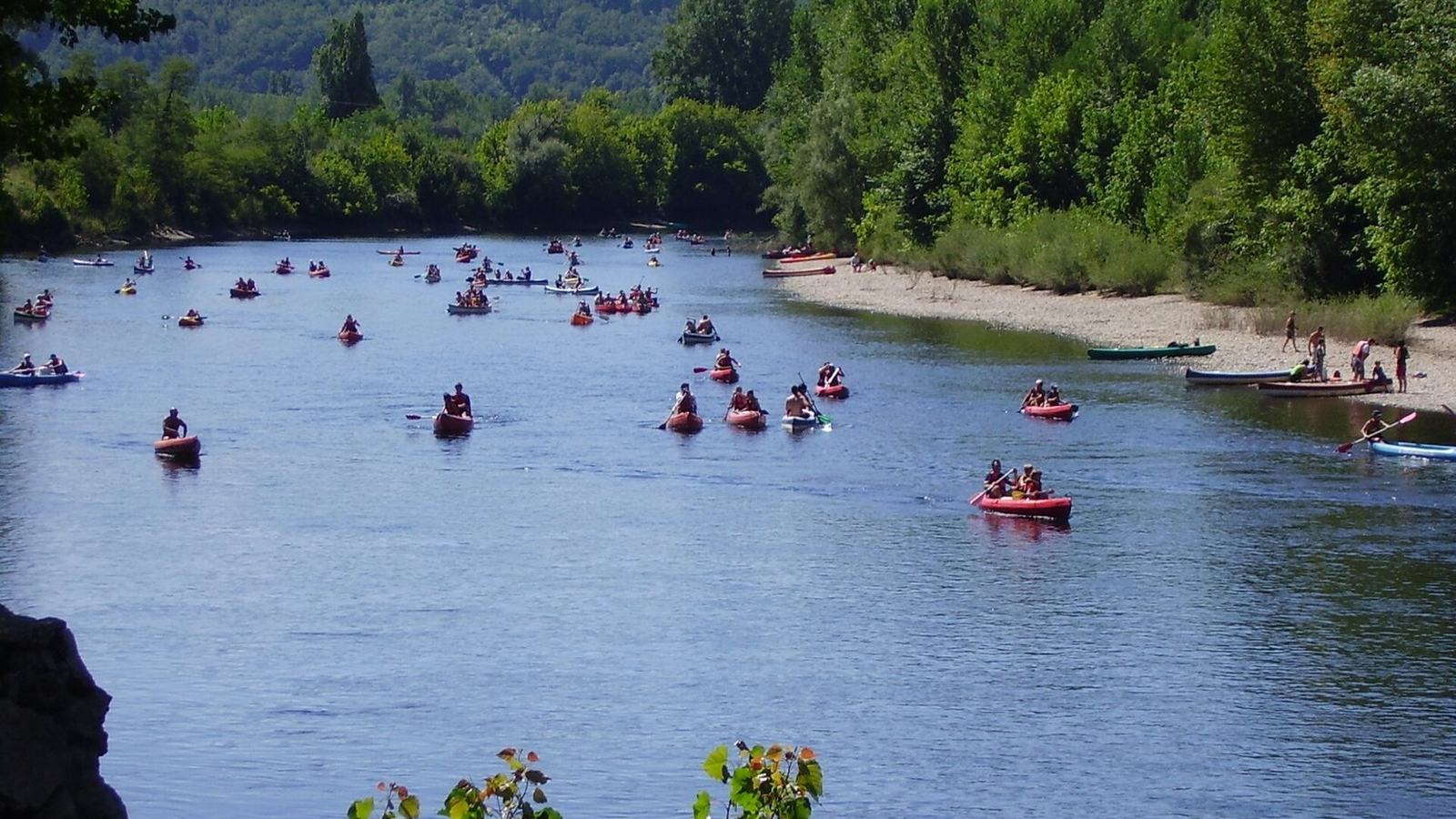
A Dordogne canoe-holiday guide covering La Roque-Gageac, Carsac and Beynac, with historic scenery, rental canoe options, river conditions and shuttles.
The Dordogne River in southwest France is an ideal place to discover why an unhurried canoe journey can become the centrepiece of a holiday. Between wooded banks, riverside villages and castles set high above the valley, the landscape combines natural beauty with centuries of human history. The official Dordogne Périgord tourism organisation describes canoeing opportunities from La Roque-Gageac and Carsac, including routes through some of the region's most recognisable scenery. Visitors do not need a high-performance boat to enjoy the area, but they do need to understand river conditions, hire arrangements and where a trip will end. A good route is chosen for its pace and safe stopping places rather than the longest possible distance.
The attraction of a village seen from the water
La Roque-Gageac is built along a striking stretch of the Dordogne, where buildings sit below steep cliffs and the river shapes the view. From a canoe, the village takes on a different perspective from that seen on the road. The slow motion of the current allows passengers to notice individual houses, terraces and boats while remaining conscious of the wider valley. It is a place to appreciate rather than rush past. A visitor should also remember that riverside landings can be busy and are not all public, so stopping for photographs or refreshments requires a permitted location rather than an arbitrary bank.
What the official tourism office confirms
Dordogne Périgord Tourisme lists canoe operators at La Roque-Gageac and explains that trips may begin in the village or farther upstream around Carsac. The site describes dramatic scenery and the succession of castles, as well as practical facilities such as parking and refreshments at an established canoe base. These details help visitors understand the kind of outing available without creating a false impression that one route is suitable in every condition. Operators can change trip options according to water level and their seasonal schedules. Before paying, ask for the current departure point, planned landing, estimated paddling time and how the return transfer is organised.
Carsac and the upper part of a holiday route
Beginning near Carsac can provide a longer outing toward the more famous riverside villages, depending on the route a hire operator offers. This can appeal to paddlers who want a fuller day on the water rather than a short introduction. The journey may include quieter countryside as well as busier places closer to major attractions. Its duration depends on the actual current, stops and the crew's ability, not just the distance shown on a map. A beginner should not automatically select the longest option because the company advertises it as a popular itinerary. A shorter stage can leave more time to explore a village and avoid an exhausting finish.
The skyline of Beynac
Beynac is celebrated for its castle on a height above the Dordogne, creating a memorable sight for travellers approaching from the river. The silhouette can make a canoe journey feel like a passage through a historic landscape, especially when the boat moves slowly enough for passengers to take in the whole scene. That sense of travelling through time is part of the region's tourist appeal. It is important, however, not to allow photography to distract from navigating the current. A crew should remain alert near other boats and bridges, choosing a safe line instead of positioning the canoe solely to obtain the most dramatic angle.
Castelnaud and the wider valley
Another castle associated with this part of the Dordogne is Castelnaud, set above the river in a landscape where historic settlements often occupy defensive positions. The relationship between the river and these monuments becomes particularly clear from a small boat. Canoeing offers the chance to see the cliffs and castles in context, although the precise route required to pass each landmark depends on the selected operator and launching point. A brochure image may show several locations that cannot all be visited during one short rental. Ask for a mapped itinerary and decide which views matter most. Choosing a clear route prevents disappointment when a destination turns out to be farther downstream than expected.
River travel is not a lake excursion
A river has a current that can affect every part of the journey, including how easily the boat reaches a landing. Even on a recreational stretch often used by families, shallows, rocks, fallen branches and changing flows require attention. An operator should explain how to steer around hazards and where not to paddle. Travellers accustomed to calm lakes may underestimate how quickly a canoe can be carried toward an obstacle when everyone stops paddling. The correct response is to look ahead, communicate clearly with a partner and avoid launching during conditions that exceed the crew's ability. Scenic surroundings do not eliminate the ordinary risks of moving water.
Choosing between canoe and kayak
A two-person canoe may suit a couple or a family wanting to share a boat, while a single kayak can appeal to someone who prefers individual control. The choice should reflect the route, experience and whether passengers can paddle reliably. A stable rental boat can be an excellent introduction, but stability is not a guarantee against capsizing. The provider should check that everyone has an appropriate flotation device and understands the basic strokes needed to stop, turn and keep the bow aligned with the current. Newcomers may benefit from a short practical demonstration before beginning a longer section. Learning a few skills can make the difference between a relaxed outing and repeated difficult manoeuvres.
The importance of shuttles and return transport
A recreational river journey often runs downstream from the launch to an agreed finish, with a shuttle returning people to their vehicles or accommodation. It should not be assumed that a family can simply turn the canoe around and paddle back against the current at the end. Confirm the pickup arrangements, collection point and time, and ask what happens if the crew arrives early or late. Many operators have systems for returning rental equipment, but the details differ. A clear agreement allows the boaters to enjoy planned stops without anxiety about missing a transfer. It also prevents the final hour from becoming a race through attractive scenery.
Water levels and seasonal conditions
The river's character changes with rain, water level and season. A low-flow summer outing may feel gentle, while higher water can increase the speed of the current and make certain sections unsuitable for beginners. A rental company may suspend operations or shorten available routes during poor conditions. This is a safety measure, not simply an inconvenience to a holidaymaker. Visitors should check the latest advice on the day, particularly if heavy rain has affected the catchment. Water temperature is another concern, since an unexpected capsize can be unpleasant even when the air is warm. A flexible itinerary with a land-based alternative is more sensible than insisting on boating whatever the conditions.
Bridges, banks and landing places
Historic villages are often linked by roads and bridges that add visual interest but can create navigation considerations. A canoeist should pay attention to bridge supports, changing currents and other water users, avoiding the temptation to stop beneath a structure for a photograph. Landing should be limited to places where public access or operator permission is clear. Banks can be steep, muddy or private, and an attractive gravel bar is not necessarily a suitable place to leave a boat unattended. Ask about authorised picnic stops before departure. A small amount of preparation makes it easier to enjoy the valley without damaging property or creating conflict with residents.
Taking a family on the river
Children can find a canoe trip exciting because the scenery changes continuously, but their comfort should determine the route. Each child needs correctly fitted flotation, suitable sun protection and enough food and water for the journey. Adults should explain where to sit and how to avoid sudden movements that unbalance the craft. Even an easy-looking route can become tiring if a child is frightened by a wave or the canoe passes close to a bank. Select a distance with time in reserve and arrange the return transport before launching. An enjoyable first experience can lead to future paddling holidays, while an overambitious day may discourage the whole family.
Combining the river with local food
The Dordogne region is widely associated with food, village markets and long lunches, and a canoe holiday can leave room for these pleasures. A short morning paddle followed by a meal in a riverside village may be more satisfying than spending all day in the boat. If the operator offers a picnic stop, ask whether food can be brought aboard and where landing is permitted. Keep packaging secured so it cannot fall into the river, and carry any rubbish out. A family wanting a leisurely lunch should avoid creating a schedule that depends on reaching a particular restaurant exactly on time. The river's pace is part of its attraction.
Observing wildlife without disturbance
The Dordogne's banks are also living habitat, with birds, fish and vegetation that can be affected by visitors. A canoe allows quiet observation, but paddlers should avoid approaching nests or entering sensitive shallows simply to get closer to animals. Binoculars can make wildlife watching rewarding without the need for an intrusive approach. Keep noise moderate, do not leave litter and avoid dragging boats across fragile riverbank plants. The region's beauty depends on more than its historic buildings. A responsible trip should leave the banks and water as undisturbed as possible for residents, wildlife and the next group of paddlers.
Photography from a moving craft
The combination of cliffs, castles and reflected houses makes the Dordogne especially photogenic, but a camera can become a distraction at exactly the wrong moment. A passenger is often better placed to take photographs while the paddler watches the river and steers. Phones should be kept in waterproof cases and equipment secured against falling overboard. If a particular view deserves more time, choose a safe part of the river rather than drifting into another canoe's path. Good images are usually possible without approaching a private landing or trying to paddle underneath an obstacle. Careful boat handling should remain the first priority.
Why an organised hire can help
An established canoe business can advise on suitable routes and provide a practical solution to the problem of transporting the craft back upstream. For visitors arriving without local knowledge, this support is valuable. Choose a provider that explains safety equipment, route difficulty, weather cancellation and the end-of-trip procedure clearly. The cheapest offer is not necessarily the best if it leaves important details uncertain. Ask whether the quoted duration includes pauses or only time paddling, and make sure everyone knows what to do if the group cannot complete the journey. A careful handover gives holidaymakers more confidence once they leave the base.
Travelling through history at paddling speed
A Dordogne canoe outing offers a rare combination: the immediacy of a small craft on moving water and a landscape filled with old villages and castles. La Roque-Gageac and the views toward Beynac help make the journey distinctive, but the pleasure comes from more than a list of landmarks. Choose a recognised operator, understand river conditions, wear suitable flotation and confirm the shuttle before starting. Allow time to drift past the scenery at a measured pace without sacrificing attention to the current. For a family or a couple seeking a small-boat holiday, a carefully selected Dordogne stage can be both accessible and memorable.
Sources and photograph attribution
Official destination and boating guidance: Dordogne Périgord Tourism — Canoë Vacances, La Roque-Gageac. Current access, rules, weather and reservations must be checked independently before travel.
Photograph: Joan Vilafranca — “Riu Dordogne - La Roque de Gageac - panoramio.jpg” (CC BY-SA 3.0), via Wikimedia Commons. Resized and converted to JPEG for editorial display. Source: https://commons.wikimedia.org/wiki/File:Riu_Dordogne_-_La_Roque_de_Gageac_-_panoramio.jpg. Licence: https://creativecommons.org/licenses/by-sa/3.0. Original rights remain with the credited creator or as specified by the source and licence.
