
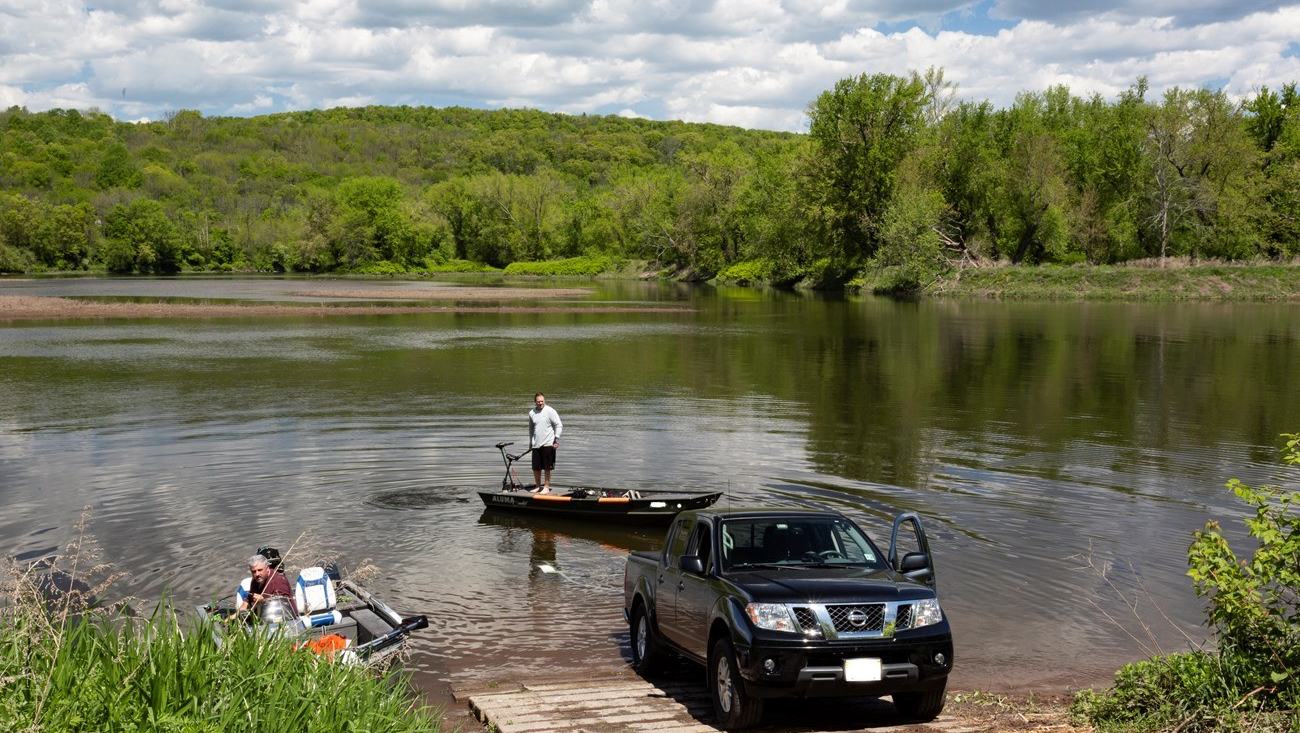
Delaware Water Gap National Recreation Area offers accessible river boating near the Pocono Mountains, with different craft sharing its scenic protected waters.
A scenic river between two states
Delaware Water Gap National Recreation Area protects a stretch of the Delaware River between Pennsylvania and New Jersey, where wooded banks and mountain scenery provide a setting for relaxed small-boat outings. The National Park Service describes the Middle Delaware as one of the more accessible water-recreation areas in the northeastern United States. Visitors travel by kayak, canoe, tube and appropriate motorboat depending on the chosen section and local rules.
The appeal is not limited to a long paddling expedition. A family with a suitable small fishing boat may enjoy a modest trip, while a couple in a canoe can focus on the natural scenery at a slower pace. The river is still a moving waterway, and each type of craft needs a route that matches its manoeuvrability and the crew's experience.
The character of the Middle Delaware
Much of the protected river passes through a relatively rural landscape, offering sections that may feel calm and welcoming. The scenery includes wooded hills and shorelines that change as the channel bends. The sense of space can be especially pleasing when a party travels at a comfortable pace without a crowded schedule.
That peaceful appearance should not be mistaken for the absence of current or hidden obstacles. Shallow rocks, tree debris and sudden changes in depth can affect a kayak or a propeller-driven boat. The skipper should keep watch for local hazards and avoid relying on a general description of the river as gentle without checking the actual conditions.
Poxono as a real launching scene
The official NPS photograph selected for this article shows a family handling small boats beside the Delaware at Poxono Boat Launch on Old Mine Road in New Jersey. It is an authentic illustration of the practical side of a river day, where loading, launching and organising passengers are just as important as the journey. The image depicts the destination and activity rather than a generic waterfront scene.
A launch can become busy when several groups arrive at once. Preparing safety equipment and securing supplies before occupying a ramp helps the process work smoothly for everyone. The crew should agree on where the outing ends and how any vehicles will be collected, since travelling back upstream may be difficult.
State regulations matter on shared waters
Because the river passes between states, operators need to understand the rules that apply to their vessel and chosen route. The Park Service explains that motorised boats, including those powered by electric motors, require appropriate state registration. A boat owner should confirm which authority's requirements apply before arriving with a small outboard or trolling motor.
Registration is not a substitute for safe operation or the relevant equipment. The vessel may need lighting, flotation, sound-producing devices or other fittings according to its size and propulsion. A short trip should be planned with the same seriousness as a longer cruise, particularly where other water users may be difficult to see.
Wake restrictions protect swimmers and paddlers
The NPS identifies no-wake requirements near designated swimming areas, including restrictions around Smithfield/Coppermine Pool and Milford Beach. Reducing speed near swimmers, kayaks, docks or narrow channels is an important part of boating courtesy, even outside an explicitly marked zone. A small motorboat can create a surprisingly disruptive wave relative to its size.
Paddlers also have responsibilities. Travelling predictably, making the craft visible and keeping clear of a faster vessel's manoeuvring area can reduce confusion. Good communication and awareness of the rules help different forms of recreation coexist along the same protected river.
A route should include the return logistics
Paddling downstream can make a day feel effortless at first, but a returning group may face current, wind or a long journey back to the vehicle. Visitors should decide on a suitable take-out and transport arrangement before launching. Local authorised outfitters may provide rentals or shuttles, helping people without their own equipment select a manageable route.
For family outings, a shorter reach with an uncomplicated ending may offer more enjoyment than attempting to cover a large distance. The crew should know where it can safely leave the water if conditions change, and a float plan left with someone ashore is useful when the return might be delayed.
Protecting the river corridor
Delaware Water Gap's protected setting supports wildlife and landscapes that attract visitors seeking time outdoors. Boaters can help by keeping rubbish, fishing line and fuel out of the water, respecting private property and using the permitted launch and landing locations. An attractive riverbank is not necessarily available for camping or an unplanned stop.
Invasive species are another reason to clean, drain and dry boats and equipment when moving between waterways. A small craft can carry organisms in wet gear or compartments even when its hull looks clean. A careful end-of-day routine protects the next place the owner visits.
A modest trip can feel like a real escape
The Delaware Water Gap demonstrates that a meaningful small-boat holiday does not require distant coasts or large vessels. A half-day paddle or gentle motorboat journey can bring woodland scenery, the sound of moving water and the companionship of a shared outing. The value lies in being present rather than collecting as many miles as possible.
The Park Service's current boating and safety guidance is the appropriate starting point for choosing a route, identifying permitted access and understanding the relevant state rules. With suitable equipment and a clear plan, families can enjoy this stretch of river responsibly while preserving the experience for those who follow.