
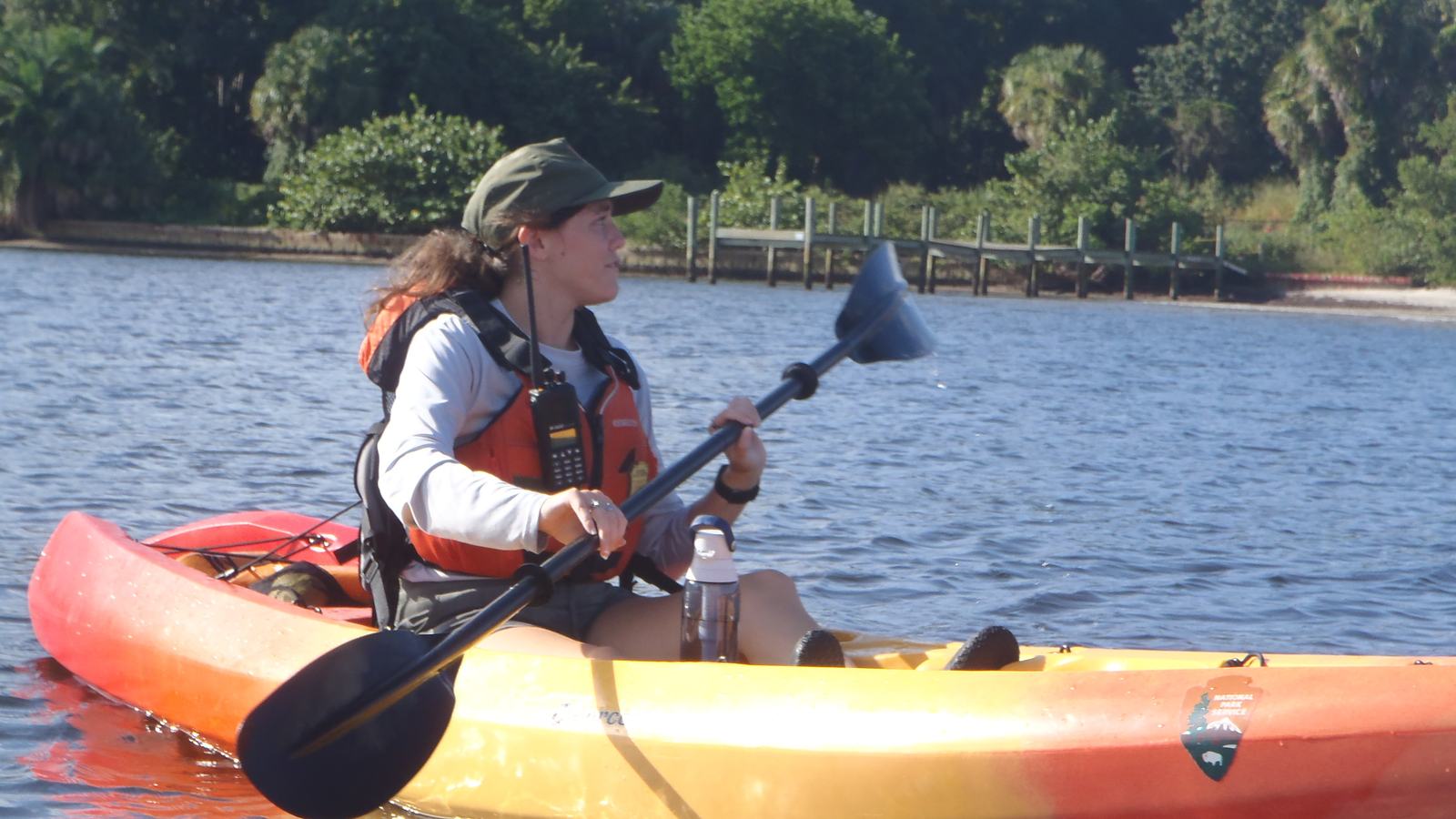
De Soto National Memorial offers a compact Manatee River paddling destination, with ranger-led kayak outings when scheduled, sheltered shores and useful boating rules.
A small coastal park with a waterborne character
De Soto National Memorial sits near the meeting of Florida's Manatee River and Tampa Bay, a setting that rewards visitors who approach the landscape with an awareness of tides and small-craft conditions. The protected historical site offers a modest and accessible introduction to an estuary that also supports active recreational boating.
Unlike a long-distance wilderness route, this is a place where a shorter experience can be satisfying. Visitors can divide time between the water, the paths and the shoreline, allowing the landscape to explain how river, bay and settlement have intersected through many periods of Florida history.
The park's published guidance identifies its Cove as a popular temporary anchorage for small pleasure boats. That should not be mistaken for a guarantee of space or suitable conditions, and skippers must consider local depths, currents and other users before planning a stop.
Ranger-led kayaking when tours operate
The National Park Service describes ranger-led kayak tours that usually last about an hour and a half and are intended for a range of paddling experience. The programme uses tandem kayaks and includes the necessary paddles and flotation devices, but places are limited and the advertised schedule can change.
The park's current visitor information says future tour dates will be announced separately, so a visitor must check the live booking page rather than assume a tour is running on arrival. Reservations are handled through Recreation.gov when tours are offered, and weather or hazardous water conditions can lead to cancellation.
The activity has participation requirements, including minimum age and weight thresholds for children and a maximum load for each tandem craft. These restrictions are important safety controls, not optional details, and anyone planning a family outing should read the current terms before organising the rest of the day.
Bringing a personal canoe or kayak
For paddlers travelling with their own hand-carried craft, the park permits canoes and kayaks to be launched from its beaches provided the activity does not damage vegetation, terrain or wildlife. That gives independent visitors a different option from a guided tour, though the responsibility for route choice and conditions rests with the paddler.
A suitable outing begins with a review of the tide, wind forecast, marine traffic and personal ability. Water that looks sheltered from a lawn can behave differently beyond the point, particularly where river flow meets the broader bay and the exposure increases.
Small craft should be properly equipped, with appropriate personal flotation devices, a means of communication and a clear return plan. The most enjoyable route is generally one that offers time to watch the shore without turning a short, relaxed paddle into an avoidable struggle against wind or current.
The difference between two beaches
De Soto Point Beach lies on the more exposed side towards the Manatee River and Tampa Bay, according to the park's descriptions. The Cove Beach is farther to the sheltered side of the point and tends to be a more comfortable place to observe the water, although conditions still vary.
Neither beach has lifeguard supervision, a fact worth remembering when children are present or when a party is tempted to swim as well as paddle. The decision to enter the water should be based on current conditions and individual competence rather than the apparent calm of the shoreline.
Boat operators should respect the park's restrictions on excessive wake and noisy motor use. A low-impact approach is particularly appropriate in a small visitor setting where people may be fishing, walking or enjoying the shore at very close quarters.
Making a useful day of the visit
A well-planned visit can pair a short guided activity, when available, with time to explore the monument's interpretation of the area's history. That combination offers greater value than driving a long distance for a quick photograph of a beach or waiting for a tour that was never confirmed.
Check opening times, any reservation requirements and the park's latest alerts before leaving home. Families may want to bring drinking water, weather protection and a change of clothes, while skippers should confirm where a temporary stop can be made without obstructing other vessels.
The charm of De Soto is its scale and its immediate relationship to the estuary. With sensible expectations and careful attention to the published boating rules, a modest paddling day can connect water, local history and the quieter side of Florida's Gulf Coast.
Visitors who have not paddled in tidal water before should consider joining a ranger programme instead of setting off independently. A guided outing can explain where currents are strongest, which shorelines deserve protection and when the best conditions may occur. If no tour is available, a land-based visit is still worthwhile, and there is no reason to treat a cancelled paddle as a failed day.
Respect for the historical site is as important as water safety. Stay on designated paths ashore, keep any beach launch low-impact and avoid leaving equipment where it blocks other visitors. In a compact park, thoughtful choices by individual boaters make a visible difference to the experience of everyone sharing the riverfront.