
A small-boat travel guide to Dalsland's Swedish forest lakes and historic canal, covering canoe trips, Håverud, safe routes, shore access and responsible outdoor travel.
Dalsland in western Sweden offers a particular kind of small-boat holiday: the pleasure of travelling slowly between forested shores, rocky islands and historic waterside settlements, with the canoe rather than the car setting the pace. Visit Sweden describes this province, between Norway and Lake Vänern, as a place whose lakes and canals make canoeing, boating and cycling accessible. Håverud and the Dalsland Canal provide a cultural focus, but the wider attraction is how easily a modest paddling journey can become a multi-day outdoor experience. This guide is intended for travellers planning an appropriate future season, not an invitation to assume that November's cold water and shortened daylight make every route suitable today.
A lake district with a different sense of distance
Dalsland's appeal begins with geography. The landscape combines long narrow lakes, woods, small settlements and waterways that can change character within a single day's travel. On a map, neighbouring lakes may look like a simple network. From a canoe, however, a crossing is experienced through wind direction, access points, shoreline shelter and the distance to the next safe landing. The result is a destination where a seemingly short outing benefits from careful planning. Visitors should choose a route around experience and conditions rather than trying to collect the greatest possible number of lakes in a weekend.
What Visit Sweden recommends
The national tourism organisation identifies Dalsland as one of Sweden's accessible outdoor regions and specifically names canoeing, boating and cycling among its activities. Its official destination description also points to Håverud and the Dalsland Canal, one of the area's defining engineering landmarks. These are more reliable starting points than anonymous itineraries that imply unrestricted access to every inlet. A visitor can use the official regional information to identify places of interest, then obtain current launch arrangements, boat-hire availability, lock schedules and local navigation advice from the relevant operator. Routes and seasonal services should be confirmed before travel.
The canal gives the wilderness a human story
A canoe journey in Dalsland can be more than a sequence of scenic photographs. Waterway infrastructure at Håverud and elsewhere tells a story of the region's trading and industrial past. A canal connects people as well as lakes: historic settlements developed around the movement of goods, timber and passengers, and contemporary visitors now experience some of those places at a far slower rhythm. The Håverud area works well as an interpretive stop on a wider trip, even for travellers who choose not to navigate a lock themselves. Historic canal works remain operational infrastructure, and visitors must follow the operator's instructions.
Why a canoe is especially suitable
A modest canoe allows a couple or small family to explore sheltered reaches without the noise and operating costs of a powerful engine. It offers room for a day bag, waterproof clothing and food, and it can encourage repeated stops for short walks or photography. That freedom is conditional: a loaded canoe requires skill to handle in crosswinds, and an apparently calm lake can develop uncomfortable chop. For beginners, a guided introductory outing or rental close to a supervised launch is more sensible than a remote point-to-point expedition. The right boat is the one the entire crew can manage safely, including at the end of a tiring day.
A day on the water is enough to understand the place
Not every visitor needs a wilderness itinerary. An unhurried day trip can begin with equipment checks, an early launch, a sheltered section of lake and a planned shoreline lunch. Allow time to turn around before weather or fatigue become an issue. A short route makes it possible to enjoy the details that are easily missed at speed: changing light across the forest, bird calls from a quiet bay and the contrast between clear shoreline water and deep open reaches. Choose an authorised landing area or one where local access rules allow a stop, and make sure the boat can be recovered without dragging it over sensitive vegetation.
Multi-day travel calls for a different level of preparation
Carrying overnight equipment turns a relaxing canoe trip into an exercise in organisation. Food, drinking water, spare clothing, sleeping gear and emergency supplies increase both weight and the time required to load and unload. Groups should decide how far they can realistically paddle before booking accommodation or camping arrangements. It is not safe to assume that every small island is an available campsite. Protected habitats, privately managed areas and designated sites may have additional rules. Ask local outfitters about permitted stopping places, fire restrictions and the practical consequences of bad weather delaying an intended journey.
Swedish outdoor access comes with responsibilities
Sweden is known for its tradition of public access to nature, often called *allemansrätten*. That principle is not a licence to disturb wildlife, damage private property or camp wherever a photograph looks attractive. Respect homes, agricultural land, protected nature reserves and local prohibitions. Take waste away, avoid loud behaviour near other visitors and check whether open fires or portable stoves are permitted under current conditions. A responsible canoe visitor should leave a landing area looking as though nobody had stopped there. The appeal of Dalsland depends substantially on quiet shores remaining attractive to both wildlife and the people who live nearby.
Locks and other vessels deserve respect
The Dalsland Canal is a working waterway that may be shared with larger recreational boats. A small canoe must stay visible and predictable around narrows, bridge approaches and lock facilities. Paddlers should learn the local rules and never enter a lock or approach moving gates without permission from the responsible operator. A larger craft may have limited space to manoeuvre and cannot necessarily stop quickly. Bright clothing and a suitable buoyancy aid help visibility, but they do not replace good judgement. If a complicated passage looks uncomfortable, there is no shame in choosing a different section or arranging an authorised portage.
Make the weather forecast part of the itinerary
Weather changes how far a canoe can travel in comfort and safety. Wind running along a narrow lake can create a surprisingly demanding paddle, particularly when the return journey is into it. Rain, fog and cooler temperatures can further reduce visibility and increase the consequences of an unexpected capsize. Check a local forecast on the day, consider wind direction rather than wind speed alone and agree clear turnaround criteria. A family canoe holiday should not depend on making a fixed distance regardless of conditions. The flexibility to spend an afternoon walking in a nearby village is a strength of a good itinerary, not a failure.
Cold water remains important outside winter
An inviting forest lake can stay cold well into the warmer months, and Dalsland's late-autumn conditions demand particular caution. Personal flotation equipment should be worn, not merely carried, and clothing should account for water temperature as well as the air. Anyone planning shoulder-season paddling should obtain local professional advice and use equipment appropriate to cold-water immersion. For most casual visitors, a late-spring or summer trip will offer more comfortable daylight and service availability. Even then, swimming or a capsize can be a serious event if people are far from a safe landing, so self-rescue planning remains essential.
The shore is part of the experience
Visit Sweden's destination guide links outdoor recreation with Dalsland's settlements and historical landscape. A holiday can combine a morning on the water with a cafe, a museum stop or a woodland walk later in the day. That combination is useful for mixed groups: one traveller may want a long paddle while another prefers to explore village streets or read beside the lake. Accommodation near a launch makes short sessions feasible without repeatedly transporting boats. Before choosing a base, establish whether the accommodation permits safe equipment storage and whether reaching the shore involves a public or private path.
Local food makes short journeys memorable
A canoe trip does not require elaborate outdoor cooking. A simple packed lunch and a thermos may be more enjoyable than spending time assembling a stove at a windswept landing. Where a route passes a village, local cafes can provide a break and reduce the weight carried from the start. Food waste must not be left for wildlife, and any fish caught should be handled according to local licensing and conservation rules. Planning easy meals also leaves space for dry clothing and safety equipment. The point of a Dalsland holiday is not to prove self-sufficiency at any cost, but to enjoy moving comfortably through a remarkable landscape.
Children can enjoy a carefully chosen first paddle
Dalsland's sheltered-looking lakes may appeal to families, but the distance to shore, variable wind and low water temperature deserve attention. Children need correctly fitted buoyancy aids and a boat appropriate to their age, size and ability. A guided trip with suitable equipment is often the best introduction. Keep the first outing short enough that everyone returns with energy and enthusiasm rather than exhaustion. Explain where passengers may sit, how to keep hands inside the boat at landings and what to do if the canoe becomes unstable. Avoid placing young paddlers under pressure to complete an adult's ambitious route.
A photograph is not a navigation chart
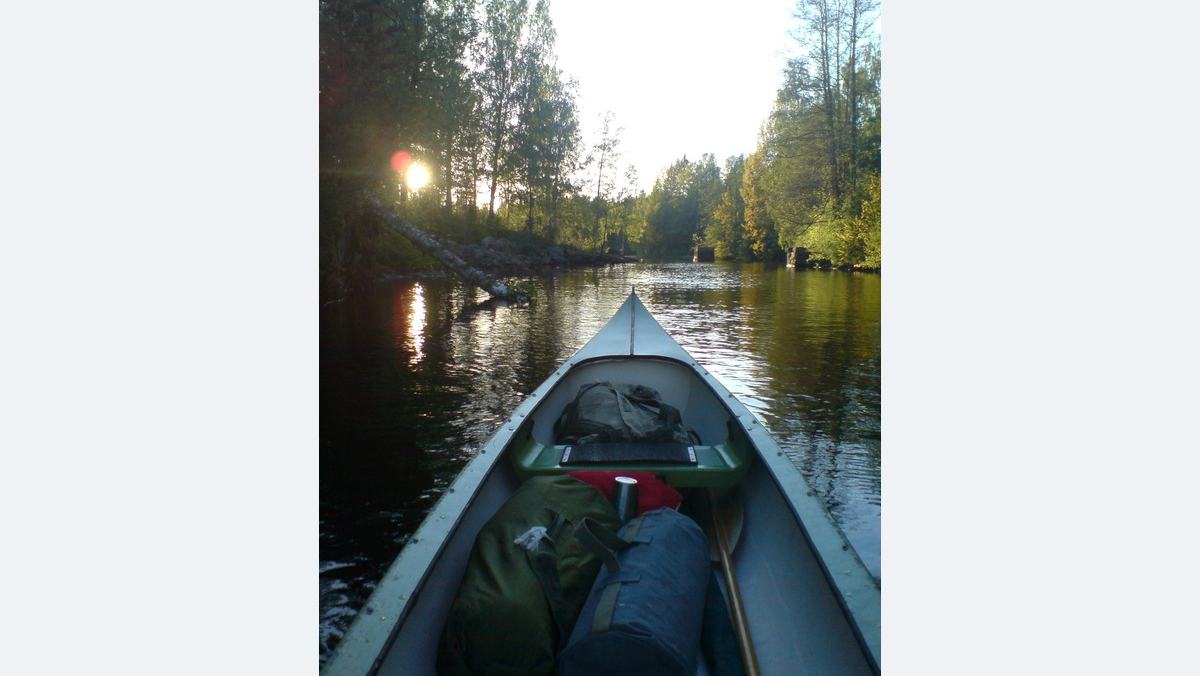
The accompanying destination photograph shows an actual canoe on the Dalsland Canal near Töcksfors. It is a documentary image by Robert Breivik, published through Wikimedia Commons under Creative Commons Attribution-ShareAlike 3.0 and credited with its licence. It illustrates the way a paddler experiences the canal at water level; it does not show present water depth, lock opening times or conditions on 23 November 2026. Such details must come from current local sources. The image's value is its authenticity and its direct relationship to the place, not a suggestion that an individual photograph can replace trip planning.
Planning a Dalsland boating holiday for 2027
Start with Visit Sweden's regional guide, choose a small section of lake or canal and then confirm current opening dates with a hire company or canal operator. Ask for a route suitable for the group's experience, including possible landing points and an alternative if conditions deteriorate. Arrange a means of communicating from the water and leave the intended plan with someone ashore. Add enough time to visit Håverud or explore local forest paths without racing between destinations. Dalsland rewards travellers who make measured decisions. A canoe need not travel far to create a sense of space, quiet and immersion in western Sweden's lake country.
Sources and photograph attribution
Official destination and boating guidance: Visit Sweden — Dalsland, forest lakes and canal. Current access, rules, weather and reservations must be checked independently before travel.
Photograph: Robert Breivik — “Dalslands kanal - Töcksfors - panoramio.jpg” (CC BY-SA 3.0), via Wikimedia Commons. Resized to JPEG 1200×800 for editorial display. Source: https://commons.wikimedia.org/wiki/File:Dalslands_kanal_-_T%C3%B6cksfors_-_panoramio.jpg. Licence: https://creativecommons.org/licenses/by-sa/3.0. Original rights remain with the credited creator or as specified by the source and licence.
