
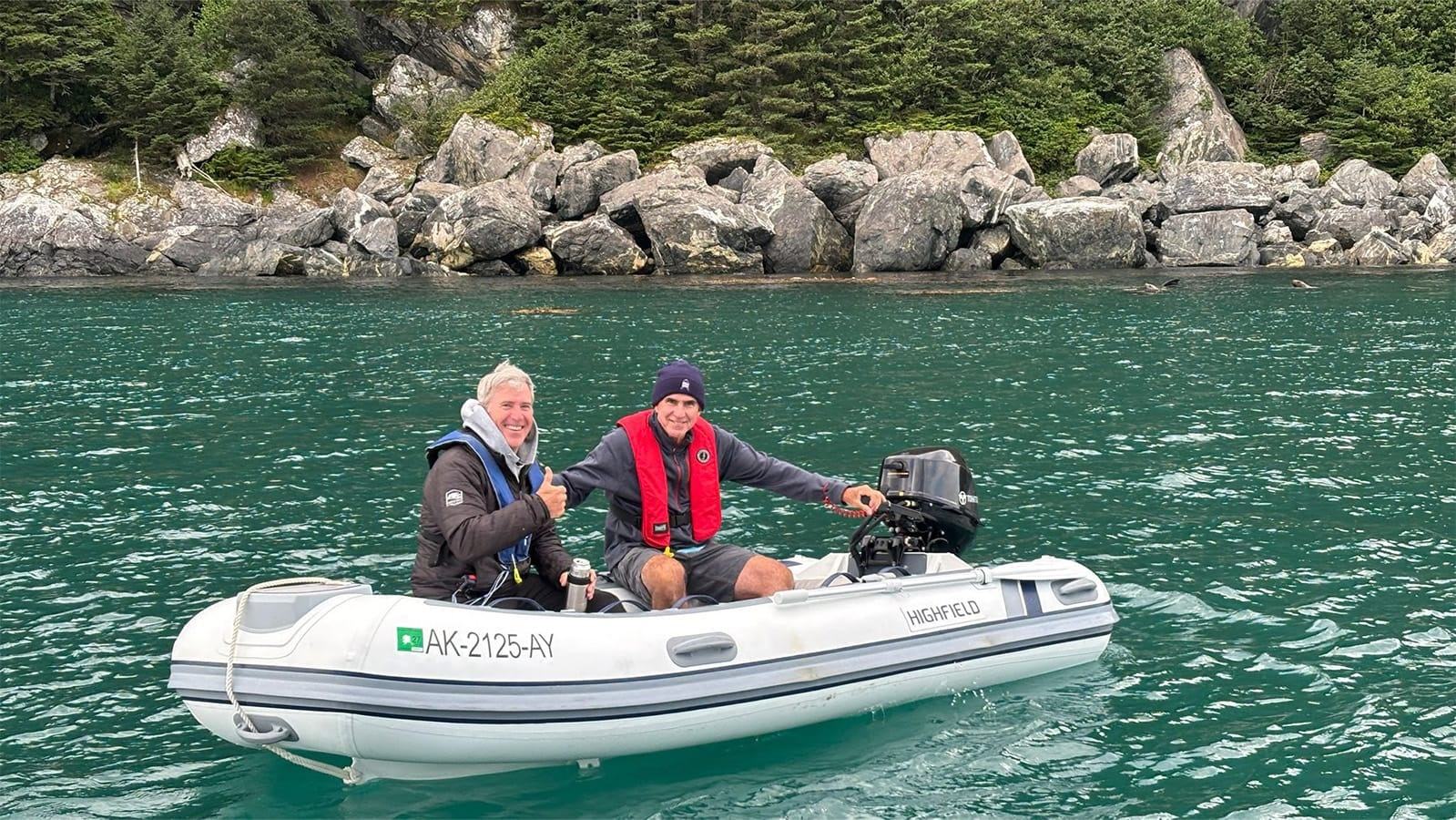
Experienced cruising instructors Jeff Grossman and Jean Levine explain why small dinghies deserve careful selection, handling and maintenance when a yacht is at anchor.
The dinghy connects yacht and shore
A tender is much more than a small boat carried behind or aboard a cruising yacht. It often provides the crew's transport to groceries, harbours, restaurants and places that the main vessel cannot reach.
American Sailing's programme Master Your Dinghy draws on the experience of Jeff Grossman and Jean Levine. The instructors encourage owners to treat the tender as an important vessel in its own right.
Choosing for the way you cruise
A dinghy's size, hull type, payload and engine must suit the crew and the yacht's storage arrangements. A boat intended for sheltered marina trips may not be suitable for long rides across exposed anchorages.
Owners should consider the real weight of passengers, fuel and provisions rather than rely only on seating capacity. Safe boarding is particularly important when waves cause two craft to move differently.
Care and maintenance matter
Tender engines need suitable servicing, while inflatable tubes or rigid hulls should be checked for deterioration and damage. Oars, a means of communication and appropriate safety equipment provide useful backup if propulsion fails.
The fact that a dinghy is used for short trips does not remove the hazards of wind, current or poor visibility. A routine shore run can become difficult if conditions change while the crew is away.
Towing and stowing require thought
A dinghy can be carried on davits, stowed on deck or towed under suitable conditions, each with its own precautions. Towing arrangements must be compatible with the vessel and the expected sea state.
A small tender can become dangerous when left improperly secured in a seaway. Owners should review their actual equipment and consult the boat and tender manufacturers' guidance.
Learning from experienced cruisers
Grossman and Levine have spent years teaching practical cruising skills and have undertaken voyages on their Skye 51 ketch. Their course uses real experiences to explain choices that are easy to overlook during a boat purchase.
Learning how to handle the tender safely can improve every anchorage visit. Skippers should practise with the dinghy before relying on it as the primary route ashore.
Start with an honest load calculation
A tender's passenger rating should not be interpreted as a promise that every possible combination of passengers, luggage and equipment will be comfortable or safe. A trip carrying four adults, groceries, water containers and fuel can be quite different from a short ride with two people and no baggage. Owners should check the manufacturer's load and engine limits and allow for changing conditions on the return trip.
Heavy objects should be secured and distributed so the dinghy remains appropriately trimmed. A crowded stern can affect handling and reduce freeboard when waves arrive from behind. If there is too much to carry, the better choice may be to make two journeys or arrange transport ashore rather than overload a small craft to save time.
Boarding and landing deserve preparation
Moving from a cruising yacht into a dinghy can be more demanding than travelling across the anchorage. The two boats may rise and fall at different rates, especially when wakes pass through. A stable point of transfer, proper footwear and a clear plan for handing over bags are valuable. Children and passengers unfamiliar with boats should be given simple instructions before they begin boarding.
Landing on a beach introduces its own challenges. Surf, rocks, tidal changes and a steep shore can turn an easy-looking arrival into a difficult one. The tender should be secured in a way that accounts for the rising or falling tide, and the crew must know how it will be launched again. Permission and local landing restrictions should be checked before making the trip.
Outboard reliability away from the mother vessel
A small outboard still needs regular attention to fuel quality, cooling-water flow, propeller condition and basic controls. A motor that starts reliably in the marina may behave differently after long periods of damp storage or when the dinghy is heavily loaded. Owners should understand the manufacturer's starting and stopping procedures and know whether a separate kill-cord or other emergency-stop arrangement is required.
Electric tenders require a different sort of planning, especially the amount of usable battery energy remaining and where recharging is possible. Neither petrol nor electric propulsion eliminates the need for a realistic alternative if the motor stops. Carrying suitable oars or another approved means of moving the dinghy, where practical, can help prevent a minor failure becoming an emergency.
Safe return journeys after dark
An anchorage can look simple in daylight but confusing after sunset. Shore lights may obscure the main yacht, unlit mooring lines can be difficult to see and wind or current may have increased. The crew should know the yacht's location before leaving and consider whether a night-time return is necessary. A waterproof communication method and suitable lighting should form part of the plan.
Required navigation lights depend on the tender and its operating circumstances, and the rules may be different from those for the larger boat. Owners should understand the rules applying locally and should not rely on a mobile-phone flashlight as a substitute for compliant equipment. Any passenger crossing at night should have appropriate flotation and be aware of the route.
Storage, security and everyday upkeep
Leaving the tender permanently in the sun can accelerate deterioration of some inflatable materials and fittings. A cover or suitable storage arrangement may help, but only if it does not trap moisture or prevent necessary ventilation. Towing eyes, lifting points, painter ropes and attachment hardware should be checked regularly because their failure can cause damage to both the dinghy and the yacht.
Equipment should also be secured against accidental loss or theft when the crew goes ashore. The owner may need a lock, a way of recording engine identification and a consistent routine for lifting the tender at night. Treating these small tasks as part of normal cruising preparation keeps the dinghy available when it is needed and reduces avoidable disruption to a holiday.
Tender insurance and local operating requirements are worth checking before an extended cruise because the dinghy may be subject to different rules from the main yacht. In some destinations, shoreline landing arrangements also change seasonally. Knowing those details before reaching a new anchorage can save a frustrating and potentially unsafe search for a place to go ashore.
Source
American Sailing