
Explore the Scottish Crinan Canal by kayak, from Ardrishaig to Crinan, with tranquil stretches, locks, swing bridges and a link to coastal sea kayaking.
The Crinan Canal provides an unusual Scottish paddling holiday because it links sheltered inland water with the possibility of continuing into the sea at either end. Running for approximately nine miles between Ardrishaig on Loch Fyne and Crinan on the west coast of Argyll, the canal offers woodland scenery, stone bridges, locks and opportunities to watch working boats pass. Scottish Canals describes it as suitable for beginners and experienced paddlers on appropriate stretches, with popular access points around Cairnbaan, Bellanoch and Crinan. The experience is not equivalent to paddling an uninterrupted nine-mile lake: locks and swing bridges complicate through-travel, and maintenance or other restrictions can affect sections. A successful holiday can be a modest outing between convenient launch and recovery points, rather than an attempt to complete the entire route in one day.
Scotland's canal journey in miniature
The Crinan Canal occupies a distinctive place in the country's boating network. It links Loch Fyne with the western coast through a short inland passage that allows boats to avoid a longer coastal route around the Kintyre peninsula. For a kayaker, this history adds interest to the scenery. The waterway was built for navigation and still functions as a shared route, with paddlers travelling alongside other kinds of craft. Its modest length can make it tempting to treat the full canal as an easy challenge. Scottish Canals' practical guidance is a reminder that distance is only one aspect of planning. Understanding where a paddler must stop, carry the boat or cooperate with lock and bridge staff matters just as much.
The attraction of sheltered canal water
On a suitable day, paddling a canal can feel calmer than tackling an exposed Scottish sea loch. The banks provide a sense of enclosure, and the gentle pace makes it easy to notice wildlife, woodland and traditional canal infrastructure. This can appeal to people who are learning to kayak and to more experienced travellers seeking a relaxed excursion. Sheltered does not mean hazard-free, however. Weather can still be cold and wet, passing craft can produce wash, and the route may narrow near structures. Beginners should receive suitable instruction and choose a section with straightforward access rather than assume that the entire canal is appropriate for an unsupervised first outing.
Long stretches between locks
Scottish Canals specifically recommends the uninterrupted sections between locks 4 and 5 and locks 13 and 14 for paddling. Those stretches provide opportunities to enjoy the scenery without immediately needing to manage a boat around lock infrastructure. A short out-and-back journey on an appropriate section can be a complete holiday activity, especially when the group wants time for photographs or a picnic ashore. Choosing a return route also avoids the need for a complicated vehicle shuttle. It remains important to identify authorised entry and exit places, check local notices and avoid obstructing working boats. The park-like atmosphere along the banks should not obscure the canal's status as an operating navigation.
Cairnbaan as a starting area
Cairnbaan, close to Lochgilphead, is one of the launch locations identified by Scottish Canals. The location allows visitors to experience a central portion of the canal, with waterway heritage and surrounding Argyll scenery. The appropriate starting place within the area should be confirmed from current official guidance rather than guessed from an attractive stretch of towpath. A kayak must be carried safely to the water, and parked vehicles should not block working facilities or access for other users. If a party intends to paddle away from the launch and return later, it should select a sensible turnaround point and allow for changing weather or unexpected restrictions.
Bellanoch and the swing bridge landscape
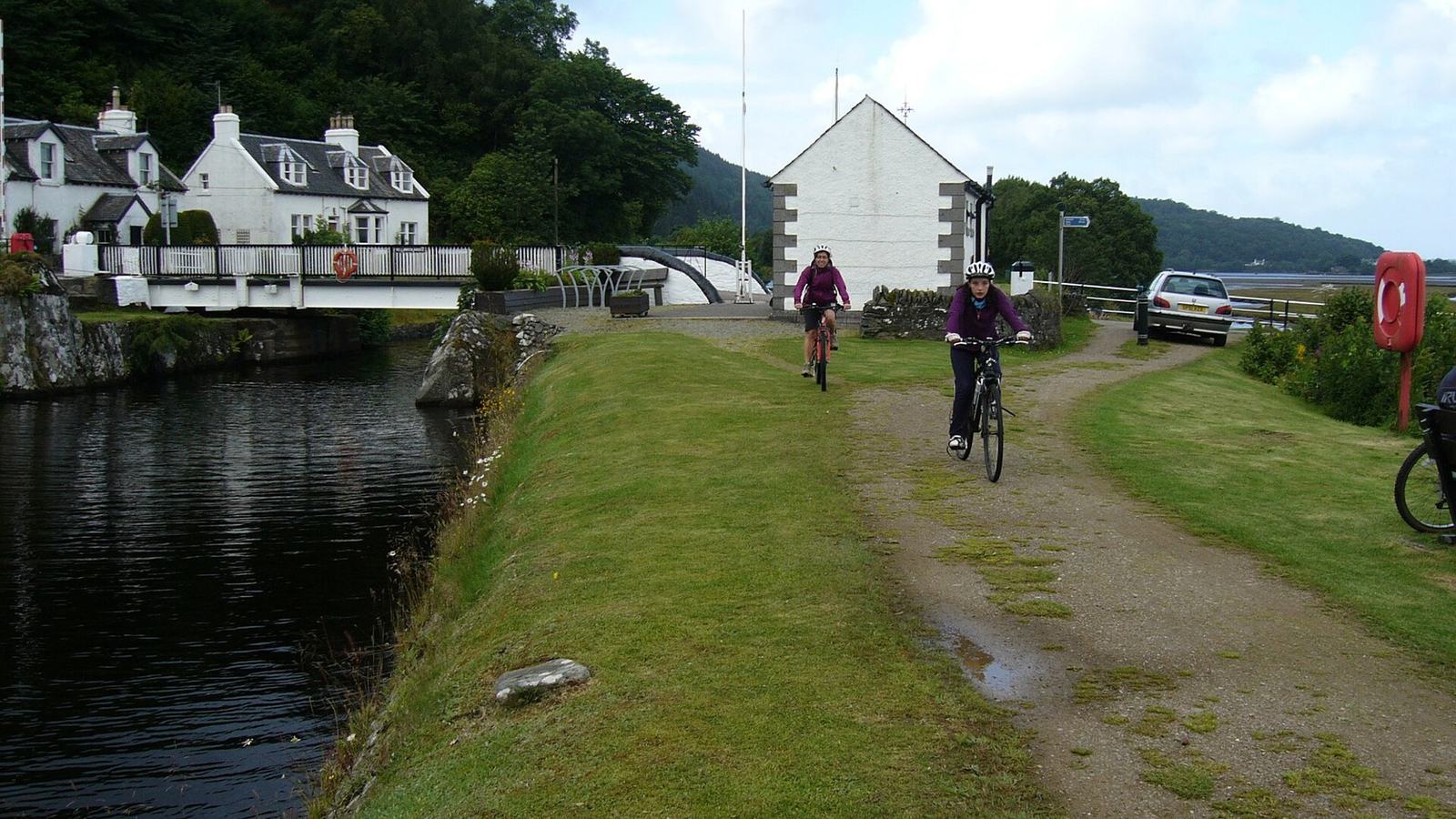
The area around Bellanoch is another location listed by the canal operator and provides a particularly photogenic view of the navigation. The accompanying licensed photograph shows the Crinan Canal and Bellanoch Swing Bridge, connecting the waterway's peaceful appearance with the practical structures that control movement. A swing bridge is not a feature to pass under or around without regard for its operation. Paddlers should follow current instructions, respect restricted areas and avoid interfering with powered craft that require bridge movements. Taking time to observe the bridge and the nearby landscape can be an enjoyable part of the outing without attempting a risky manoeuvre for a photograph.
Crinan at the western end
Crinan is the western endpoint of the canal and a possible starting point for an appropriate paddle. It has a different atmosphere from the middle reaches because of its proximity to the open coast. Visitors may be drawn to the idea of combining canal paddling with a sea-kayak adventure, but the change in environment is substantial. Sea conditions, tides and navigation require skills and equipment beyond those necessary for a sheltered stretch of canal. A traveller should not assume that a successful hour inland demonstrates readiness for an exposed coastal journey. The scenic western terminus can be enjoyed in its own right, with a sea passage reserved for people who are properly trained and equipped.
Ardrishaig and Loch Fyne
At its eastern end, the canal meets Loch Fyne at Ardrishaig. Scottish Canals identifies this as another connection with the wider Argyll Sea Kayak Trail. For the casual visitor, it may be enough to appreciate the meeting of canal and sea from the shore, or to select a suitable canal section nearby. A sea loch is a different paddling environment, with tide, weather and other boat traffic requiring separate planning. Kayakers who intend to leave the canal should investigate the conditions, safe launch and landing sites and any rules concerning the canal entrance. Combining both environments can be a rewarding progression, but it should not be undertaken solely because they appear adjacent on a map.
Locks demand a plan of their own
One of the canal's defining features is its series of locks. These structures are designed to move boats between levels of water under controlled conditions. Scottish Canals advises paddlers that locks may require portaging or coordination with lock keepers. A kayaker should not enter a lock or approach moving gates without following the operator's rules. Carrying a boat around a structure can also involve uneven ground and a loaded craft that is heavier than expected. A trip across multiple lock sections should include realistic time for these transitions. A shorter outing that avoids them may be a better choice for families or people unfamiliar with canals.
Swing bridges and other navigational traffic
Swing bridges introduce another form of interruption and may require users to wait or coordinate with staff. The canal is also shared with larger vessels, which may have limited room to manoeuvre. A small kayak should remain visible, avoid blind bends and allow working boats enough space to pass. It is unwise to assume that a powered craft can stop immediately or will see a low boat close to a bank. Clear communication, appropriate distance and patience can make shared navigation comfortable. The enjoyment of travelling slowly includes accepting that some passages require waiting. A canal holiday is not made better by attempting to rush other users through a narrow place.
Registering a paddling trip
Scottish Canals invites and recommends advance registration for paddling outings so the operator can maintain an overview of craft using its waterways. The official Crinan page includes a trip-registration form, along with contact details for the local waterway office at Ardrishaig. A visitor should check the current registration and any other access requirements before leaving home. The page describes ordinary paddling access as free, but that does not mean all activities, services or facilities are always free. Equipment hire, transport and special arrangements may incur charges. Registration also does not replace the need to assess weather or operate a suitable craft. It is part of using a managed canal responsibly.
Preparing for a Scottish paddling day
The local weather can change quickly, and a sheltered canal still involves cold water and exposure. Each paddler should wear a suitable buoyancy aid, carry appropriate clothing and know how to recover from a capsize. Keep personal equipment protected from rain, and carry a communication method that remains useful if the group becomes separated. A crew should decide where it intends to start, where it can finish legally and what will cause an early return. Anyone hoping to use a rented kayak should verify the operator and booking arrangements in advance. A short, well-organised excursion is likely to be more enjoyable than a complex through-paddle that becomes difficult at the first lock.
Towpaths, picnic stops and a relaxed itinerary
The towpath can make a useful companion to the canal journey, offering walkers a view of the boats and giving visitors an option for time ashore. But access must be shared respectfully: kayaks left across a path can obstruct cyclists or walkers, and landing should be limited to appropriate places. A good outing might combine a modest paddle with a walk near a bridge or a village lunch, allowing more time to appreciate the landscape. Scottish Canals directs visitors to current maintenance notices because works and closures can change what is possible. Planning an alternative shore activity is sensible, particularly in the wetter or colder seasons.
Photograph and primary source
The lead photograph is a genuine view of the Crinan Canal and Bellanoch Swing Bridge by Clive Nicholson, published through Wikimedia Commons under the Creative Commons Attribution-ShareAlike 2.0 licence. It documents a real piece of the route rather than a generic image of a canoe or a claim about a current guided tour. The photograph has been resized, with the author and licensing information recorded. The factual basis for the route length, suggested paddling stretches, locations and registration advice is Scottish Canals' official Crinan paddling page. Travellers should consult the operator's latest stoppage and safety information before launching.
An appealing route without a race to finish
The Crinan Canal can make an exceptional small-boat outing because it combines Scottish scenery with the history and working rhythm of a navigation. It offers enough variety for visitors to choose either a gentle return trip or a more ambitious journey requiring portage and coordination. The presence of open sea at both ends adds possibilities for experienced kayakers without making a coastal trip obligatory. A good plan recognises locks, bridges, other boaters and changing weather. For people who appreciate unhurried travel, even a short section of the nine-mile canal can provide the sense of having explored a distinctive place from the water.
Sources and photograph attribution
Official destination and boating guidance: Scottish Canals — Just Paddle: Crinan Canal. Current access, rules, weather and reservations must be checked independently before travel.
Photograph: Clive Nicholson — “Crinan Canal and Bellanoch Swing Bridge - geograph.org.uk - 4342547.jpg” (CC BY-SA 2.0), via Wikimedia Commons. Resized and converted to JPEG for editorial display. Source: https://commons.wikimedia.org/wiki/File:Crinan_Canal_and_Bellanoch_Swing_Bridge_-_geograph.org.uk_-_4342547.jpg. Licence: https://creativecommons.org/licenses/by-sa/2.0. Original rights remain with the credited creator or as specified by the source and licence.
