
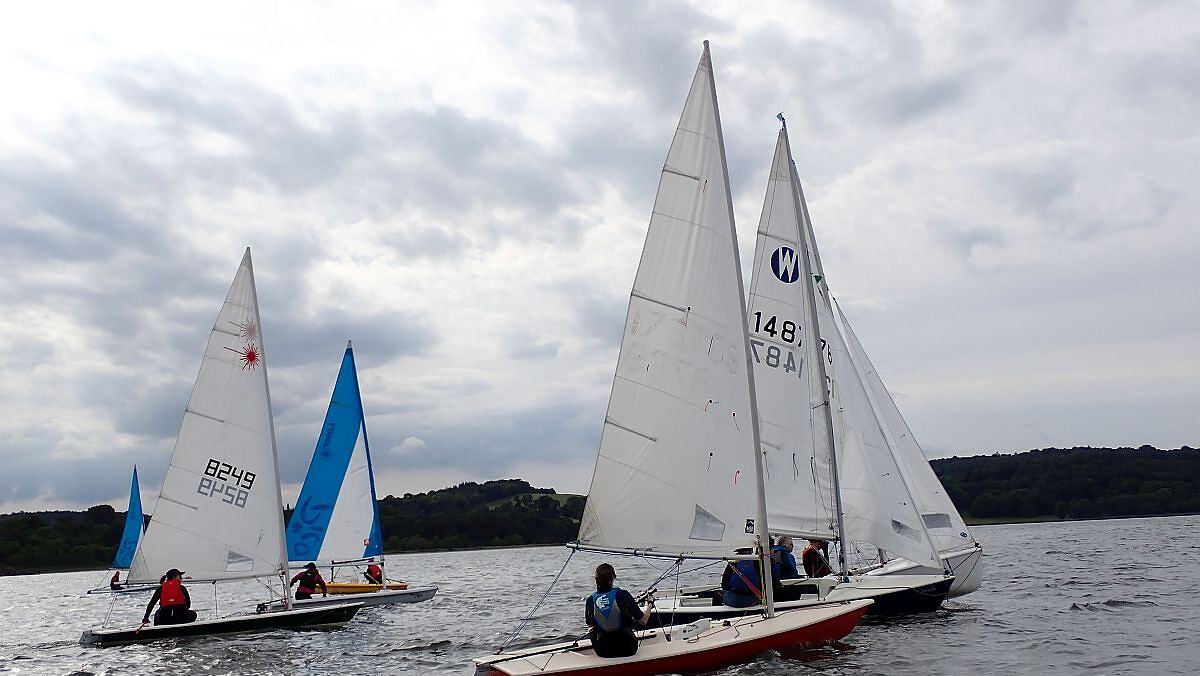
Cramond Boat Club linked a new Women on the Water coaching programme with a record turnout for its annual women’s dinghy race day.
Cramond Boat Club in Edinburgh recorded its largest women’s race-day turnout in 2026, with seven dinghies crewed by nine women and girls. The club connected the stronger entry directly with its newer Women on the Water programme, which had included an introduction-to-racing session before the annual event.
The result is a small but useful example of how participation programmes can move beyond one-off taster sessions. Instead of treating getting afloat as the finish line, Cramond created a route from learning and coaching into a normal club racing day.
Coaching helped turn interest into participation
The club’s account says all-female crews were present even in the double-handed boats, while safety-boat support was provided around the racing. Three short races were completed in a steady Force 2 breeze, giving newcomers and more experienced sailors a manageable setting in which to practise starts and close-quarters sailing.
That progression matters because racing can look intimidating from outside a sailing club. A coached introduction reduces the uncertainty around starts, rules and boat handling, making it easier for someone who already enjoys sailing to decide that organised competition is also for them.
Women on the Water is becoming a club pathway
Cramond’s Women on the Water activity is not only about a single event. The wider programme has been taking women afloat through the season, creating repeated opportunities to build confidence, meet other sailors and return to the club rather than relying on one annual recruitment push.
For small-boat sailing, that social continuity can be as important as formal instruction. People are more likely to keep sailing when they know who they will sail with, understand how the club works and can see a realistic next step after the first course or taster day.
Seven dinghies can still represent meaningful growth
A record of seven boats may sound modest beside a national championship, but grassroots sailing depends on exactly this type of incremental growth. Each additional regular sailor strengthens the pool of crews, volunteers and future instructors that keeps small-boat activity viable.
The Cramond example also shows why LBG Lifestyle should cover participation as well as products. Boats are only useful when people feel able and welcome to use them, and a simple programme that turns coaching into confident club activity can have a lasting effect well beyond one race afternoon.
Source
Cramond Boat Club