
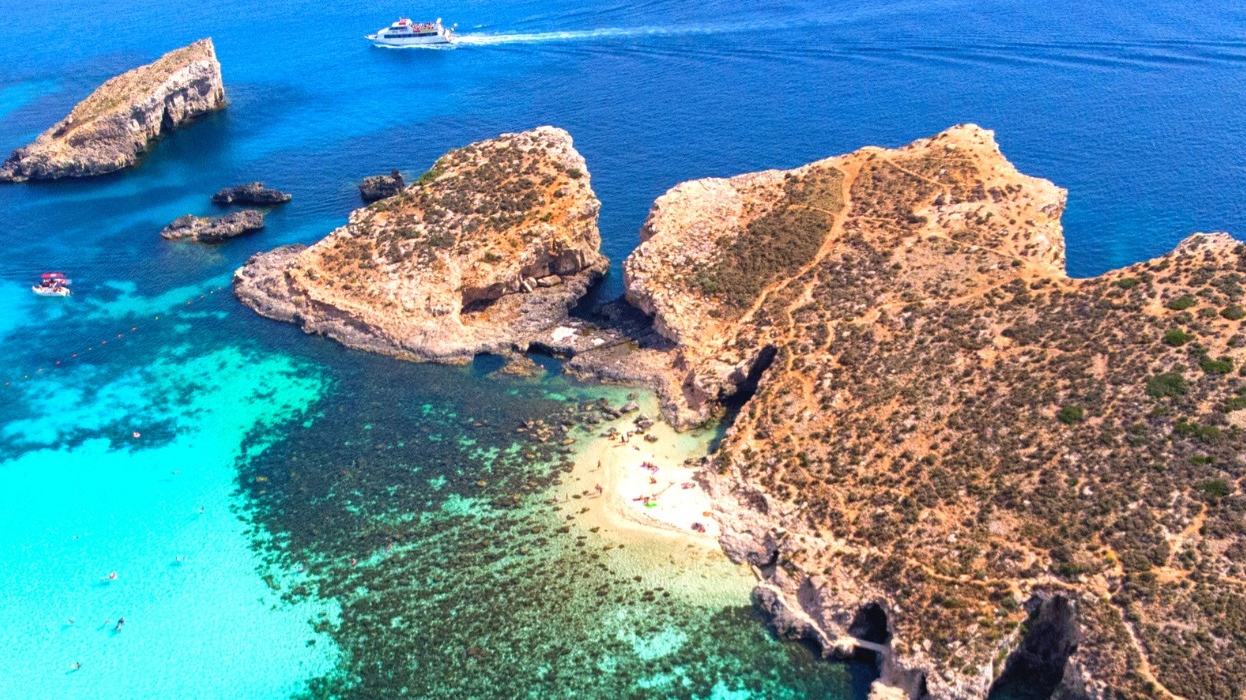
An original practical guide to Comino's Blue Lagoon shore-access system for private boat owners, including free QR passes, booking slots, wristbands and safe arrival planning.
A private boat does not remove the shore-entry requirement
Comino's Blue Lagoon is one of the Mediterranean's most recognisable stretches of turquoise water, and arriving aboard a privately operated boat can make the approach feel wonderfully independent. The visit nevertheless comes with a specific shore-access requirement. Malta's Blue Lagoon Access Management System says anyone who intends to spend time ashore within the managed lagoon area needs a free, timed landing pass, including Maltese residents and visitors arriving by private boat.
The system was introduced in 2025 and remains described on the official booking website for 2026. Its purpose is to manage pressure on a fragile Natura 2000 location where beach space, paths and marine traffic can become crowded. A boat ticket, charter booking or the fact that the skipper owns the vessel does not automatically provide the passenger's personal permission to remain on the shore.
Reserve a free QR code before setting off
The official Blue Lagoon site, blcomino.com, issues a QR code for access. Travellers select their preferred date and time window and supply an email address so the pass can be sent to them. The management system says bookings can be made up to two months ahead, with same-day availability only when free places remain. There is no price for the landing QR code itself.
Each reservation may cover up to four people, according to the published FAQ. Larger private-boat groups therefore need to plan the number of passes rather than assuming a single booking covers everybody aboard. Children under five accompanied by a parent or guardian are exempt, but the supervising adults must still comply with the relevant access conditions.
Keep the QR code accessible on a phone or as a printout and check email delivery before leaving coverage behind. The official FAQ says bookings cannot be modified and that lost codes must be retrieved from the original email rather than a separate recovery service. A skipper taking friends out spontaneously should explain that a last-minute decision to land may not be possible.
Morning, afternoon and sunset are separate access windows
The booking system divides the day into morning, afternoon and sunset time slots. The published FAQ and booking display distinguish the time available ashore from a separate boat-manoeuvring allowance, which explains why some displayed start or finish times do not exactly match. Visitors should follow the time on their actual booking and any directions from the marine coordinator instead of relying on screenshots of an older timetable.
On arrival, the access team scans the QR code before people disembark and issues wristbands. According to the FAQ, these may be used to re-enter during the assigned period, provided the person returns within the permitted slot. Visitors are asked to hand their wristbands back before leaving, reducing plastic waste around the coastline.
Arriving early does not guarantee immediate admission, while arriving late generally leaves only the remainder of the booked period. This matters to private boats because delays caused by wind, berth congestion or sea conditions can consume an entire planned shore visit. A flexible captain should not allow a QR code expiry time to become a reason for unsafe manoeuvring.
What the pass does not cover
A shore-entry QR code is not an authorisation to anchor, pick up a buoy or occupy a landing place. The booking authority explicitly separates its system from transport arrangements, and boat operators remain responsible for safe passage and compliance with maritime directions. Private skippers should check current Transport Malta port notices, any marine coordinator instructions and the local situation before choosing where to wait or disembark.
The FAQ says ferry journeys must be arranged and paid for separately. For a privately owned vessel the analogous distinction is that the captain and crew remain responsible for the boat, its passengers and practical transfer logistics, regardless of whether the passengers possess valid wristbands. A landing reservation does not guarantee suitable weather or a safe position alongside.
The system also makes a narrow distinction for people simply passing through on designated hardstanding routes toward other areas of Comino. Such passage is not the same as remaining within the managed Blue Lagoon shore area. Similarly, an extremely brief purchase of food or drink may be treated differently by officials, but travellers should not plan a prolonged beach stay around those exceptions.
Plan the day around weather and responsible seamanship
A trip to Comino can be short in distance from the Maltese mainland or Gozo, but it is still a marine passage in a busy area. The Blue Lagoon's appeal attracts excursion boats, small private craft, swimmers and snorkellers, so a calm, unhurried approach is essential. The presence of numerous boats in the bay is not evidence that every anchorage or route is appropriate for every hull.
Before departure, check current wind direction, swell, forecasts, navigation notices and the craft's fuel and safety equipment. Appoint a responsible person to manage the QR passes while the skipper concentrates on vessel control. If an assigned slot is no longer practicable, the correct response is to change the itinerary, not to rush a landing or place the boat among swimmers.
Leaving no litter is a simple but important part of the experience. Bring reusable water containers, secure loose items on deck and take waste away rather than relying on limited island services. Comino's conservation value depends on both the rules applied ashore and the habits of people arriving by sea.
How to organise a rewarding visit
For a family day, one person can confirm the available landing window and distribute QR codes before everybody boards. The captain can then plan a comfortable cruise, with enough allowance to reach the correct landing area and deal with delays. Guests who prefer to remain on the boat can still enjoy the views, but anyone going ashore to stay in the controlled area needs to meet the access conditions.
Groups who want to swim should use safe, authorised areas and take account of boat movements, other visitors and any local warnings. The official booking FAQ addresses access to land; it does not replace water-safety judgement or grant a general right to use marine space as one pleases. Local restrictions can change, so follow signs, patrolling officers and current notices on the day.
The beauty of the Blue Lagoon is that a modest private boat can offer the flexibility to enjoy Comino without a large excursion timetable. That freedom works best when the practical rules have been handled in advance. A free QR pass, an appropriate time slot and respect for the marine environment make the day easier for guests and for the people managing this delicate island.