
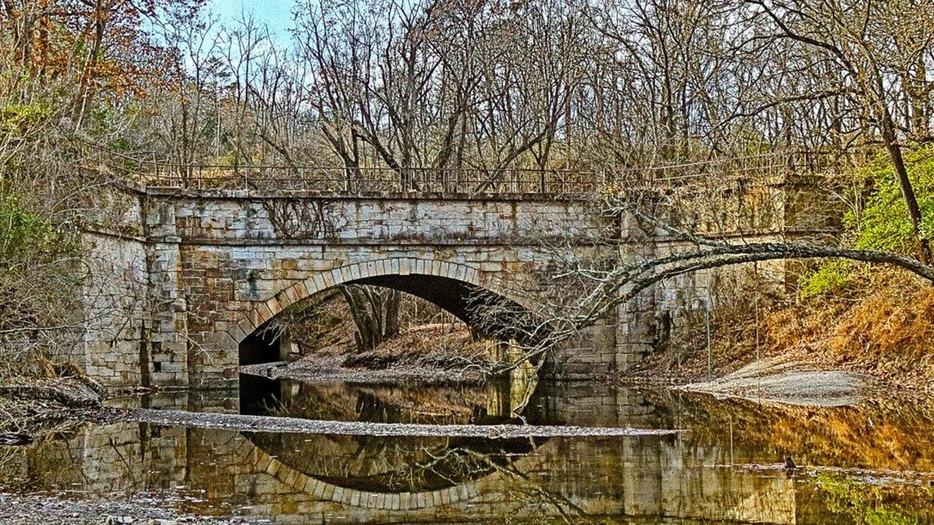
Chesapeake and Ohio Canal National Historical Park offers short paddling routes along watered canal sections and access to the Potomac River, each with different safety demands.
A historic canal offers a distinctive boat day
The Chesapeake and Ohio Canal once connected communities and transported goods beside the Potomac River. Today, visitors can explore sections of that history by canoe or kayak, bringing a quiet view of old locks and the waterway's engineered landscape. The experience differs from a typical broad lake because not every part of the original canal remains filled with water.
The National Park Service explains that visitors can paddle certain watered stretches and also use park boat ramps to reach the Potomac River. These are different environments with their own restrictions. Choosing between them should depend on the paddler's skill and the exact conditions, rather than assuming that the water beside a canal path is uniformly calm.
Not every canal section contains water
The park lists specific lengths where paddling can be possible, including Georgetown to Violettes Lock, shorter stretches near Williamsport and Hancock, and sections around Big Pool, Little Pool and Oldtown. Levels can vary, and some places may be closed or unsuitable at a particular time.
Visitors should check current conditions before carrying a boat to a lock or access point. A photograph showing a full canal does not confirm that the same stretch is navigable today. A short route chosen around confirmed water availability is usually preferable to planning a long traverse without understanding where the craft must be carried.
Locks may require carrying the boat
The canal includes lift locks and other structures built for historical canal traffic. Modern recreational paddlers cannot assume they can simply operate each lock and remain afloat throughout a journey. The National Park Service states that craft need to be carried around lift locks on relevant routes.
That requirement changes what equipment is practical. A lightweight canoe or kayak may be manageable for experienced adults, while a heavy boat or a large group carrying substantial luggage can turn a short portage into an awkward task. Review the route, access points and carrying needs before choosing a vessel.
The Potomac has a very different character
The adjacent Potomac River includes both flat water and serious whitewater. The park identifies particularly difficult Class IV and V rapids in the eastern area near Great Falls, with other challenging sections around Harpers Ferry. Such water must not be approached as though it were an ordinary canal paddle.
Skippers should choose a route that fits their actual whitewater experience and equipment. A calm-looking access point does not guarantee the downstream section is suitable. Local instruction and qualified guided opportunities may be more appropriate than an independent attempt for someone unfamiliar with a natural river.
Motorboat rules differ between canal and river
Gasoline and propane motorboats are prohibited on the canal, while limited use of electric motorized vessels is permitted in specified sections such as Big Pool, Little Pool and a stretch near Town Creek. The Potomac River is governed by Maryland boating rules, so its requirements are not identical to those applying inside the canal.
Owners should not assume that seeing a motorboat on the nearby river means the same craft may enter a canal section. The relevant laws and park guidance should be checked for the exact activity and location. Electric propulsion is also subject to designated limits rather than unrestricted permission.
Take water safety seriously
The National Park Service highlights previous drownings and injuries within the canal and river park. Even when the surface is still, water may be deep, cold or difficult to leave if the bank is steep. An unplanned swim near a lock or other structure can be especially hazardous.
Correctly fitted flotation should be worn in line with the park's advice and applicable regulations. Paddlers should understand basic recovery and avoid attempting manoeuvres near hazards they cannot assess. The visual calm of a historic canal can make caution seem unnecessary, which is precisely why a clear safety routine matters.
Decide where to hire equipment
Boat rentals and guided opportunities may operate near selected sections of the waterway, while private paddlers can bring suitable craft where access is allowed. Rental arrangements can differ between sites, with separate rules about where a customer may travel and how the equipment must be returned.
Before making a reservation, confirm the route, launch and finishing point, required skills and what equipment is supplied. An operator may restrict access during poor weather or adverse water conditions. Those decisions should be respected rather than treated as an inconvenience.
Combine a short paddle with the towpath
The canal towpath offers opportunities to appreciate the structures and landscape from land as well as water. A family may choose a short paddle where it is permitted and then explore a nearby section on foot. That can be a better introduction than trying to cover a long distance with several portages.
Historical features should be treated with care. Do not tie craft to fragile structures or climb on closed areas to obtain photographs. The park preserves an important transport landscape, and present-day recreation should leave it in good condition for future visitors.
A checklist for the day's conditions
Check the National Park Service's current conditions and any canal closures, and review the forecast and relevant river information. Identify where the boat can actually enter and leave the water and whether portages are required. The group should know how to contact assistance and should not rely solely on a chart displayed on a phone.
Carry enough drinking water and protection against the weather, but avoid overloading a craft that must be lifted around obstacles. A manageable itinerary makes the trip more enjoyable and leaves time to explore its historical setting. The aim is a safe day, not completing an arbitrary length of canal.
A waterway that rewards careful choices
The C&O Canal combines historical interest with paddling opportunities, while the nearby Potomac offers different and sometimes far more demanding water. Understanding the distinction makes it easier to select a route suited to beginners, families or experienced crews.
A well-prepared visit can reveal why canals mattered to earlier communities and how their remains now support recreation. Follow current access and safety rules and be willing to change plans if levels or conditions differ from expectations. Thoughtful choices protect both visitors and this important historical landscape.
Source
National Park Service