
The Chesapeake's historic water trail is a vast network rather than a single fixed cruise. Small-boat visitors can explore individual tributaries with an eye on access and history.
A historic trail made of water
The Captain John Smith Chesapeake National Historic Trail cannot be followed like a conventional walking path. It runs along the Chesapeake Bay, connected rivers and coastlines, offering many possible excursions rather than one compulsory start and finish. The boating visitor's real task is to select a manageable stretch and discover both the landscape and the human stories associated with it.
The National Park Service describes the trail as following routes explored by John Smith and his crew in 1608, while explicitly recognising the Indigenous societies whose lives were already shaped by these waterways. Any thoughtful trip should start with that broader perspective. The bay and its tributaries were routes of travel, work, food and culture long before they were destinations for leisure craft.
Build a trip from a genuine launch
The trail spans thousands of miles of water routes, which makes a vague plan to paddle 'the Chesapeake' of little practical use. Begin with the official public-access tools and choose a specific river, creek or bay shoreline with legal launching and a realistic take-out. Check who manages each access point because opening times, parking fees and restrictions vary substantially among partner sites.
The National Park Service's boating-adventures guidance directs visitors to launch locations and trip ideas. Even when a river is navigable, a particular landing may not accommodate trailers, overnight parking or large craft. Contacting a park or local harbour authority is a small effort compared with arriving to find that a chosen ramp does not meet the boat's needs.
Choose the boat to suit the water
The Chesapeake includes quiet reaches suited to paddling as well as open waters where wind, waves and traffic make a small craft feel exposed. A protected tributary excursion can be highly rewarding without attempting a bay crossing. First-time visitors should focus on a route compatible with their experience rather than the longest distance visible on an interactive map.
Currents, tides and changing weather affect different parts of the trail in different ways. Review local marine forecasts, not general inland weather alone, and keep enough flexibility to shorten or postpone the outing. Kayakers should have a plan for getting back aboard after a capsize and avoid treating a pleasant launch morning as a forecast for the whole day.
Read the scenery as history
The park's interpretation connects natural landscapes with stories of Indigenous peoples, exploration and later changes around the estuary. Those themes can turn an ordinary shoreline into something more absorbing, particularly when visitors take time to learn about the community associated with the water they are crossing. It is possible to gain that perspective without landing at a sensitive site or disturbing an archaeological place.
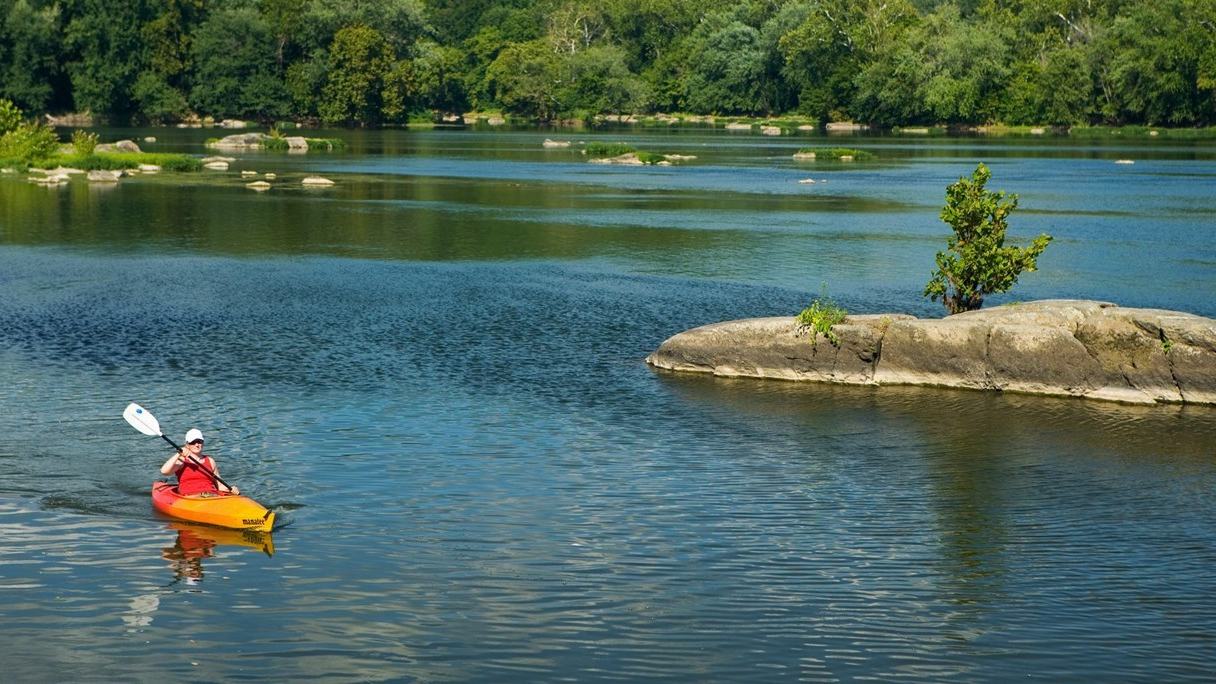
At Riverbend State Park, one of the images accompanying the official boating guide shows a kayaker navigating around river rocks. It is a reminder that even stretches far from the open bay can have local obstacles and moving water. Choose a route because it is appropriate to the boat and river conditions, not simply because its photograph looks attractive.
Plan a day that works ashore as well
Many travellers will enjoy pairing a modest paddle with a visit to a town, museum, historic place or nature reserve around the watershed. Such a combination provides time to explore local stories without demanding a full day of uninterrupted paddling. Distinguish the authorised boat landing from a nearby attraction's visitor entrance before combining the two into an itinerary.
Facilities can be seasonal even though the water trail itself is open throughout the year. Park-operated visitor centres, partner attractions and outfitters may keep shorter hours in colder months. Confirm access, opening times and the possibility of boat storage in advance, particularly for a trip that relies on a shuttle between different launch points.
Look after the bay while visiting it
The quieter reaches of the Chesapeake and its tributaries provide opportunities to observe birds, marshes and changing water textures from an unobtrusive distance. Keeping away from sensitive banks and taking litter home are simple forms of respect. Plan rest stops at authorised places rather than making opportunistic landings on private shores or important habitat.
Above all, make each outing achievable. Tell someone the intended route, carry suitable personal flotation devices, allow for weather changes and know how to contact local help. A small, well-chosen stretch of the Captain John Smith trail can offer a strong sense of place without trying to compress an enormous watershed into a single trip.
Different generations have used these waterways for different purposes, and their meaning cannot be reduced to one explorer's voyage. Visitors who read the park's historical interpretation alongside local community accounts will find a much richer backdrop to the coast than the route line alone could ever convey.
Current access details, conditions and regulations should be checked with National Park Service — Chesapeake boating adventures before a visit. The photograph is credited to National Park Service, kayaking at Riverbend State Park.