
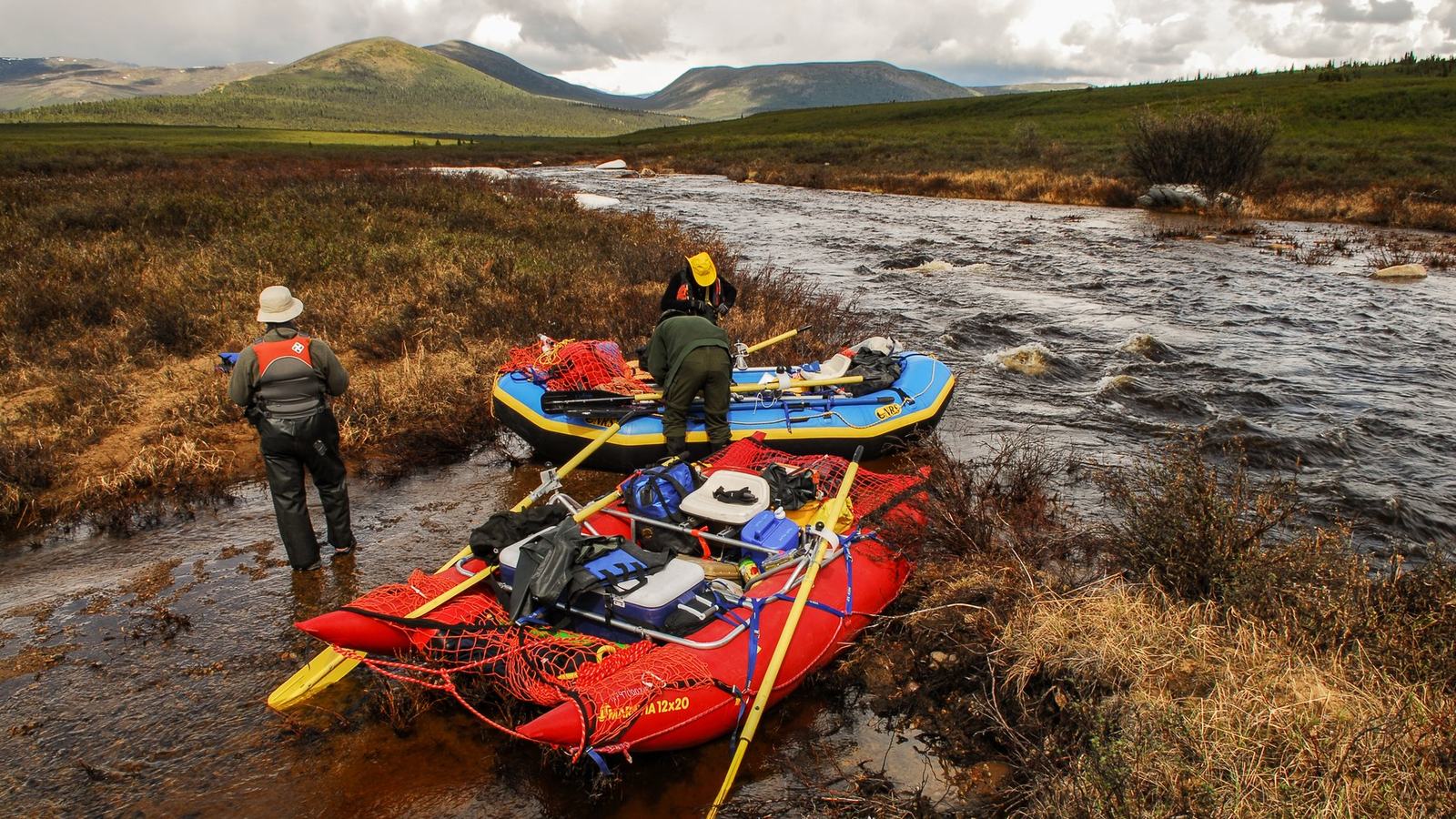
Alaska's Charley River offers a remote expedition through Yukon–Charley Rivers National Preserve, with aircraft access, cold water, variable rapids and no roadside backup.
A river adventure far from ordinary facilities
The Charley River flows through the remote interior of Alaska before joining the Yukon, travelling through upland valleys, steeper canyon country and a broad lower floodplain. The National Park Service describes roughly 108 miles of river with varied scenery and a wilderness setting that requires substantial self-reliance.
This is not a casual rental kayak route near a holiday marina. Visitors may be days from assistance and must manage equipment, transport, food, weather and emergency decisions themselves. The attraction is the chance to experience an undeveloped landscape, but that appeal cannot be separated from the preparation required.
Access often begins with an aircraft
There is no direct road access to the Charley River basin. Parties commonly arrange a charter flight from a suitable Alaskan settlement to a landing site near the upper river, then travel downstream by raft. That makes aircraft capacity, equipment weight and reliable pickup planning major parts of the trip.
The Park Service identifies places such as Three Fingers and Gelvin's as possible access points, but these are primitive locations whose suitability can change. An old description of an airstrip is not a guarantee of a safe landing today. Transport providers must assess current conditions, and visitors should not regard their preferred schedule as a certainty.
River flow changes the physical challenge
The river typically carries its highest flow in late May or early June, with lower levels later in summer. When water falls, paddlers may have to drag or line a craft around shallow rocks and gravel. Higher water introduces a different danger by strengthening current and changing the character of rapids.
The National Park Service generally describes much of the river as Class II with limited Class III water, while higher-flow conditions can create more demanding sections. These ratings do not make the route suitable for beginners. Remote access and the absence of easy evacuation significantly increase the consequences of any incident.
Why inflatable rafts are frequently preferred
The Park Service recommends inflatable rafts because they can be transported by aircraft and may be more manageable around boulder-filled sections than some other boats. Open canoes and kayaks are not its preferred choice for typical self-guided visitors to this river.
The correct equipment still depends on load, route and skill. A raft needs suitable repair materials, spare paddle arrangements and competent handling. A puncture or broken component far from a road cannot simply be solved by calling a nearby hire shop.
Plan realistic time rather than optimistic miles
A trip beginning near Gelvin's may involve around seventy-five river miles to the Yukon, followed by a much longer downstream journey to Circle. The Park Service describes an average of about six days for the Charley section and two additional days for the Yukon, depending on conditions.
Those figures are planning context, not a guarantee of travel time. Low water, weather delays or equipment trouble can extend the journey. Participants should carry additional supplies and avoid scheduling inflexible onward travel immediately after the expected finish.
Cold water is a serious hazard even in summer
Water temperatures remain low, and an unexpected immersion could quickly affect a person's ability to move and think. Appropriate flotation should be worn throughout the voyage, and helmets are strongly recommended for whitewater sections according to park guidance.
Clothing and shelter must be chosen for actual conditions rather than summer daylight hours. Crews need a plan for rescuing a swimmer, recovering equipment and warming someone who has become dangerously cold. Those procedures should be practised before the trip rather than improvised in a remote rapid.
Scouting rapids can prevent a poor decision
Boulder gardens, fallen timber and changing channels may create hazards not shown on a printed route guide. The Park Service describes channel changes in the lower river and advises scouting where possible. A safe line can differ from the one used by travellers in an earlier season.
An experienced team should be prepared to stop and examine a difficult passage instead of treating forward progress as the most important goal. Lining or carrying the raft may be slower but safer. Crew members need to know who makes the final decision and how everyone will communicate when a route is uncertain.
Wildlife and the wilderness setting
The Charley watershed supports caribou, moose, bears, birds of prey and other wildlife. An encounter can be memorable, but camping and food storage must follow the park's bear safety guidance. Food and scented equipment should be managed to reduce the chance of attracting wildlife into camp.
Visitors must also respect the area's cultural history and the restrictions on collecting artefacts. A remote location is not an unrestricted area for taking souvenirs or leaving refuse. Minimum-impact camping protects the landscape and helps preserve the experience for later parties.
Backcountry planning is strongly advised
Although a specific river float permit is not generally required for the Charley, the National Park Service strongly recommends filing a voluntary backcountry trip plan and reporting completion. Such information can help responders understand the intended route if a party becomes overdue.
A plan should include the launch, expected route, transport arrangements, communication equipment and realistic emergency procedures. Satellite equipment can be useful, but its limitations must be understood and batteries protected. Remote travel requires contingency thinking before departure.
The appropriate audience for this voyage
The Charley is best considered by highly experienced river travellers who understand whitewater, remote camping and self-rescue. Travellers without that experience can enjoy other river destinations while acquiring skills through safer supervised outings. A spectacular landscape is not a reason to exceed one's abilities.
Before undertaking this expedition, verify current guidance with Yukon–Charley Rivers National Preserve, a suitable transport operator and appropriately experienced advisers. The remote nature of the journey is its defining characteristic. For the right team, careful preparation can make the trip memorable without minimising its substantial hazards.
Protect the expedition against avoidable delays
Small setbacks can grow into major logistical problems in an isolated region. Transport arrangements, backup equipment and enough time for a cautious decision are especially valuable when there are few alternatives nearby. A crew that has already discussed how to respond to injury, a damaged raft or delayed aircraft is less likely to make a rushed choice.
Every participant should understand the limitations of the planned route and have confidence in the group's leadership. A traveller who is uncomfortable with the level of risk should be able to raise that concern before departure. The most successful wilderness trip is one in which preparation and safety are shared priorities throughout the team.
Source
National Park Service