
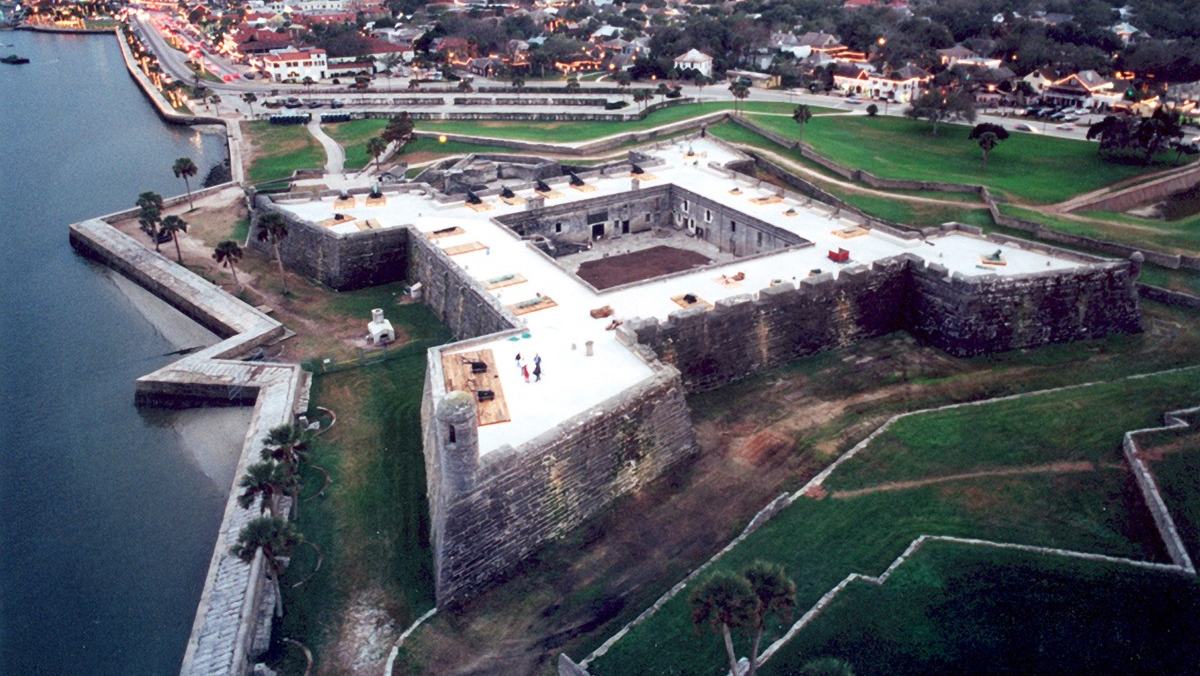
A practical St Augustine boating day linking municipal marina moorings and hourly slips to the historic Castillo de San Marcos, its coquina ramparts and National Park Service visiting information.
A town best approached by water
St Augustine is a rewarding destination for a small cruising boat because the waterfront and the historic city sit close together. A skipper who has secured suitable harbour arrangements can exchange the cockpit for centuries of Florida history without committing the whole day to a car journey. The most compelling first stop is Castillo de San Marcos, the substantial Spanish coastal fortress overlooking the Matanzas waterfront.
The setting suits a leisurely boating holiday, not an improvised landing beneath the fort's walls. The Castillo is a protected national monument with public land entrances, while the city's municipal marina manages the practical business of visiting boats, slips and moorings. Arrange a legitimate place to leave the boat before beginning the walk ashore.
Moor the boat before planning the sightseeing
St Augustine Municipal Marina lists transient dockage for visiting vessels, hourly dockage for shorter calls and reserved downtown moorings near the Bridge of Lions. Its official guidance describes hourly slips at five dollars an hour, for a maximum of four hours, allocated on a first-come basis rather than by prior reservation. The marina asks approaching vessels to contact its office on VHF channel 16 or 71 for registration and instructions, so do not assume an empty-looking berth is available.
For a full-day visit, advance enquiry about a transient slip or an appropriate mooring is the sensible option. Draft, vessel length, local traffic and marina instructions determine what is practical, and conditions at the inlet or approaches can change. The marina's official rates page also explains that dinghy-dock permits have specific restrictions, so a larger tender should not be treated as automatically eligible.
The old fort still commands the water
Construction of Castillo de San Marcos began in 1672 after repeated wooden forts failed to provide durable protection for Spanish St Augustine. According to the National Park Service, the major building phase was completed in 1695, after a difficult project shaped by storms, shortages, illness and the constant threat of attack. Seen from the water, the fort remains a striking reminder that coastal security once depended as much on geography and masonry as it does today on electronics.
The stronghold's angular bastions are not merely decorative architecture. Their shape developed from European military responses to cannon warfare, giving defenders multiple fields of fire while reducing vulnerable blind spots. Looking down from the gun deck towards the present harbour makes the relationship between historic defence and the modern waterfront especially clear.
The story of coquina stone
The Castillo's walls were built from coquina, a sedimentary stone made largely of compacted shell fragments quarried on nearby Anastasia Island. Unlike brittle brick or harder rock, its porous structure could absorb the impact of cannon shot without shattering in the same way. The National Park Service explains that this unusual property helped the fort endure prolonged attacks, including bombardment during the eighteenth century.
It is a useful example of engineering through material choice, and it can fascinate young visitors as much as keen boat owners. A nearby wave-worn shoreline reminds travellers that the sea can build as well as erode the materials used to defend a port. Guests should enjoy the stonework visually and follow the park's rules on touching historic surfaces or entering restricted areas.
History includes the people who built it
A thoughtful visit goes beyond the soldiers and governors usually associated with a fortress. National Park Service interpretation documents the labour involved in quarrying, transporting and shaping coquina, including the work of Indigenous people, soldiers and skilled craftsmen under colonial Spanish rule. It also sets the Castillo in the wider contest between European empires and the consequences that contest had for the region's communities.
Exploring the rooms and exhibits with that context gives the building a more complete human scale. The structure was a strategic response to raids and imperial rivalry, but it was also the product of years of hard work by people whose experiences differed greatly. Visitors can use the park's educational material to connect the impressive external walls with those more difficult histories.
What families can see inside
The Castillo offers a courtyard, interior spaces and a gun-deck experience that reward unhurried exploration. Children can understand the defensive layout through the bastions and the position of the cannons, while adults may enjoy learning how a garrison supported itself on a vulnerable frontier. Living history and interpretive activities may be offered, but visitors should check the park's current programme before promising a particular demonstration.
The stone stairways, exposed upper areas and strong Florida sun make comfortable footwear and water sensible essentials. During thunderstorms the National Park Service may close the gun deck because of lightning risk, although lower rooms can remain accessible. Do not turn a weather-affected visit into a safety gamble simply to finish a photographic circuit of the ramparts.
Hours, tickets and a relaxed arrival
The park's published visiting hours normally begin with first admission at 9 a.m., with final admission at 5 p.m. and visitors leaving by 5:15 p.m. It is closed on Thanksgiving Day and Christmas Day, and the National Park Service notes that busy holiday periods and weekends bring considerably more visitors. An early start can make the difference between a quiet history morning and a crowded midday circuit.
The published entrance fee is fifteen dollars for adults aged sixteen and over, with accompanied children aged fifteen and under admitted without charge. Check the official fees page for any changes, accepted passes or scheduled fee-free days before travelling, because rates and eligibility are subject to current rules. Admission to the fort is separate from what a marina charges to keep the boat safely alongside.
Give the historic streets time to breathe
After the fort, a short walk through downtown St Augustine reveals a streetscape very different from modern Florida marina developments. The compact historic centre invites an unhurried lunch, a browse among independent shops or a rest at the waterside before reboarding. The pleasure of this stop is the ability to shift from an active morning in a historic monument to a relaxed afternoon afloat.
Families should leave enough time for the return walk, the crew's loading arrangements and whatever departure window the skipper has planned. The waterfront can be busy with tour boats and other harbour movements, especially around the Bridge of Lions. Follow all posted pedestrian directions, and let the person responsible for the boat set the departure timing according to navigational conditions rather than an arbitrary sightseeing deadline.
A sensible boating-day checklist
Before departure, consult current official navigation information for the coastal approach and confirm that the boat's draft and air draft suit the intended route and bridge arrangements. Check the forecast and tide, inspect the engine and safety equipment, prepare a working communications plan and confirm the day's dock or mooring details with the harbour office. The municipal marina's written rules are more useful than an unverified description of a free berth on a tourism forum.
Carry a secure means of paying harbour and park charges, drinking water, sun protection and shoes suitable for both deck and fort. If travelling with a dinghy, check the city's current permit and size conditions before leaving the main vessel. A slower, well-planned visit is far more rewarding than trying to combine unfamiliar harbour navigation, fort history and a meal ashore without allowing time for any of them.
Why this is an excellent short-cruise stop
The distinctive value of Castillo de San Marcos is that the boating context makes the history real. From a skipper's perspective, the waterfront is still a navigational environment with rules, approaches and responsibilities; from the ramparts, it becomes a scene shaped by centuries of attempts to control sea access. Both views enrich the experience of the other.
For a family cruiser or small motorboat, St Augustine can therefore offer more than another marina night. The combination of a walkable waterfront, a nationally significant coastal fortress and a harbour with published visiting-boat arrangements makes it a strong candidate for a carefully planned Florida cruising day. The best itinerary leaves room to enjoy the place, not simply to tick off a famous landmark.
Official sources and photograph
Historical and visitor information comes from the National Park Service's official architecture and construction guide, construction history, opening-hours notice and entrance-fee guidance. Harbour visiting arrangements, including hourly slips, reservations and VHF contact instructions, come from the City of St Augustine Municipal Marina's own published rates and rules.
The article's hero image is the National Park Service's official aerial photograph of Castillo de San Marcos beside historic St Augustine, distributed on the monument's own website and credited there as an NPS photograph. Readers should treat mooring availability, charges, navigation conditions and attraction hours as live operational information, and confirm all of them shortly before their visit.