
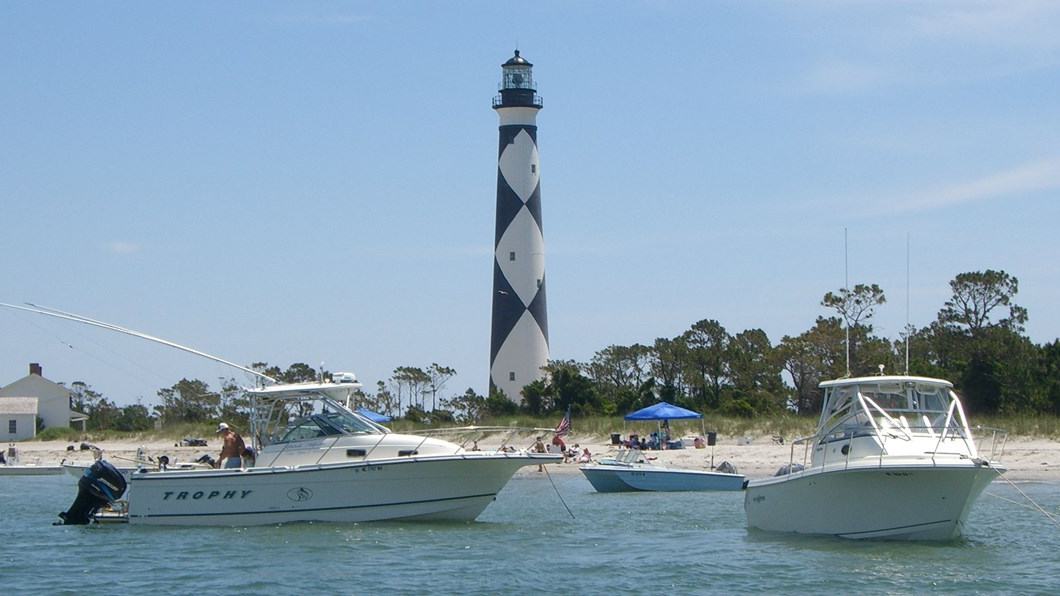
Cape Lookout's barrier islands require different ferry departure points for the lighthouse, Shackleford Banks, Portsmouth Village and vehicle-access Core Banks beaches. This guide compares the routes and practical planning constraints.
Choosing the correct island ferry
Cape Lookout National Seashore is one destination on the map but several very different journeys in practice. Its chain of barrier islands is reached by boat, and visitors need to decide what they hope to see before buying a ticket. A lighthouse outing, a beach visit to Shackleford Banks and a vehicle-based trip to the Core Banks should not be treated as interchangeable ferry products.
The National Park Service identifies Island Express Ferry Service as the authorised passenger concessioner serving Cape Lookout Lighthouse and Shackleford Banks from Harkers Island and Beaufort. For travellers bringing a vehicle, separate ferries operate from Davis and Atlantic to different Core Banks destinations. That distinction should be understood before departing for the coast, because arriving at the wrong terminal may make the intended visit impossible.
The ferry timetable is a planning document rather than a guarantee of calm conditions. The park makes clear that departures and visitor access depend on the season and weather, and each operator maintains its own schedule. For a family holiday, an early call to the ferry service is more valuable than assuming online information will remain unchanged until the morning of travel.
Harkers Island and Beaufort
The shorter Harkers Island passenger crossing takes visitors towards the lighthouse area or the eastern end of Shackleford Banks. The National Park Service gives an approximate travel time of thirty minutes for the 3.5-mile run. A visitor primarily interested in the lighthouse and a straightforward beach walk may find this an easier starting point than committing to a much longer excursion.
Beaufort also offers passenger departures, with the western Shackleford Banks crossing described by the park as approximately twenty minutes. The route from Beaufort to the lighthouse is longer, at around forty minutes for twelve miles. These figures are useful for choosing the structure of the day, but they should not be confused with a fixed journey duration in every wind, sea and operating condition.
Shackleford Banks is best approached as an undeveloped barrier-island environment rather than a serviced resort. Beach conditions and landing arrangements can be different from sheltered marina facilities. Visitors should travel with practical footwear, drinking water and realistic expectations about the absence of conventional amenities, leaving ample time to return to the designated ferry pickup location.
Vehicle ferries and the remote Core Banks
Travellers carrying a suitable vehicle need a different booking from ordinary walk-on passengers. The park directs South Core Banks vehicle ferry users to Davis, with service to the Great Island Cabin Camp area. Visitors heading to North Core Banks use the route from Atlantic to Long Point Cabin Camp. The two arrivals are not simply alternative docks for the same beach itinerary.
According to the park, the Davis crossing is around forty-five minutes and the Atlantic route about one hour. Those are only the waterborne portions of a more complex day. A vehicle-based visit should also allow for boarding procedures, appropriate permits, road conditions on the islands and the eventual return sailing, all of which should be confirmed directly with the responsible operator.
Isolation is part of the Core Banks experience, yet that also raises the importance of preparation. Fuel, drinking water, communications and recovery options should be considered before travelling, rather than relying on facilities that might not exist at a particular landing. A remote-island outing can reward careful planning, but it is poorly suited to a casual last-minute detour from another destination.
Portsmouth Village and the limits of the timetable
The historic settlement of Portsmouth Village has its own boat-access considerations. The National Park Service lists a passenger ferry from Ocracoke for the village, with the journey estimated at around twenty minutes over five miles. It is not a convenient substitute for the Harkers Island or Beaufort lighthouse services; it serves a different part of the seashore and calls for its own itinerary.
The park emphasises that schedules vary through the year and advises travellers to obtain current departure information directly from the ferry provider. For anyone aiming to combine islands, historic locations or extended beach time, timing is the critical constraint. Two individually appealing destinations can become an uncomfortable day if the last return sailing is overlooked.
Autumn trips deserve particular care because shorter daylight hours leave less flexibility after a weather delay. A conservative plan prioritises one principal destination, allows a margin for boarding and leaves an alternative land-based activity if the sea does not cooperate. On an exposed coast, a cancelled departure is not an inconvenience to argue away; it is a sound operational decision.
What to carry and how to travel responsibly
At Cape Lookout, the absence of built-up resort infrastructure is part of the attraction. It is also a reason to carry enough water, sun protection, food and a securely packed layer for changing conditions. Footwear suited to sand and occasional wet landings is more useful than formal clothing, and everything brought onto the islands should leave with the visitor.
Conditions published by the Park Service should be checked immediately before departure, including the status of docks, ferry operations and visitor facilities. A current open notice is not a promise that the following day's sea state will permit a crossing. Families should also pay attention to the practical walking distance from the landing point to the attraction they plan to visit.
The most rewarding Cape Lookout excursion begins with a single clear decision: lighthouse, wild barrier island, historic village or remote vehicle-access beach. Once that objective is chosen, select the correct departure point and obtain the operating details from the authorised provider. This keeps the journey enjoyable while respecting the real limitations of a protected, boat-access coastline.