
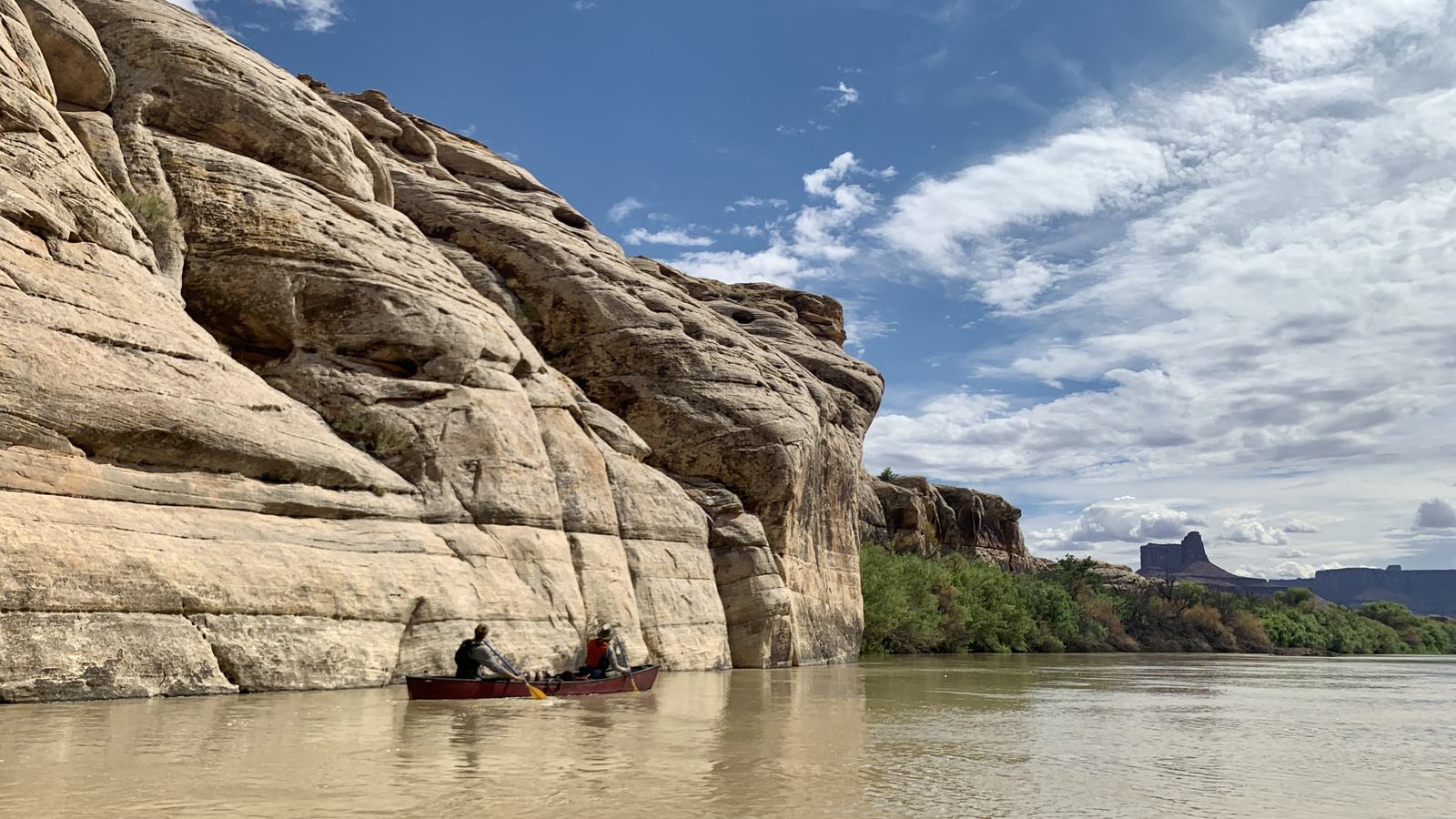
Canyonlands offers extraordinary desert canoe journeys above the river confluence, but remote launches, permits and the powerful rapids below require serious planning.
See the desert from the river upwards
Some landscapes make sense only when experienced from their lowest point. At Canyonlands National Park in Utah, canoeists travel between walls of layered sandstone while the Colorado and Green rivers trace deep channels through the desert. A river journey changes the scale of the landscape: cliffs that look like modest lines from a distant overlook become a sequence of vast surfaces, alcoves and changing colours when viewed at water level.
The National Park Service separates two very different river experiences. Upstream of the Green and Colorado confluence lie stretches of comparatively calm water suitable for suitably equipped canoeists and kayakers. Below the confluence is Cataract Canyon, where powerful whitewater demands a different vessel, expertise and trip plan. Confusing these sections would be a serious mistake, especially for travellers who are comfortable on sheltered lakes but have little experience of remote rivers.
Choose a flatwater journey deliberately
The Green River and Colorado River above their meeting point offer the opportunity for slower travel through spectacular country. A canoe party can pause to look at the cliffs and make measured progress without treating every bend as an obstacle. That calm appearance should not be mistaken for easy logistics. Launches and take-outs are distant from many visitor services, and a journey planned as one-way travel requires transport arrangements at both ends.
The park identifies Green River launch options such as Green River State Park, Ruby Ranch and Mineral Bottom, while Colorado River access commonly uses ramps near Potash or Moab. The right choice depends on the distance a group wishes to cover, water level, available days and the arrangements for recovering boats and people. It is sensible to consult the official river guidance before reserving transport or hiring equipment.
Permits and shuttles shape the itinerary
Private noncommercial trips require a river permit, and overnight use brings its own requirements. Travellers should not assume that having a canoe, a map and several days free is enough to launch. The permit specifies the approved party and trip, while a responsible group must account for sanitation, waste and safe camping practices in a remote environment. Read the current National Park Service instructions in full rather than relying on remembered rules from an earlier visit.
At the end of a flatwater route, getting everyone and every boat out of the canyon can be as important as the journey itself. Commercial jetboat shuttle services are used on some routes, and their availability and conditions should be agreed in advance. Weather or water level changes may affect timings. A competent organiser confirms the handover point, return transfer and contingency arrangements before departure, not after arriving at a remote beach.
The confluence is a real dividing line
Cataract Canyon starts below the meeting of the rivers and is not a gentle continuation of a canoe tour. The park describes a roughly fourteen-mile stretch of major whitewater, including rapids that can reach Class V. Experienced river runners plan specialised equipment, rescue procedures and a suitable craft for that environment. Ordinary recreational paddlers should treat the confluence as the limit of an upstream flatwater itinerary unless a properly arranged whitewater trip is intended.
The easiest way to keep a first visit enjoyable is to decide in advance what sort of journey the group actually wants. There is no virtue in drifting from quiet paddling into demanding rapids because the scenery encourages one more mile. For visitors seeking the grandeur of Canyonlands without whitewater technicality, a defined flatwater route with a confirmed take-out is the better fit.
Carry a plan that works without reception
Navigation and communication in a canyon can be very different from that on a reservoir near a town. A mobile phone is useful but should not be the only source of maps or the sole emergency strategy. Bring suitable river charts or maps, a reliable means of navigation, first-aid supplies, sufficient drinking water, sun protection and clothing for changes in temperature. Agree a float plan with someone ashore and establish when help should be requested if the group does not return.
Desert weather creates its own demands. Strong sun may be followed by wind, cool nights or local storms, while conditions upstream can alter river flow. A conservative daily distance leaves time for an unexpected delay and for careful landing decisions. Avoid choosing campsites merely because they are photogenic; legality, rising water and the safety of a landing matter more than a panoramic backdrop.
Travel lightly through an ancient landscape
Canyonlands is a place to look closely as well as far away. The river corridors can reveal birdlife, vegetation and textures that are easily overlooked on a long drive. Visitors should respect cultural sites, avoid disturbing archaeological material and keep camps and shore stops within the park's rules. The best photograph is one that can be taken without damaging a fragile riverbank or leaving a trace for the next party.
Paddling slowly also changes the social atmosphere of a trip. Conversation gives way to the sound of the paddle, and a group begins to notice the different light on the canyon walls during morning and evening. The attraction is not a race toward the confluence, but the rare opportunity to inhabit a magnificent landscape on its own terms for several days.
A strong trip begins before the launch
Before committing to Canyonlands, review the National Park Service river permit system, current access advice, river flows and shuttle options. Match the route to the least experienced person in the party and make sure everyone understands the difference between the calm reaches and Cataract Canyon. If a guided journey is a better match, select an authorised operator and establish what the itinerary includes.
The reward for that preparation is considerable. A properly organised canoe journey offers still mornings, desert silence and a sense of scale that a brief overlook stop cannot provide. Its luxury lies in time and attention rather than speed or elaborate equipment, provided the practical fundamentals of river travel have been handled with care.
Check the official National Park Service Canyonlands boating guide for updated access restrictions, conditions and regulations. Hero photograph: National Park Service, canoeists on the Green River in Canyonlands.