
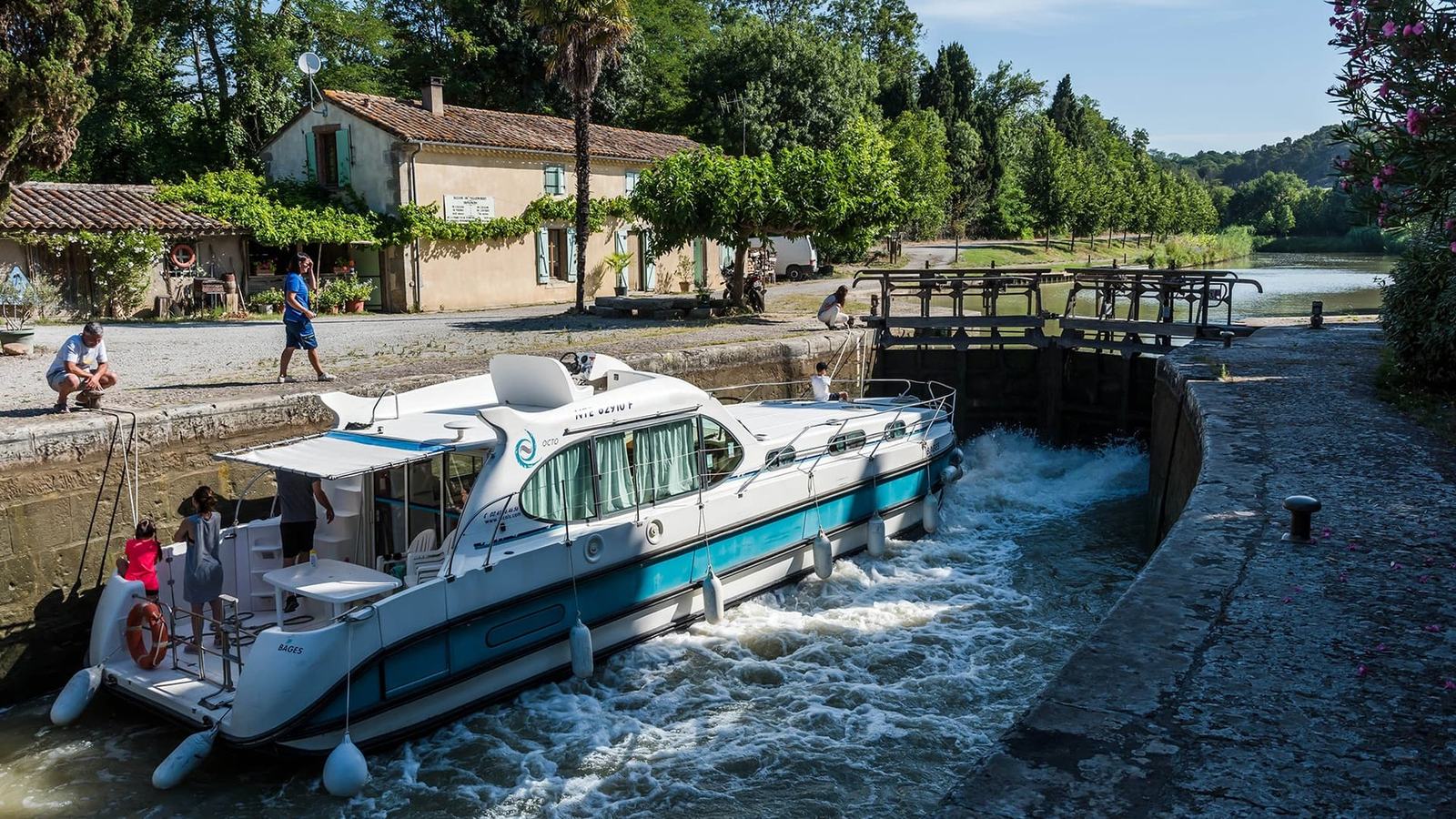
A Canal du Midi boating holiday moves at the pace of locks and villages. Careful attention to waterway notices, bridge limits and seasonal closures keeps the experience relaxed.
The pleasures of travelling slowly
The Canal du Midi offers a form of boating that is almost the opposite of high-speed day cruising. Moving through southern France by canal allows the journey itself to become the holiday, with small settlements, towpaths and shaded banks unfolding at a deliberate pace.
A hire boat can act as both accommodation and transport, making it possible to stop for a local market or a short village walk without constantly packing luggage. The trade-off is that progress depends on locks, water levels and the limits of the navigation.
That change of rhythm is the attraction, not a defect. Travellers who allow the route to shape the day often enjoy the waterway more than crews who set an ambitious distance target and then resent every slow lock passage.
The canal's historic engineering gives the journey a distinct character. Its locks, bridges and carefully managed pounds are a reminder that the route is an operating waterway, not an unrestricted lake.
Plan around locks and bridge clearances
Before hiring, discuss the length, width, height and draught of the proposed craft with the operator. Some bridges and structures offer limited clearance, and figures that are acceptable for one hire boat may not suit a taller vessel carrying extra equipment.
Lock operation deserves particular attention in the handover briefing. Crew members should understand where to stand, how to handle lines without wrapping them around hands and when to keep clear of moving gates and changing water levels.
The official Canal du Midi visitor information explains navigation procedures and restrictions, including the importance of adhering to the canal operator's instructions. A lockkeeper's direction takes precedence over a crew's preferred schedule.
An enjoyable first day should include fewer planned miles than might appear possible on a route map. That leaves time to practise slow manoeuvres, learn the boat's steering response and avoid arriving tired at the final mooring.
Seasonal closures are part of the calendar
The canal is subject to maintenance periods when sections are closed to navigation and locks may be unavailable. The official guide explains that the low-season stoppage allows Voies Navigables de France to carry out work on the waterway.
Water levels can also change when canal pounds are drained for maintenance or when exceptional weather affects operating conditions. Checking present notices before departure is far more important than relying on a general article written for a previous summer.
The guide identifies certain public holidays when navigation across the Canal des Deux Mers system is restricted or prohibited. Travellers should verify the exact dates, hours and sections that apply to their intended departure.
A flexible booking plan should account for possible delays, especially if the crew needs to reach an airport or return the boat by a fixed deadline. Leaving a margin at the end of the trip protects the holiday from avoidable last-minute stress.
The human side of a canal passage
Canal boating is a shared activity, and everyone aboard can have a meaningful role. One person watches the approach to the lock, another prepares lines, while the helmsperson maintains a safe, slow speed and clear view.
Communication matters more than strength. A simple routine for stopping, securing and leaving a lock keeps the crew calm, while shouted last-second instructions tend to create confusion in confined spaces.
Towpaths are often appealing for walks and cycling, but shore access should use appropriate public moorings. Do not assume every attractive bank is a legal or safe place to leave a hire boat unattended.
Restaurants and food shops can be part of the day's destination, yet opening hours vary between villages and seasons. Carry enough drinking water, food and basic supplies to remain comfortable if a planned stop is unavailable.
Make the itinerary fit the boat and the season
Boat choice should begin with sleeping arrangements, accessible walking space and whether all travellers are comfortable using steps and narrow side decks. On a self-drive holiday, daily practicalities matter more than a glossy cabin photograph.
Ask the hire operator about bedding, cooking equipment, fuel charges, bicycle carriage, pet rules and how the boat handles wastewater. Clear answers help distinguish the advertised rental price from the real cost of a week afloat.
Check the weather and waterway updates each morning. Heavy rain, heat or maintenance can affect the day, and the safest response is often to stay at a suitable mooring rather than press into an uncertain passage.
Above all, Canal du Midi cruising rewards patience. With a sensible daily distance, respectful lock handling and time to enjoy the villages, the waterways of southern France become a memorable destination in their own right.
For families, a useful final planning step is to make a short written cruising plan for each day. List the intended mooring, the number of locks, the likely time spent underway and the nearest sensible alternative stop. Keep food and drinking water aboard for delays, and agree who will handle ropes before approaching each lock. Do not assume that a canal-side restaurant or supermarket will be open when you arrive. These modest preparations create the flexibility that makes a boat-hire holiday genuinely relaxing, especially for crews with children or first-time inland-waterway travellers.