
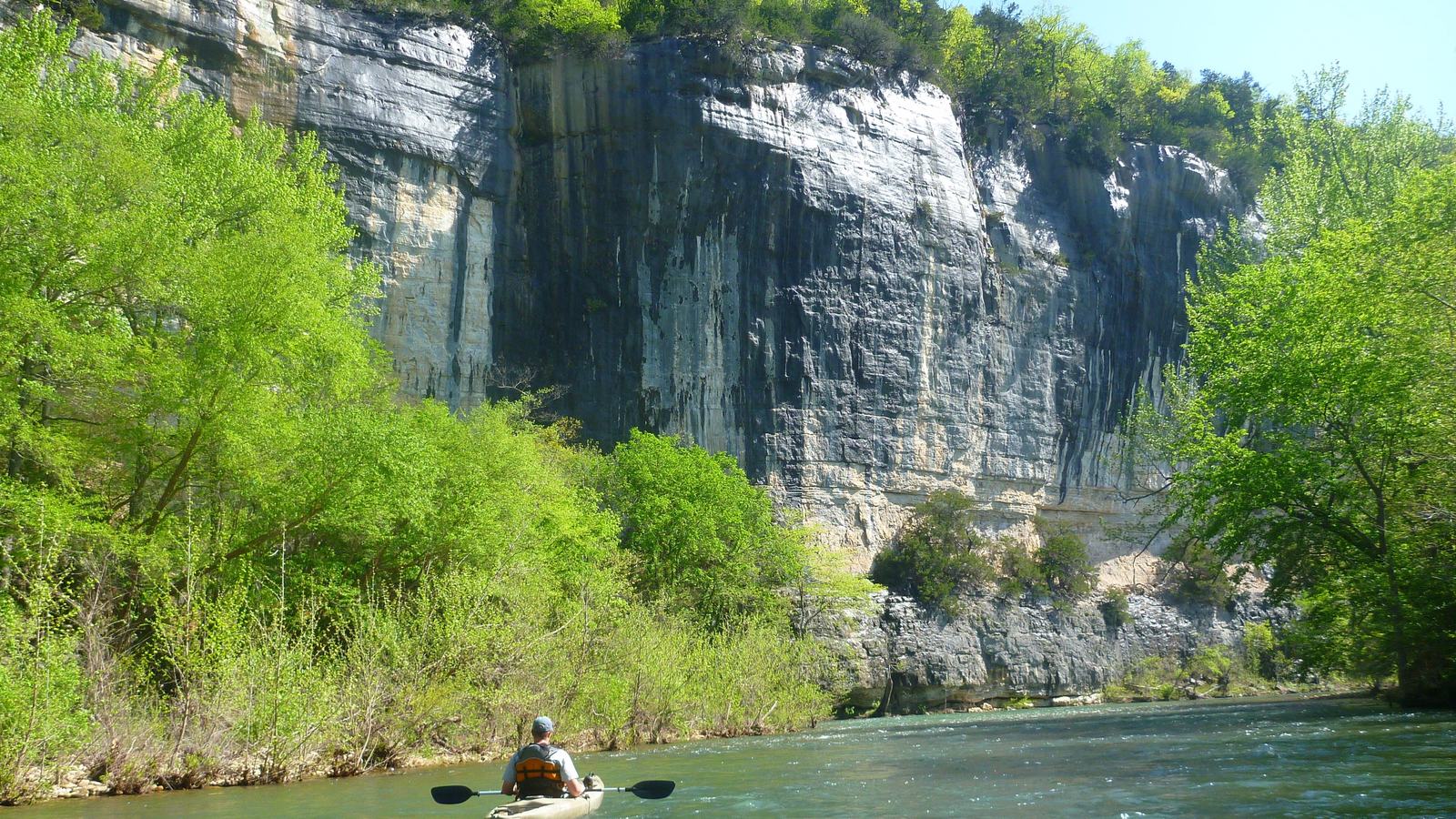
The Buffalo National River rewards careful canoe and kayak planning, with very different floating seasons and water conditions along its 151 free-flowing miles.
A free-flowing river with changing character
Arkansas’s Buffalo National River covers 151 miles of free-flowing water through the Ozark landscape, making it a memorable destination for canoeists and kayakers. Towering bluffs, forested banks and quiet reaches create a very different experience from running a boat on an impounded lake. The park’s defining attraction, however, is the river’s natural character, which means that flow conditions change with the weather.
The National Park Service divides the river into Upper, Middle and Lower districts for planning purposes. Those names represent more than locations on a map. Each part has different seasonal opportunities, levels of difficulty and road access. A successful day begins with choosing an appropriate reach, then confirming whether it is navigable and suitable for the least experienced member of the party.
Spring on the upper river
The upper Buffalo typically attracts paddlers in spring, when rainfall produces more reliable flow and, in some sections, challenging whitewater. This can be exhilarating for a skilled group with suitable equipment, yet a poor choice for a family simply seeking a tranquil afternoon. The park warns that its upper reaches can become narrow and fast, and users must judge their own experience honestly.
Higher water levels do not necessarily mean a safer or easier journey. Fast current increases the force against rock walls and obstacles, while a capsized craft can separate people from their gear quickly. Ask an authorised outfitter or ranger for current guidance, but remember that a new fallen tree or shifting gravel bar can create a hazard after the latest report.
The middle and lower districts
As the year progresses and upper stretches become shallower, suitable paddling often shifts downstream. The Middle District includes the Tyler Bend area, while the Lower District reaches towards the river’s confluence with the White River. The park notes that lower sections may offer opportunities throughout more of the year, although the entire system remains sensitive to rainfall and drought.
This seasonal pattern encourages repeat visits because the scenery and pace change markedly by district. For someone new to the Buffalo, a moderate lower-river float may be more appropriate than a spring whitewater section. The decision should still be made from current water-level reports, not an assumption that a river described as navigable year-round can always be paddled without difficulty.
Access, distance and a reliable take-out
A river journey is rarely a simple out-and-back excursion. The current carries the craft downstream, so an agreed take-out and vehicle shuttle are part of the trip itself. The National Park Service provides river-access information and mileage tables for its districts. Use them to select a distance that allows for stops, slower paddlers and unexpectedly low water.
At busy public launches, vehicles and rental operators compete for limited space. Unload efficiently, observe parking restrictions and make sure all equipment is ready before occupying the ramp or bank. Every participant should know the take-out name, who is responsible for the shuttle and what the group will do if it has to end the trip earlier than planned.
Reading the water and avoiding strainers
Downed trees are one of the Buffalo’s most serious paddling hazards. The park describes sweepers and strainers that can trap a canoe or person while the current continues to push water through the branches. Such obstacles are particularly dangerous on the outside of bends, where the flow may be strongest. The safest solution is to identify them early and keep a wide margin.
Water-level gauges provide useful information but cannot report every obstacle. Recent rain can change a channel, and low water can expose rocks or force a craft towards a difficult chute. Experienced paddlers continually look ahead and avoid committing to a line they cannot safely exit. If a section is beyond the group’s ability, choosing a different reach is a sign of good judgement.
Personal safety and river etiquette
Buffalo National River requires an approved flotation device to be carried for each person, and children aged 12 and under must wear theirs while aboard. The park recommends that all ages wear one. Carry drinking water, sun protection, appropriate footwear, a basic first-aid kit and an emergency communication plan. Mobile coverage may be poor along remote reaches.
Tell a responsible person ashore the exact put-in, take-out and expected return time. Keep the group together, respect other paddlers and avoid disturbing wildlife on the banks. The river is an exceptional natural area, and careful behaviour helps preserve its appeal. Take all waste out, even when a gravel bar looks as though nobody has visited it before.
A river that rewards planning
The strongest Buffalo River itineraries are built around conditions rather than an inflexible date. An ambitious upper-river passage in spring and a relaxed lower-river paddle later in the year may both be rewarding, but they require different equipment and skills. The park’s official district descriptions, access maps and river-level information should be reviewed together.
Hiring an authorised outfitter can simplify the shuttle and provide local knowledge, although it never removes the paddler’s responsibility for safety. If conditions are unsuitable, the Ozarks offer plenty of land-based scenery and a deferred trip is better than an emergency on the water. The Buffalo’s appeal will still be there when the river is ready.