
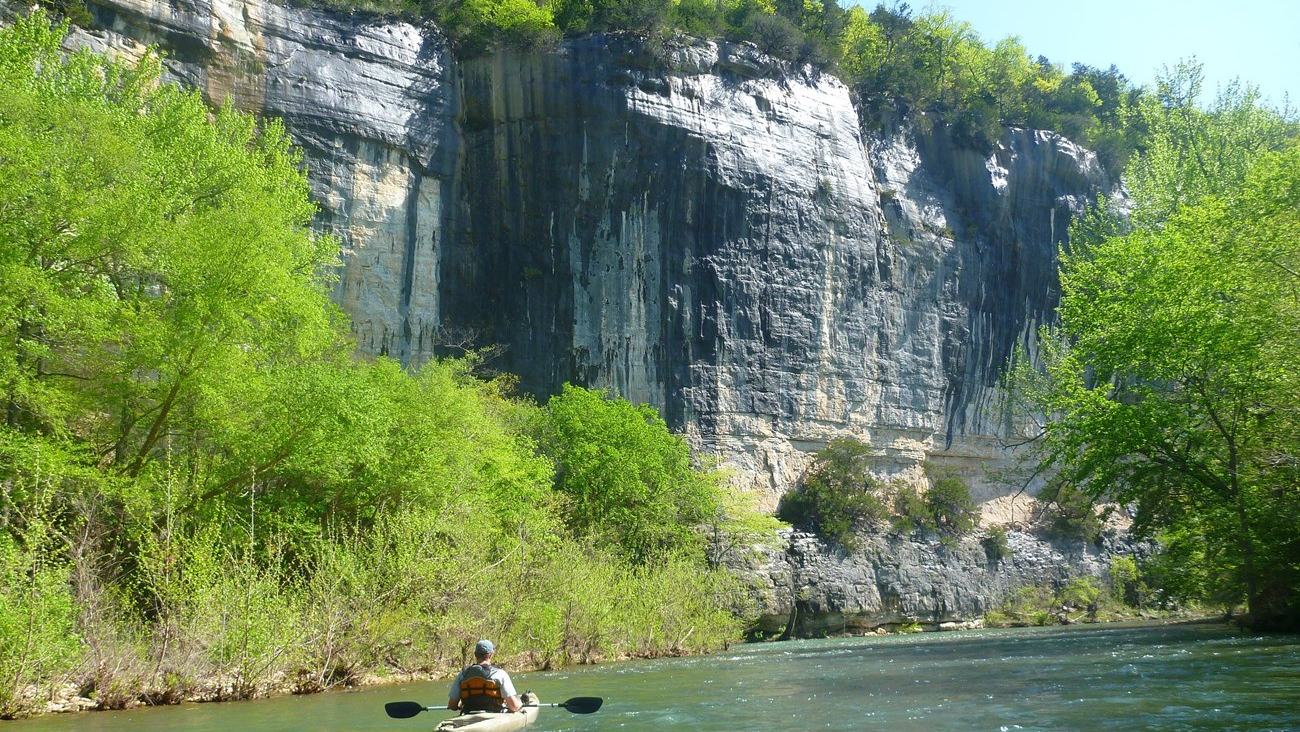
Arkansas's Buffalo National River offers scenic paddling through wooded valleys and gravel-bar country, with different routes suited to different levels of experience.
A river that invites slower travel
Arkansas's Buffalo National River offers the sort of small-boat experience in which the journey is shaped by the water rather than a timetable. A canoe or kayak carries visitors past wooded banks, gravel bars and stretches of scenery that feel far removed from a busy highway. The National Park Service highlights paddling as an important way to experience the river, with local outfitters and public access points allowing travellers to choose trips of different lengths.
The essential choice is not simply where to launch, but which reach of the river suits the crew. Some areas have easier access and relatively gentle conditions, while others require more experience or are difficult to navigate when water levels are high or low. A successful holiday begins with realistic planning rather than treating every kilometre of the river as equivalent.
Selecting a reach before making reservations
The Park Service uses the term reach to describe the section between a put-in and a take-out. The distance of a reach matters, but it is not a reliable measure of travel time on its own. Current, obstructions, shallow areas and the number of stops can all change how long an outing takes. A route suitable for a summer afternoon under one set of conditions may demand far greater effort at another time.
Visitors should consult the park's current paddling map and information about water levels before booking a shuttle or deciding where to collect the boat. A rental operator may be able to suggest an appropriate route for beginners or families. The most reassuring arrangement is one in which the crew understands exactly where the journey ends and how they will return to the starting area.
The launch deserves patience
Popular access points may become crowded when several groups arrive at once, especially during warmer weather. Canoes, kayaks, shuttles, private vehicles and rental trailers can compete for limited space. The NPS asks visitors to respect parking restrictions and be considerate of other users while loading and launching.
A calm departure sets the tone for the day. Bags and paddles should be secured before the boat reaches the water, and each passenger should understand where to sit. The crew should ensure that its vehicle is parked legally rather than blocking equipment movement. A rushed or poorly organised launch can lead to lost items and unnecessary tension before the outing even begins.
Gravel bars are part of the landscape
The Buffalo's gravel bars change with floods and the movement of sediment, making them a characteristic feature of the river. They may offer a convenient place to pause during an authorised outing, but shallow water around them can interrupt a route or force paddlers to manoeuvre carefully. A heavily loaded boat may touch bottom where a lightly equipped kayak can pass.
These bars are also habitat for plants and animals, so visitors should take care to avoid disturbing sensitive areas. Campfires, camping and access are subject to specific regulations, and an attractive gravel patch should not automatically be treated as a place where overnight use is permitted. Current park guidance should be consulted before planning any camp.
Water levels change the experience
The same reach can feel very different after rainfall or during a dry period. Higher flows may increase speed and the consequences of encountering a fallen tree, while low water can leave shallow sections requiring difficult handling. The Park Service's paddling information stresses that some sections are navigable only when the river carries enough water.
Checking the latest conditions is therefore more important than relying on memories from an earlier visit. A beginner should not assume that a familiar route is safe after significant rain, nor should an owner of a larger canoe expect the boat to float comfortably through a reach in low-water conditions. Local outfitters may also change their recommended routes according to the state of the river.
Life jackets and a clear float plan
National Park Service guidance requires everyone floating or paddling the Buffalo to have a suitable personal flotation device aboard and children aged twelve and under to wear theirs while in the boat. The agency also recommends that older paddlers wear flotation consistently. The correct item should be approved, in serviceable condition and fitted to the wearer rather than simply placed somewhere in the bottom of the craft.
Visitors should tell somebody ashore which route they intend to take, their expected return and how they will travel between access points. A map is useful even where the current seems to make the direction obvious. Communication may be limited in remote sections, so a group should have a practical response plan in case someone becomes separated or a boat is damaged.
Enjoy the river without leaving damage
Paddling quietly offers opportunities to observe birds, changes in the forest and the shape of the valley. That experience is best preserved when visitors pack out waste, avoid feeding wildlife and respect private property adjoining the river. A dry bag for rubbish is a small addition that can prevent lightweight packaging from escaping into the current.
Fishing, swimming and riverbank stops may all be part of a trip when permitted, but they create additional responsibilities. A skipper needs to understand how the current moves around a stopped boat and should avoid anchoring or tying up where the craft might become pinned or obstruct others. Safe recreation requires attention even when the overall pace feels relaxed.
A river holiday built around local knowledge
The official NPS photograph accompanying this article shows a kayaker on the Buffalo itself, providing a genuine view of its small-craft setting. For a newcomer, a half-day guided or rented outing on a suitable reach may be more rewarding than trying to cover too much of the river. It creates time to enjoy the scenery and learn the basic handling needed for future journeys.
Arkansas's Buffalo River demonstrates how an accessible small boat can connect visitors with a protected landscape. The final route should be based on real conditions, current park rules and the abilities of the passengers, not on an ambitious distance selected months in advance. When those details are in place, the rhythm of the water becomes the main pleasure of the day.