
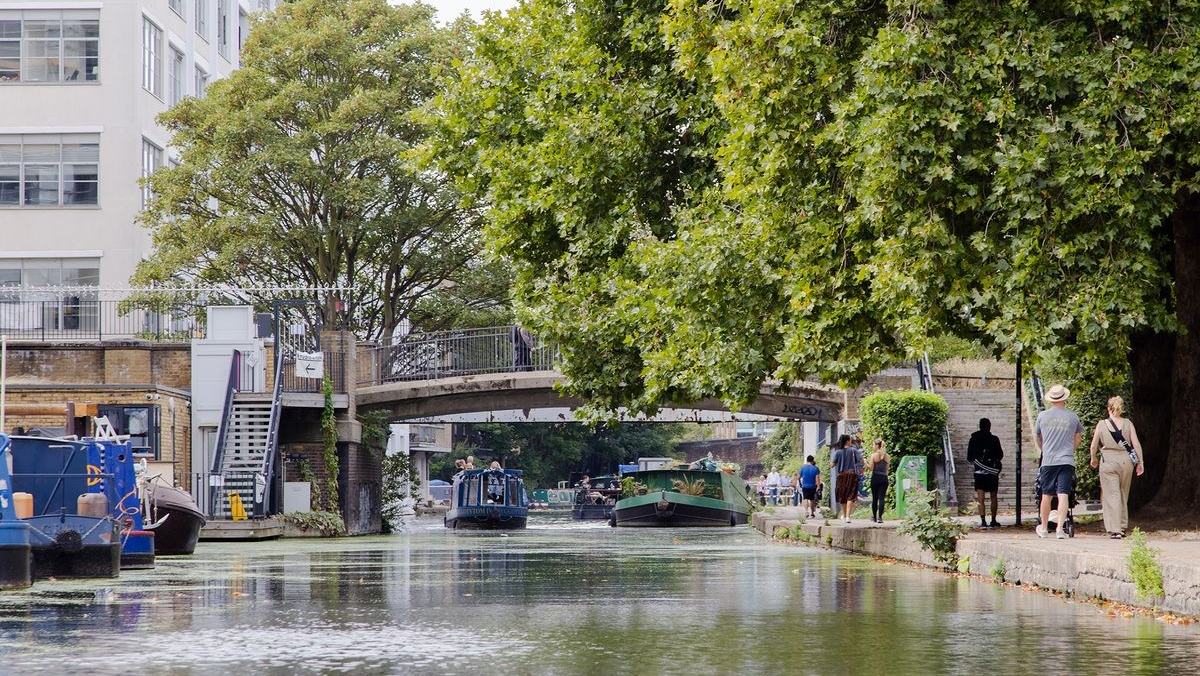
The Canal & River Trust has scheduled a Bow-to-Islington Canal History Walk for 24 October 2026, from 11am to 1pm. The free guided route starts at Alîa’s Café, Block C, 24 Stoneway Walk in Globe Town, then follows the waterway towards Islington Tunnel before the group disperses near Angel. The guide is described as a qualified historian.
A guided route through east London’s canal landscape
The Canal & River Trust has scheduled a Bow-to-Islington Canal History Walk for 24 October 2026, from 11am to 1pm. The free guided route starts at Alîa’s Café, Block C, 24 Stoneway Walk in Globe Town, then follows the waterway towards Islington Tunnel before the group disperses near Angel. The guide is described as a qualified historian.
Walking the canal can reveal an aspect of London that is easy to miss from buses or Underground trains. Towpaths connect residential streets, former industrial land and small waterside spaces in a relatively continuous line. The route’s history helps explain why the canal follows its particular course and how neighbouring communities have changed.
A route with stories rather than a speed target
The organiser calls the outing one of its friendly Let’s Walk sessions, allowing pauses to discuss landmarks and local events. The experience is intended to be sociable rather than an endurance challenge. Participants can ask questions and learn from the guide’s knowledge of the neighbourhood as it passes on both sides of the water.
A historical account of a canal should be approached with curiosity rather than nostalgia alone. These routes served trade and industry and were linked to demanding working conditions as well as remarkable engineering. Considering those different experiences makes the walk more meaningful than simply identifying attractive brickwork or moored boats.
What to bring and how to return
The Trust recommends comfortable shoes and a jacket if it rains; no specialist walking equipment is required. Because the group finishes in the Angel area rather than returning to its starting point, travellers should plan a journey home from there. The organiser mentions nearby public transport connections at the start and finish.
Participants should check any route updates, especially if towpath works or local events restrict access. The narrowness of some sections means walkers also need to be considerate of cyclists, residents, boaters and other users. Safe behaviour beside open water matters even during an informal leisure stroll.
A useful way to explore without owning a boat
A canal-based event can appeal to people who enjoy boating but cannot regularly get afloat. Walking beside moored narrowboats and working locks offers an introduction to the infrastructure that supports inland cruising. It may also encourage visitors to explore other parts of London’s connected waterways.
The October session offers a manageable way to combine fresh air, conversation and the history of a changing city. Its attraction is the focused route and an experienced guide, while the final timetable, booking arrangements and any accessibility questions should be confirmed through the Canal & River Trust.
Source
British Marine