
Boston Harbor Islands reward small-boat owners with maritime history and island scenery just outside the city, but current mooring changes, commercial shipping lanes and restricted landings need careful planning. This 2026 guide explains Georges Island and Fort Warren, Spectacle Island, reservation systems and the October end to regular ferry services.
The Boston Harbor Islands may sit within sight of a major American city, but reaching them in a private boat still calls for the habits of a careful coastal skipper. Working channels, tidal currents, exposed approaches and very different landing rules sit alongside islands shaped by military history, beaches and quiet walking trails. For owners looking beyond an ordinary marina stop, the reward is a short cruise that feels remarkably far from downtown Boston.
An important change for boaters in 2026 is the park partnership's revised mooring fee structure, introduced to support inspections, repair and replacement. Public moorings at Georges, Spectacle and Peddocks Islands are booked through Dockwa, with additional sites and different access arrangements elsewhere in the harbour. The 2026 seasonal public ferry service finished on 12 October, so an autumn visitor planning a trip now should not assume summer facilities or staff are available.
A harbour with an unusual island network
Boston Harbor Islands National and State Park encompasses a series of islands and peninsulas managed through a partnership that includes the National Park Service and Massachusetts agencies. The islands are not an unrestricted boating playground; active port traffic uses nearby shipping channels, while protected habitats and historic sites impose different rules from one shoreline to the next. Understanding that mosaic is the first step to an enjoyable visit.
A sensible itinerary starts with a navigational chart, the marine forecast and the latest harbour notices rather than a straight line between attractive names on a map. Ferry routes, large commercial vessels and small recreational craft share the water. Close to island shores the sea state and exposure can also change more quickly than a skipper might expect from the weather observed at a sheltered Boston waterfront berth.
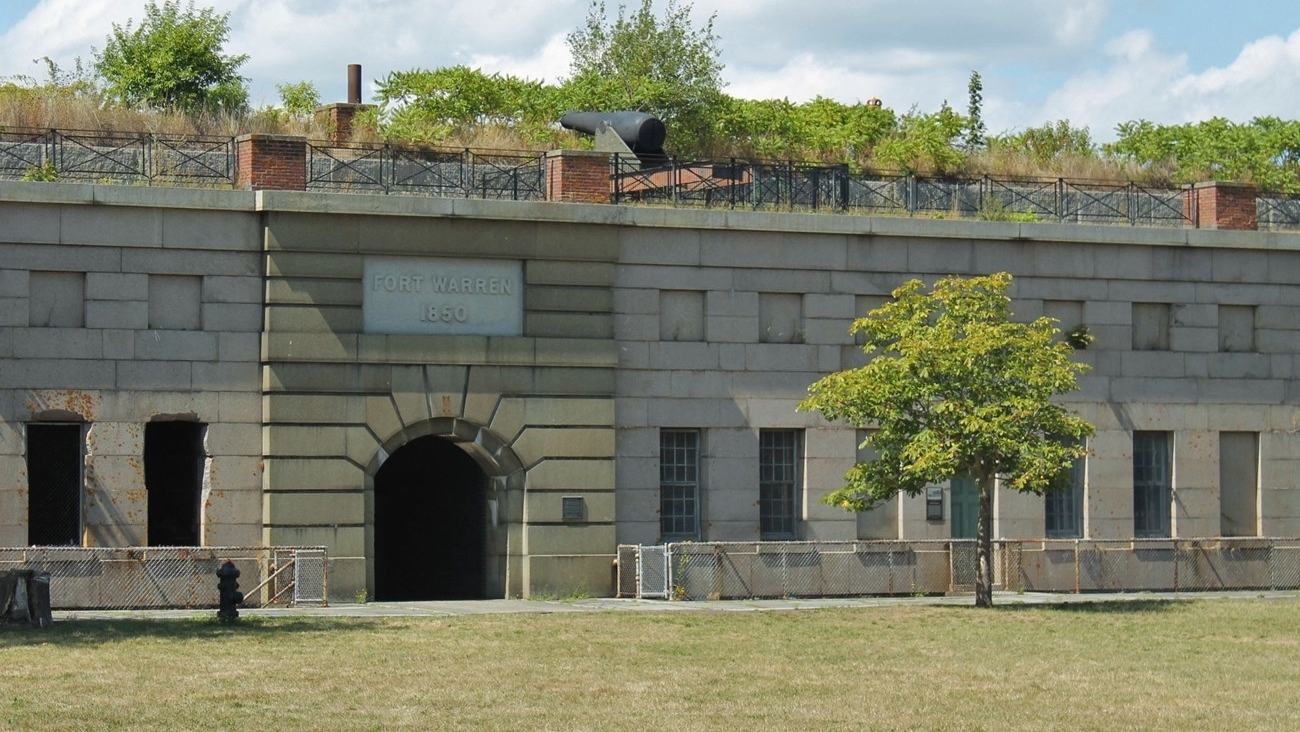
For many casual visitors, Georges Island is the cultural centrepiece. The island's Fort Warren is a National Historic Landmark associated with the Civil War period, and a visit provides far more than a quick photograph of the ramparts. Its corridors, stone walls and parade grounds speak to the long history of protecting the approaches to one of New England's most important ports.
Georges Island: a fort worth leaving the cockpit for
Fort Warren was built during the nineteenth century and later served as a prison for Confederate officers and officials. Visitors can trace the harbour's defensive logic by moving through its imposing structure and looking outward toward the water that the guns were intended to command. For children and adults alike, the physical scale of the walls makes that history easier to imagine than a museum plan alone.
Access has its own practical considerations. The park partnership's Georges Island guide warns of dark passages, stone steps and steep drops within the fort; adults should supervise children and remain on established routes. It also states that swimming at Georges Island is not allowed, a useful distinction from other Boston Harbor Islands where beaches are part of the attraction.
Arrival by private craft is not the same as securing a marina berth for the day. Boaters should reserve a suitable mooring, plan a safe passenger transfer and keep ferry operations clear of the landing area. The partnership explains that passenger pick-up and drop-off are normally possible at many piers, but the vessel operator must stay aboard during a transfer and official and ferry traffic has priority.
Georges Island's visitors may find the journey especially rewarding when they regard the fort as the main event rather than trying to rush through several islands. A relaxed shore visit leaves more time to explore the defensive architecture and interpretive exhibits, then return aboard before afternoon winds or increased shipping traffic complicate the short cruise home.
Spectacle, Peddocks and the value of a mooring plan
Spectacle Island offers a different rhythm: open views toward the city, trails across drumlin hills and a more landscape-led outing. The current official boating guidance makes a specific point that Spectacle moorings remain available even though its marina is closed. A reserved mooring and suitable dinghy can therefore be the key to a visit; an assumption that an empty marina slip is open to private traffic is not.
Peddocks Island adds another variety of shore experience, with historic buildings and walking routes, but its visitor operating season matters. National Park Service information lists Peddocks as closed for the 2026 off-season from 13 October, while seasonal ferry services also have ended. A skipper considering it in late October should obtain current access confirmation instead of relying on summertime marketing or the presence of a mooring on a map.
Gallops Island illustrates the opposite problem: the availability of a mooring does not confer permission to land. The park partnership lists moorings near Gallops while explicitly forbidding public island access. It similarly places restrictions on several other islands, and the overall access picture can change with conservation requirements, so every planned landing needs to be checked against the current island-by-island rules.
Other moorings lie around Hingham Harbor and nearby islands under different managers. The Hingham Harbormaster looks after sites at Worlds End and Langlee, and the partnership lists a small number of first-come, first-served moorings at Thompson Island without public access from those moorings. Reservations, landing rights and permissible shore activities are separate questions, and each deserves its own answer.
The 2026 mooring update and costs
Boston Harbor Now and the Massachusetts Department of Conservation and Recreation say the 2026 rate adjustments will contribute to maintaining and replacing mooring equipment. Prices are structured differently across locations, with weekend and peak-period differences at some islands and a flat-rate approach at Peddocks. We have not inserted unverified prices here because they vary by site and booking period; the current Dockwa quotation is the appropriate figure for a particular visit.
A reserved buoy should never be treated as proof that it suits every hull. Before paying, owners should confirm the published mooring limits, the available depth at expected tide levels, and the condition of the tackle and approach. A berth suitable for a modest dayboat cannot simply be assumed to accept a heavy cruiser, and a booking confirmation does not remove the captain's responsibility for safe mooring.
The islands follow a carry-in, carry-out approach, so guests need to bring rubbish back to the mainland rather than expect harbour-side bins. Boston Harbor is also a No Discharge Zone, according to the park partnership, meaning sewage holding tanks must use an authorised pump-out service. These are practical parts of the voyage plan, not minor administrative details to remember after arrival.
Making a late-season or future-season visit worthwhile
By the final week of October 2026, the regular island ferry season is over and services on some islands have shut for the winter. This is still a useful time to study routes, identify the right mooring and confirm whether a particular shore landing will be permitted, but conditions and access should not be inferred from a mid-summer itinerary. The National Park Service directs visitors to the partnership website for live operating guidance.
Whenever the visit takes place, every crew should plan a conservative weather alternative. The harbour has enough interest for a rewarding scenic cruise without an island landing, and there is no need to persist with a dinghy transfer if wind, current or wake makes it uncomfortable. Carry adequate fuel reserve, appropriate lifejackets, navigation lights, communications equipment and a realistic plan for returning before darkness.
A memorable Boston Harbor Islands trip balances three things: a historic shore experience such as Fort Warren, a quiet interlude on the water, and respect for the harbour as a working port. The National Park Service trip-planning pages and the park partnership's current boating and island-access notices are the authoritative starting points. Check them again immediately before departure, because seasons, landings and mooring provisions are capable of changing.