
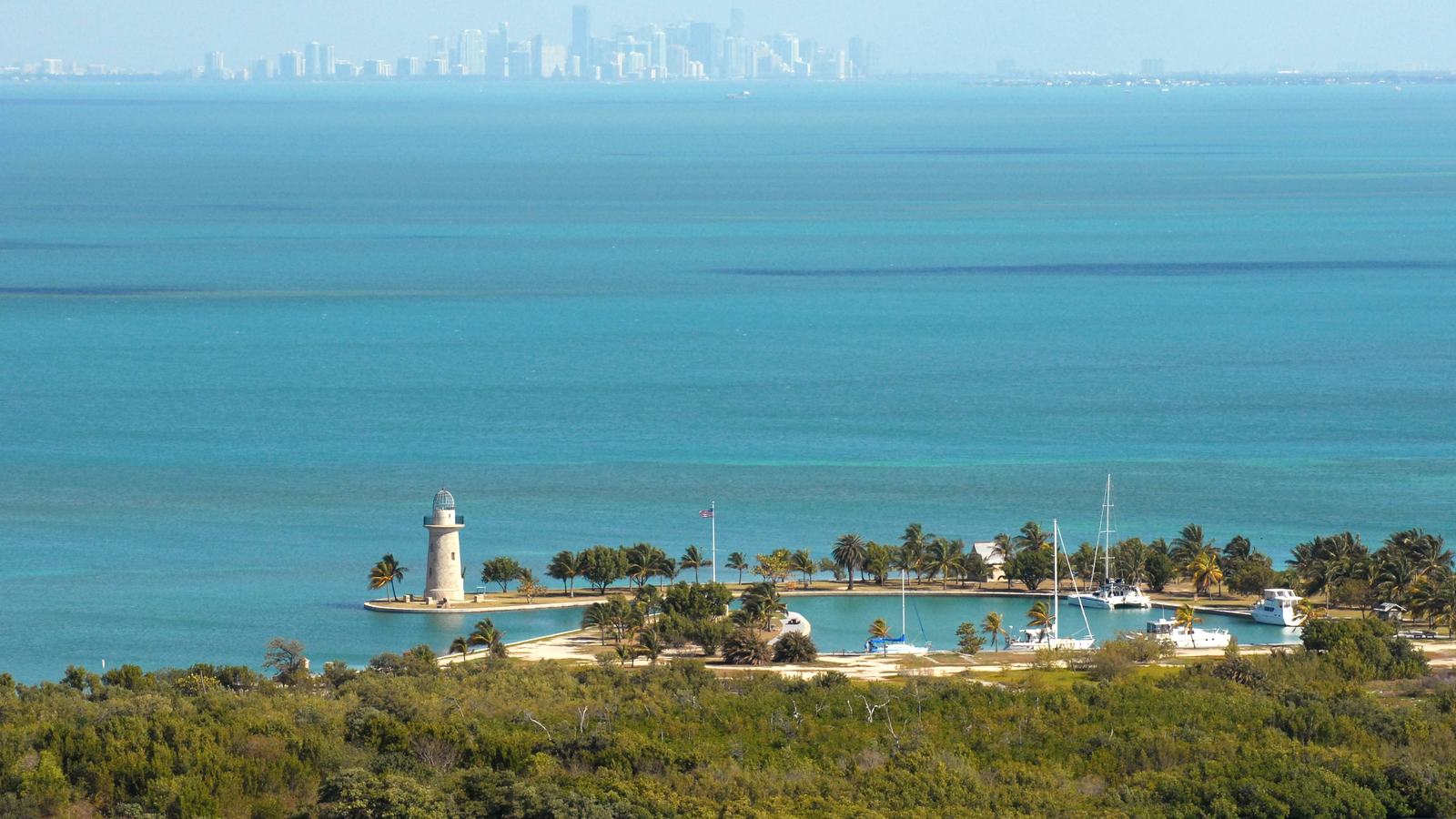
An independently researched boating guide to Biscayne National Park's Boca Chita Key, covering the lighthouse's 2026 reopening, shallow harbor approach, park docking rules, and a self-sufficient day ashore.
A small island with unusually specific boating rules
Boca Chita Key can look effortless in photographs: a white lighthouse above blue water, low tropical vegetation and a protected-looking harbor within sight of Miami. For private boat owners, however, its appeal depends on knowing the practical rules before leaving the dock. Biscayne National Park is largely a water-based destination, and Boca Chita is reached by boat. The island has a distinctive historic landscape, but little of the infrastructure associated with a conventional marina or staffed waterfront resort.
The reward for a well-planned visit is a genuine change of pace close to a major city. Passengers can step ashore for a picnic, explore a short trail and see the ornamental lighthouse that has become one of the park's signature landmarks. The trade-off is that visitors must bring their own drinking water, respect capacity and docking restrictions, and make a careful assessment of tidal depth. This is a particularly good outing for boaters who appreciate simple surroundings and preparation.
The low-water entrance deserves attention first
The National Park Service warns that the entrance to Boca Chita Harbor is approximately four feet deep at low tide. It specifically urges deep-draft vessels to exercise extreme caution. That figure should shape the entire plan: a boat that draws close to the available water at a published reference point may not be suited to an attempted harbor entry. Local conditions, accuracy of soundings, tide, squat, waves and the vessel's real loaded draft all matter.
The NPS provides a local timing reference, saying Boca Chita low tide is calculated by adding one hour and forty-three minutes to the low tide at Government Cut in Miami. That is useful context, not a substitute for an up-to-date tide prediction, navigation chart or the skipper's judgement. The safe approach is to work from current official hydrographic information, consider a generous under-keel margin, and change plans if the entrance or available docking looks doubtful.
Docking space is limited and specifically controlled
The park identifies the cleated bulkhead as the only permitted location for docking boats. It allows vessels to raft no more than two deep, a restriction that has immediate consequences for fenders, lines, passenger transfers and how long an unattended boat can safely remain. Skippers should not assume that a convenient stretch of wall, shore or nearby shallow water is available for alternative landing. On a busy weekend, the absence of usable space is a reason to look elsewhere.
First-come conditions make flexibility important. A narrow schedule can turn a relaxing excursion into a stressful approach with guests waiting to disembark, whereas a more generous plan leaves room for another destination if necessary. Small boats are often better suited to the facility than large, deep-draft craft. Whatever the boat's size, checking the approach and confirming a safe, lawful mooring comes before stepping ashore or assessing whether the island's famous lighthouse is open.
A 2026 return for the historic lighthouse
Boca Chita's ornamental lighthouse is not simply an attractive backdrop. In June 2026 the National Park Service announced its reopening to visitors after more than two years closed for major restoration. The agency described repairs to corroded ironwork, safety railings, masonry, doors and windows, along with work to address lead and the legacy of serious storm damage. The project was part of a broader effort to protect historic buildings and the island landscape.
The lighthouse was built in 1938 during the development of Mark Honeywell's private island retreat. Although it resembles an aid to navigation, it is an ornamental landmark rather than a light on which mariners should base navigation. The park says the observation deck offers striking views across the islands, Biscayne Bay, the ocean and the Miami skyline. Public access upstairs can depend on park staff availability, so guests should not promise a tower climb until they have checked current arrangements.
The island's original role was an exclusive retreat
Before becoming a national park destination, Boca Chita was developed as a private retreat during the 1930s and early 1940s. Honeywell's improvements formed an island setting intended for guests arriving by water: lighthouse, pavilion and other designed features within a compact landscape. The US National Park Service now interprets this as a historic district, preserved partly for its connection with South Florida's evolving leisure culture and coastal development.
The island offers an intriguing contrast with the bigger, faster boats familiar in Miami today. A visitor can still see how arrival by boat helped define the retreat's social life, but must treat the surviving structures as protected public heritage rather than private-party facilities. The historic district was listed on the National Register of Historic Places in 1997. That recognition makes the case for keeping to designated areas and leaving everything exactly as found.
Plan for an island with almost no supplies
The park's most important comfort warning is simple: Boca Chita has no drinking water, electrical supply, sales facilities, sinks or showers. There are restrooms, but boat owners must provide the essentials for everyone in their party, including water, appropriate food, sun protection and any necessary personal medications. A shaded picnic can be delightful; arriving without supplies because Miami seems nearby can make the same day unpleasant.
Trash must be taken away rather than left on the island, and the lack of disposal and retail services should influence how food is packed. Reusable bottles, sealed containers and lightweight bags make the return trip easier. Mosquitoes occur throughout the year, according to the NPS, so sensible clothing and repellent belong on the checklist. The aim is to enjoy a relatively undeveloped place while adding as little impact as possible to the shoreline and its wildlife.
Understand day-use fees and overnight charges
The NPS Boca Chita visitor page lists a US$25 day-use docking fee on Fridays through Mondays and federal holidays, with fees collected through a Recreation.gov mobile Scan and Pay system. Its published overnight camping and docking information totals US$60. These charges and payment rules should be rechecked immediately before travel, because the park's detailed fee listings have not always been worded identically across different official pages.
Paying the appropriate fee does not reserve a specific docking position or make an unsuitable vessel safe for the harbor. The park describes slips and camping spots as first-come, first-served, and mobile connectivity or app preparation can matter on arrival. Downloading the relevant app before departure and understanding what is actually payable for the planned day reduces friction. If the skipper finds the bulkhead full, the correct response is to alter the plan, not assume the fee creates an entitlement to land.
A half-mile trail and the pleasure of slowing down
The short walk is one of the island's best assets. The NPS describes a half-mile trail beginning east of the restrooms and continuing towards the southern end before returning near the pavilion. For visitors used to long days of offshore running, even a modest trail offers a welcome chance to stretch their legs and see the vegetation and changing perspectives over the water.
The most satisfying itinerary avoids trying to make Boca Chita into a full-service destination. Start with an unhurried landing, explore the lighthouse exterior, take the trail and enjoy a picnic without rushing the return. Guests who are particularly interested in the island's history can use the park's conservation and reopening information as a guide to the structures. If weather, insects or daylight make staying ashore less appealing, the island can still be appreciated briefly and respectfully.
Pets, behavior and protecting the park
Animal arrangements require special care. The park prohibits pets on the island and on boats within Boca Chita Harbor, except for service animals under the applicable rules. That may surprise owners accustomed to taking a dog on all their boating outings. Rather than seeking an informal exception, plan a different destination if a pet is part of the day. It is one of several examples of how national-park protection takes precedence over ordinary recreational habits.
Wildlife observation is another reason to keep expectations realistic. Biscayne protects marine habitats and subtropical islands, not a curated wildlife encounter, and sightings are never guaranteed. Guests can enjoy the coast without feeding animals, entering sensitive areas or collecting natural material. Noise should remain considerate of other boaters and shore users. A successful visit is one that leaves the island available and attractive for the next people arriving by water.
Choose weather and daylight before choosing a photograph
Weather in Biscayne Bay can change the character of this outing more than distance from shore suggests. Wind over shallow water, thunderstorms, strong sun and reduced visibility all affect the approach and passenger comfort. The captain should consult the latest marine forecast and notices, and allow ample time to return to a safe harbor. A calm morning plan may be worthwhile even when an afternoon stay would be uncomfortable or unnecessarily exposed.
Photography often draws visitors to the lighthouse at the harbor entrance and the contrast between the island and Miami skyline. The images are best made from places that do not interfere with mooring operations or other people. An especially attractive view is not a justification for edging a deep-draft boat towards shallow ground, or for climbing a closed structure. Safe seamanship is part of enjoying the destination, not an unwelcome addition to it.
A practical Boca Chita Key day plan
Begin by confirming whether the particular boat can safely navigate the entrance at the intended state of tide and whether docking space is likely to be available. Check the current NPS rules, hours for any staffed lighthouse access, fee arrangements, weather and park advisories. Equip the crew and guests for a self-sufficient landing, including enough fresh water for the full excursion and the return passage. If these conditions do not align, choose another stop in Biscayne Bay rather than stretching margins.
On arrival, use only the designated bulkhead and respect the limit on rafting. Keep the boat secure and supervised as appropriate, then give guests time for the landmark, trail and an easy picnic. Leave no rubbish and return aboard before the tide or weather compromises the departure. Boca Chita is at its best when treated as a small island reached by thoughtful boating: its restored lighthouse and historical character provide the attraction, while careful planning preserves the pleasure.