
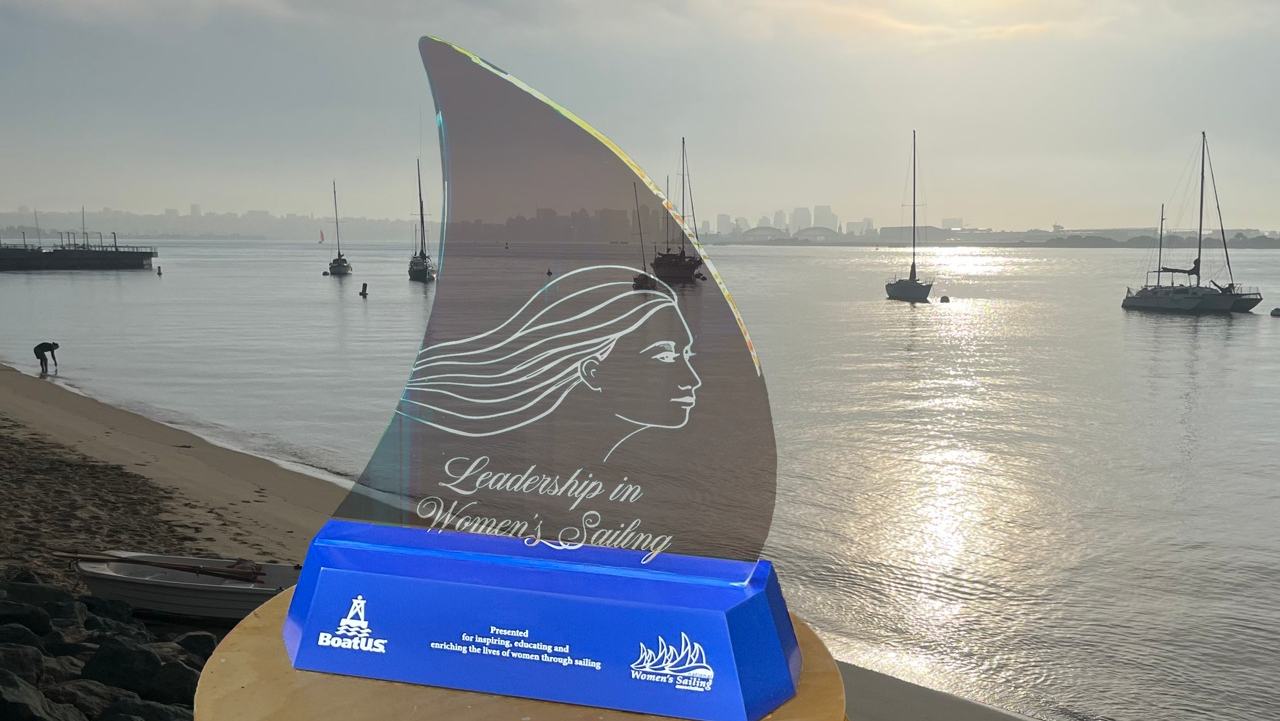
Nominations are open until February 1, 2027, for the BoatUS/NWSA award honouring leadership in women's sailing, from teaching and cruising to community support.
The National Women's Sailing Association and BoatUS are inviting nominations for a long-running award that honours those who help other women enjoy sailing. Announced on October 16, 2026, the call for the 2027 Leadership in Women's Sailing Award looks beyond race trophies to recognise teaching, mentoring, community service and the building of opportunities on the water. The nomination deadline is February 1, 2027, with the winner due to be announced in Boston next June.
For local sailing clubs, the story is more than a competition for recognition. The award provides a chance to identify instructors, cruising leaders and volunteers whose quiet efforts have encouraged new sailors or helped experienced members take on greater responsibility. It also raises practical questions about how the sport welcomes people, how mentoring continues after initial training and why the impact of a good teacher can be felt for decades.
An award that recognises the people behind sailing
The 2027 BoatUS/NWSA Leadership in Women's Sailing Award is intended to celebrate a person whose work has helped women enter and progress in the sport. The National Women's Sailing Association and BoatUS say the programme has operated since 1999, recognising contributions in education, inspiration and the wider sailing community. Previous recipients have come from coaching, competitive sailing, cruising, writing, marine businesses and yacht clubs. That range matters because the person who opens a first door to the water can be just as influential as the athlete who later stands on a podium.
The latest nomination invitation, announced on October 16, is specifically for an individual from the United States with a record of substantial contribution. Nominations are being accepted through the association's website until February 1, 2027, with the recipient scheduled to be announced at the NWSA Women's Sailing Conference in Boston in June. Those details are useful for clubs thinking of putting forward a volunteer or professional who has made a long-term difference. Applicants should follow the association's current eligibility rules and official submission instructions.
Why teaching is a form of leadership
Learning to sail involves more than memorising the names of ropes or understanding which boat gives way. It requires confidence in unfamiliar conditions, the freedom to ask basic questions and access to instructors who make participation possible for people with different backgrounds. Good sailing mentors introduce technical skills at a pace that encourages progress while keeping safety at the centre. When that happens over many seasons, the effect can reach far beyond one person's first trip, because new sailors eventually become the people who welcome others.
The NWSA award seeks to draw attention to precisely this sort of influence. BoatUS notes that women in the sport have been supported by educators, authors, racers, cruising sailors, marine-industry professionals and club figures, not by a single model of success. In community sailing, leadership might involve creating a welcoming beginners' course, maintaining a supportive crew network or helping women gain the experience to take responsibility as skippers. The common thread is demonstrable benefit to other sailors.
The story of the 2026 recipient
The previous award offers a concrete example. BoatUS identifies lifelong sailing educator Karen Prioleau as the 2026 honouree, citing her work at Orange Coast College and beyond. According to the announcement, the proportion of female participants in her classes rose from none to 40 per cent during her career there. The organisation also points to her experience skippering the sailing vessel Alaska Eagle and teaching at safety-at-sea programmes. Those details show the award's interest in sustained education rather than a fleeting publicity achievement.
Prioleau's example is especially relevant to any skipper who has learned to rely on a good instructor. Building a stronger sailing community depends on repeated opportunities for training, practice and the development of judgment under a competent mentor. A single lesson may be memorable, but a structured pathway from novice crewmember to confident decision-maker can take years. Recognising the people who sustain that pathway helps members see instructional work as central to the future of sailing rather than an optional activity organised around race calendars.
What clubs can do during nomination season
A sailing club considering a nomination can start by looking at the impact an individual has had over time. It is not necessarily the highest-profile member, longest-serving commodore or winner of the most trophies. Evidence of changed opportunities, mentoring relationships, accessible teaching or a lasting programme may tell a more meaningful story. Clubs should examine the NWSA criteria and check that the proposed candidate meets the eligibility rules before spending time collecting a submission. Being precise about achievements is more persuasive than generous but untestable praise.
The preparation can also be an opportunity to thank instructors and volunteers locally, whether or not a national nomination proceeds. A club could record how many beginners have completed courses, how women have progressed into helming and instructing roles, and whether mentoring support continues after the first season. Such information is valuable for its own development decisions. The award provides a prompt to recognise service, but the most important long-term result would be making those opportunities easier to find and sustain.
Sailing as a lifelong shared activity
NWSA President Debby Grimm describes sailing as a lifetime activity that brings together leadership, science and engineering skills, teamwork, enjoyment of nature and responsibility. That wide view reflects an important part of leisure boating: people arrive for different reasons and may develop very different interests. Some are drawn to a peaceful day on the water, others to racing, navigation, maintenance or longer-distance cruising. A healthy club allows those interests to overlap without insisting everyone follow the same route.
For newcomers, practical welcome often matters more than a glossy invitation. Clear joining information, courses that explain safety equipment, opportunities to crew before buying a boat and a respectful learning environment can all reduce barriers. More experienced sailors have a role in sharing passage planning, weather awareness and seamanship without turning basic questions into tests of confidence. That kind of inclusive culture is not a slogan; it is built in training sessions, committee choices and the small daily interactions around the pontoon.
An invitation to celebrate lasting contribution
The 2027 nomination window runs to February 1, so interested US sailing communities have time to review the award details and put forward a person whose work deserves a wider audience. The association plans to announce the recipient during the June conference in Boston, making the award part of a gathering centred on women's sailing. Anyone planning to nominate should consult the NWSA website for the latest submission procedure and avoid assuming that examples of past winners create an automatic entitlement for a new candidate.
Whether or not a local sailor is selected, the programme is a reminder that access to boating is shaped by people as well as boats and facilities. Teachers, cruising leaders and patient mentors make the sport safer, more welcoming and easier to sustain across generations. By documenting their work, clubs gain a clearer view of what makes their community effective. BoatUS and NWSA have provided a timely occasion to recognise those contributions, and to ask what more can be done to keep the next generation of sailors engaged.