
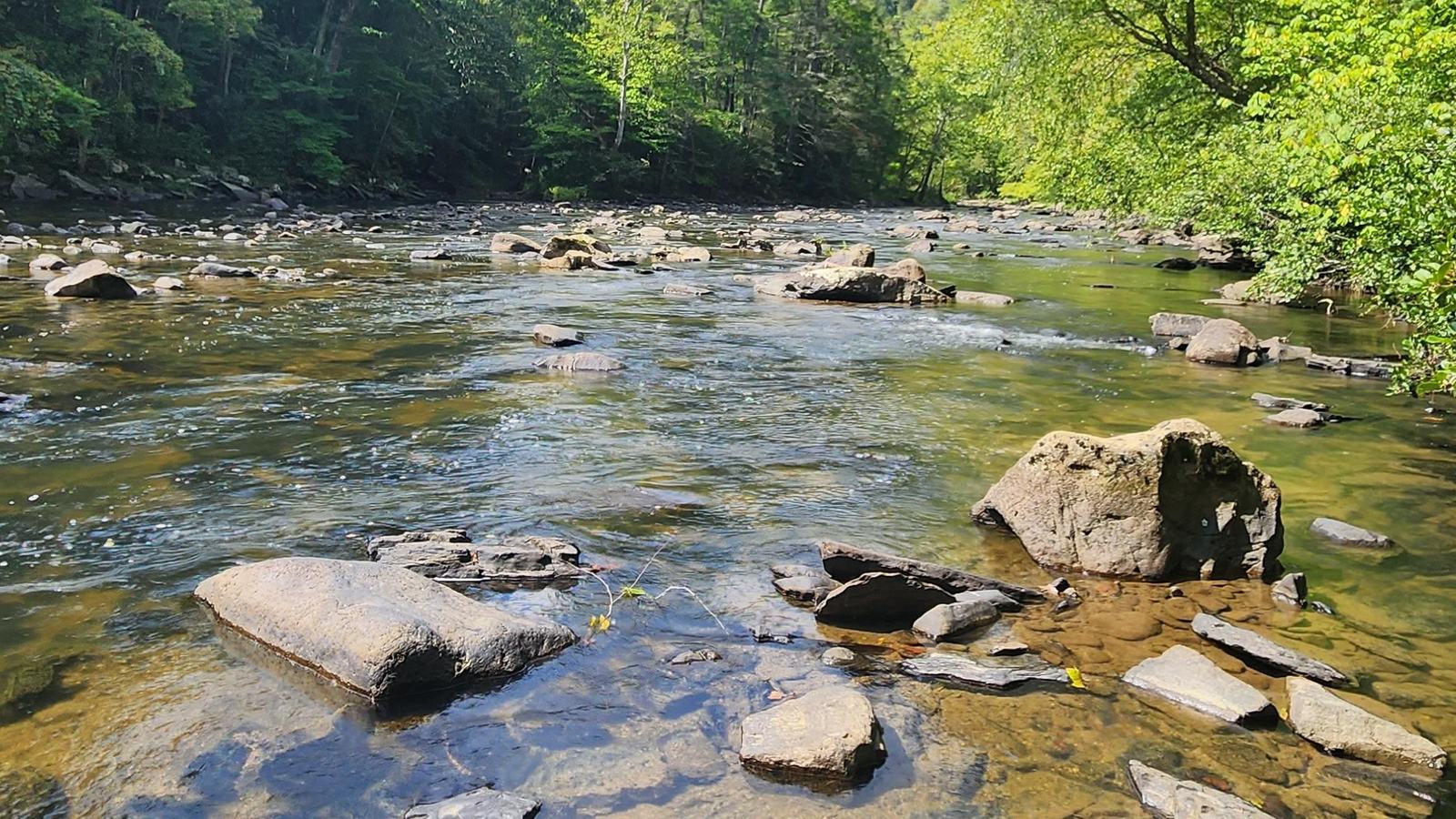
The protected Bluestone River is a beautiful but variable Appalachian paddling route. River height, access arrangements and a conservative shuttle plan govern a successful visit.
A quiet Appalachian river with an exacting timetable
The Bluestone National Scenic River protects part of a free-flowing waterway through the wooded mountains of southern West Virginia. From a canoe, its appeal is the intimacy of the gorge: banks that close around the water, trees that reflect in calmer reaches and the feeling of travelling at a scale that roads rarely allow. Yet planning a paddle here is more complicated than identifying a pretty launch point.
The protected section extends for approximately ten and a half miles, but the river does not maintain an ideal canoeing depth throughout the year. According to the National Park Service, the greatest challenge is often finding a suitable water level at all. A trip planned around fixed holiday dates can therefore fail before it starts, even if the weather looks pleasant on the day.
The Pipestem gauge is central to the decision
The park's official paddling guidance identifies a river-height window of about four to seven feet on the Pipestem gauge for navigating without excessive grounding. Below that range, shallow sections and exposed rocks may turn a supposed paddle into a long series of drags and carries. Above a suitable level, a stronger current and changing hazards can make the river less manageable for a recreational group.
A numerical threshold should never replace judgement about a particular day's conditions. Gauge readings change with rainfall, and the reading at one measurement point cannot describe every fallen tree or rapid along the route. Check the current gauge information before setting out, and allow for the possibility that recent rain or an upstream storm has altered what you will encounter farther downriver.
Reach the water with a return journey in mind
The Bluestone is associated with access from Bluestone State Park and Pipestem Resort State Park, but access to particular points may depend on park operations and transport options. The National Park Service notes that river journeys may be affected by the availability of the Pipestem tram. Visitors should confirm the current arrangement directly rather than assume that a previous visitor's shuttle description is still workable.
For a one-way outing, the practical itinerary starts with the take-out. Decide how the boats and passengers will return, whether a vehicle shuttle is practical and what time the access facility closes or stops operating. A remote gorge is not a suitable location to discover that a proposed exit is inaccessible. Keep a shorter alternative route or an onshore outing in reserve if the logistics cannot be confirmed.
Match the journey to the group
River paddling demands different skills from exploring a sheltered lake. Current can pin a boat against a rock or fallen tree, and even a gentle-looking bend may conceal a submerged obstruction. Paddlers should be comfortable controlling a canoe or kayak in moving water, identifying an eddy and deciding when to stop and scout. A trip should be planned around the least experienced participant rather than the ambitions of the strongest one.
The temptation to launch simply because the river is finally high enough should be resisted. The suitable depth window is necessary information, but it does not prove that conditions are comfortable for beginners. If members of the party have not practised river recovery and safe landing in current, choose a less demanding venue or go with suitably qualified local guidance.
Know the protected corridor's restrictions
Bluestone National Scenic River is managed for its ecological and scenic values, and its regulations differ from those of some other places to camp beside a river. National Park Service visitor guidance states that camping is not permitted within the national scenic river unit, although overnight options exist in nearby state parks. An attractive gravel bar does not automatically become a lawful campsite just because it is accessible by boat.
The park also restricts fires and emphasises carrying out litter and protecting natural resources. These rules encourage a low-impact day trip that respects the river rather than treating it as a convenient place to improvise a camp. Checking the current regulations is particularly important if a group is considering a late take-out, fishing stop or long day that might otherwise extend unexpectedly into darkness.
Build an emergency margin
Cold water, shaded banks and changing weather can make a short Appalachian paddle feel surprisingly remote. Wear an appropriate flotation device, carry clothing that remains useful when wet and secure a dry change of clothes in a waterproof bag. Sturdy footwear is valuable for a rocky landing, while adequate drinking water and food help the group cope if the trip takes longer than expected.
Tell someone ashore the planned launch, take-out, participants and latest expected return time. Do not depend on a mobile phone being available throughout the gorge, and carry a map or offline navigation method. If the water level rises beyond your comfort threshold or the group falls behind the schedule, make a conservative decision while safe options remain available.
The reward lies in going at the river's pace
When conditions, access and experience coincide, the Bluestone offers the pleasure of travelling slowly through a protected mountain corridor. A canoe allows its occupants to notice subtle differences in bank vegetation, sound and light, without the constant movement and noise associated with a road journey. The attraction is not a dramatic mileage target but the unusual closeness of the landscape.
Its unpredictability is also the reason to plan carefully. Check the official gauge and National Park Service updates, confirm transport at both ends and be willing to postpone. A well-judged Bluestone outing is one in which the river's actual condition determines the itinerary, leaving the crew free to enjoy the scenery rather than struggle against water that is too shallow or too forceful.
For changing conditions and access rules, consult the official National Park Service Bluestone paddling guide. Hero photograph credited to National Park Service, official Bluestone National Scenic River panorama.