
For visitors who enjoy camping but prefer to approach their destination by water, Black Canyon in Bighorn Canyon National Recreation Area offers an intriguing possibility. The campground lies within a side canyon extending from Bighorn Lake, and its boat-access character means that the journey is part of the experience. The setting offers something quite different from a roadside camping trip, even for boaters who are accustomed to a trailer launch.
A small boat as the gateway to camp
For visitors who enjoy camping but prefer to approach their destination by water, Black Canyon in Bighorn Canyon National Recreation Area offers an intriguing possibility. The campground lies within a side canyon extending from Bighorn Lake, and its boat-access character means that the journey is part of the experience. The setting offers something quite different from a roadside camping trip, even for boaters who are accustomed to a trailer launch.
The site is described by the National Park Service as a primitive campground served by seasonal dock facilities. Its setting is attractive, but it is not a full-service marina or a conventional holiday park. Plan a visit around the requirements of travelling and staying overnight in a small recreational boat. Check current conditions, dock availability and any wildlife-related closures rather than interpreting an older photograph as evidence that facilities are available today.
Begin at Ok-A-Beh with a realistic plan
The campground information identifies Black Canyon as approximately five lake miles from the Ok-A-Beh boat ramp. That makes it a useful starting point when considering a northern-district boating holiday. The distance discussed by the park should not be mistaken for a navigational route, a guarantee of travel time or an assessment of suitability for a particular kayak or motorboat.
Find out whether the contemplated launch, route and landing are appropriate under the conditions expected for your visit. A compact motorboat, an appropriately equipped touring kayak and a canoe will each require different planning. The park's itinerary information mentions boating and rental opportunities in the Ok-A-Beh area; confirm the current arrangements with operators and obtain advice on a route that matches the ability of the group.
Exploring the canyon landscape from the water
Bighorn Lake occupies a striking landscape where the surrounding slopes and canyon walls can give boaters a sense of travelling through an enormous natural corridor. A journey towards a side canyon allows a visitor to experience a change in scale as well as scenery. The intention is to enjoy a measured trip rather than set off merely to accumulate miles.
For the skipper, the surroundings should be part of the weather assessment. Terrain, the orientation of the water and nearby landing options may influence how the boat can be handled if conditions change. A cove that appears sheltered on a map may not offer useful protection from every wind direction. Consult authoritative local waterway guidance and choose a conservative route, including suitable alternatives if the original landing becomes unavailable.
Seasonal docks are not guaranteed
Black Canyon's official campground information describes a dock system and floating toilet facilities during the principal summer operating period. It lists the usual seasonal dock arrangements from Memorial Day to Labor Day. Check the current status before committing to an itinerary, as water levels and operational decisions can affect when facilities are actually installed or removed.
The absence of an ordinary marina berth changes the planning for both arrival and departure. Bring appropriate lines and equipment for the craft, keep control of loose items and follow the park's current docking instructions. A loaded boat must remain secure without obstructing other visitors. Do not assume that an available public dock may be occupied indefinitely or that a seasonal comfort station will always be in operation.
Understand what primitive camping means
The park lists Black Canyon as a tent-oriented campground without the electric connections or potable-water supply that a visitor might expect at a developed vehicle-access campsite. Bear-resistant food storage facilities are an important part of the site's provision. Confirm current amenities before packing, particularly the practical arrangements for water, toilets and waste during the season in which you plan to travel.
An overnight journey demands more attention to load than a short afternoon cruise. Keep equipment organised and within the vessel manufacturer's capacity limits. Plan the drinking water supply, food, shelter and clothing for all members of the party, accounting for possible delays. Test how the boat handles when it is properly loaded, rather than discovering the consequences of a poorly thought-out arrangement after launch.
The implications of first-come camping
Black Canyon is described as a first-come, first-served campground. Its popularity means that availability cannot be assumed, even if the proposed boat journey itself appears straightforward. A group travelling with tents and provisions should therefore identify suitable alternative arrangements before leaving the mainland. Consult the park about permitted options rather than treating an arbitrary shoreline as a substitute campsite.
An occupied campground should not create pressure to improvise in unsuitable conditions. Find out what the park currently permits at established water-access sites and what options are practical for the actual vessel. Consider the time, fuel or paddling endurance required to return to a safe landing if necessary. A flexible plan makes the freedom of a small-boat outing more enjoyable because the crew is not depending on a single uncertain outcome.
Bear awareness is part of the boating trip
The campground's attraction includes its natural setting, but bears are among the wildlife that visitors must take seriously. The National Park Service describes previous temporary closures associated with bear activity, including one in 2022. Check the latest alerts and follow the park's current guidance for camping in bear country before travelling.
Food, refuse and other attractants must be handled in accordance with that guidance. Do not assume that a tent, a boat cockpit or an ordinary storage container provides adequate wildlife protection. Learn how the provided lockers are to be used and what arrangements are needed before occupying a site. Never approach wildlife or offer food. Responsible visitors help protect both the animals and the continued availability of water-access camping opportunities.
A quiet night and responsible use of facilities
The campground's published rules include quiet hours from 10 in the evening until 6 in the morning, during which boat idling is prohibited. That is a meaningful detail when planning an overnight stay. A crew should not arrive expecting to use a running engine for convenience throughout the night or treat the water-access campsite as an extension of a busy marina.
Read the current park compendium and campground rules relating to overnight docking, generators, campsite use, fires and waste. Collection of firewood within the recreation area is prohibited according to the campground information. Arrange a permitted means of preparing food and consider seasonal fire restrictions. Small details such as avoiding unnecessary noise and keeping paths clear contribute to a better experience for everyone using the cove.
Weather, communications and the return leg
The water-access nature of the campsite means that the return journey remains an essential part of the plan. Forecast information should be considered in relation to the entire anticipated period afloat, not just the time of departure. Do not rely on ordinary mobile phone service at a primitive site; the campground information indicates that reception is unavailable there.
Arrange communications appropriate to the area, share a specific float plan with a dependable contact and make realistic contingency arrangements. Wear a suitable flotation device while boating, and select equipment and clothing for the conditions. Discuss any uncertainties with local specialists. If the crew lacks the skills or equipment to cope with an overnight route, begin instead with a shorter guided or otherwise appropriately organised day outing.
Make the water-access experience worthwhile
A Black Canyon trip is an example of the way a compact boat can change the nature of a holiday. The destination's appeal derives in large part from its separation from ordinary road access, its natural surroundings and the opportunity to travel by water before spending time ashore. A suitable itinerary can be rewarding without involving an extravagant boat or extensive cruising range.
Check the National Park Service's official information for the campground, lake access, alerts and current waterway guidance. Confirm the seasonal facilities, applicable rules and any provider arrangements near Ok-A-Beh. The purpose of sound preparation is not to make a simple holiday unnecessarily complicated. It is to give the crew the confidence to enjoy the canyon while accepting the conditions that accompany a remote, boat-access campsite.
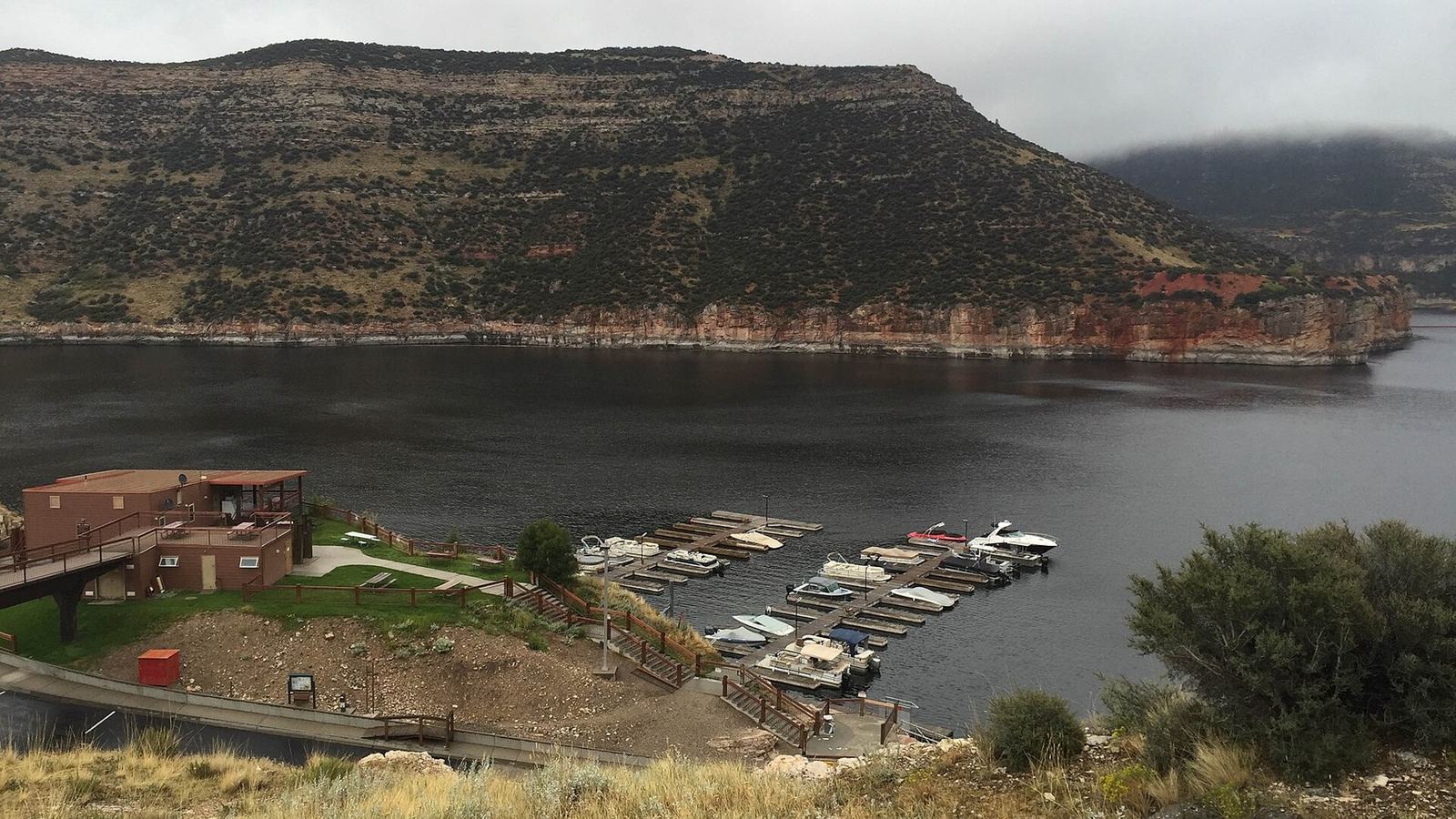
Official source: National Park Service campground information. Boats and marina facilities in Bighorn Canyon National Recreation Area, 4 September 2016. National Park Service, NPGallery archive 0dc19632-b102-4850-ac1c-5d3424fdaedb, via Wikimedia Commons (public domain). Regional photograph, not the Black Canyon campground dock. No claim to original U.S. Government works.
Source
National Park Service