
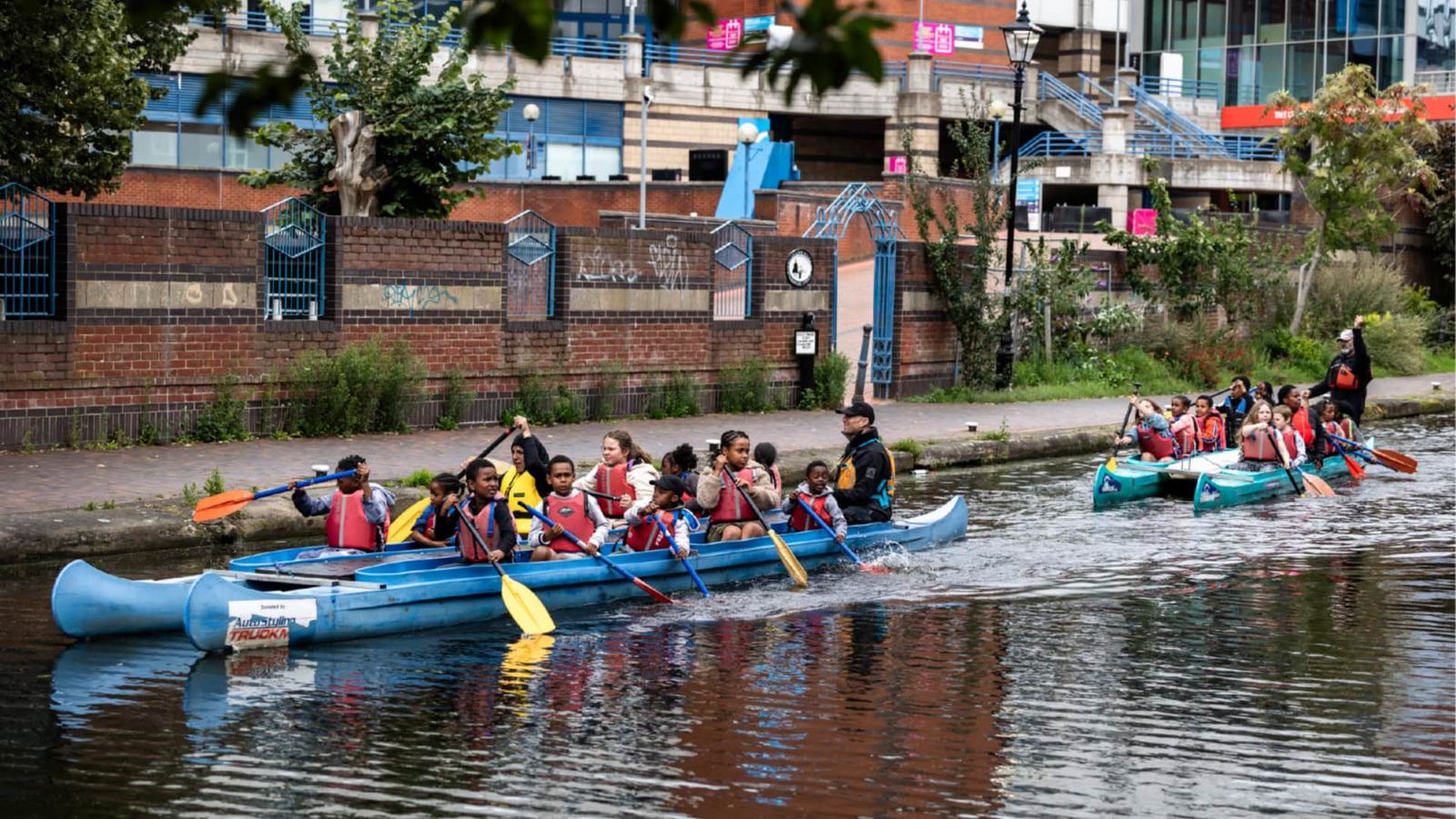
A community-led Birmingham paddlesports programme has introduced more than 1,400 young people to the city’s waterways while developing locally run activity hubs.
The Birmingham Community Paddlesports Project has introduced more than 1,400 young people to paddlesport since 2022 while building local activity hubs around the city’s canal network. The programme is led by Olympic canoeist Andy Train with support from Paddle UK, StreetGames, the Canal & River Trust and community organisations.
Its significance goes beyond the headline participation number because the project is designed to leave skills and leadership inside the communities where sessions take place. Instead of repeatedly bringing in an outside team, local volunteers and organisations are being supported to run activity themselves.
Community hubs reduce the distance to the water
Paddle UK says 71% of community-hub participants come from areas of high deprivation, where travel cost and unfamiliarity with waterways can become real barriers. Locating activity within walking distance and working through trusted local organisations helps make a first session feel more normal and reachable.
The hubs retain their own identity while receiving funding, advice and access support from project partners. That balance can make the programme more sustainable because participants are joining something rooted in their neighbourhood rather than a temporary city-wide campaign.
Women and girls now form most participants
In 2026, women and girls account for around 65% of overall project participation, according to Paddle UK. A dedicated bellboating programme brought 125 women onto the water, predominantly from Asian and British Asian backgrounds, while the women’s bellboat regatta has now reached its fourth year.
Progression is becoming visible as well as participation. Paddle UK highlights one former participant who moved from trying bellboating to becoming a helm, then a paddlesport instructor and ultimately gaining a racing-coach qualification.
Urban waterways can become recreational spaces
Birmingham has an extensive canal network, but physical proximity does not automatically mean residents feel able to use it. The project’s work shows how instruction, trusted relationships and repeated community events can turn infrastructure into something people see as part of their own recreational landscape.
For LBG Lifestyle, this is exactly the kind of small-craft story worth following. Canoes, kayaks and bellboats require modest infrastructure compared with larger craft, but their real value emerges when local people have the confidence, access and support to use them regularly.
Source
Paddle UK