
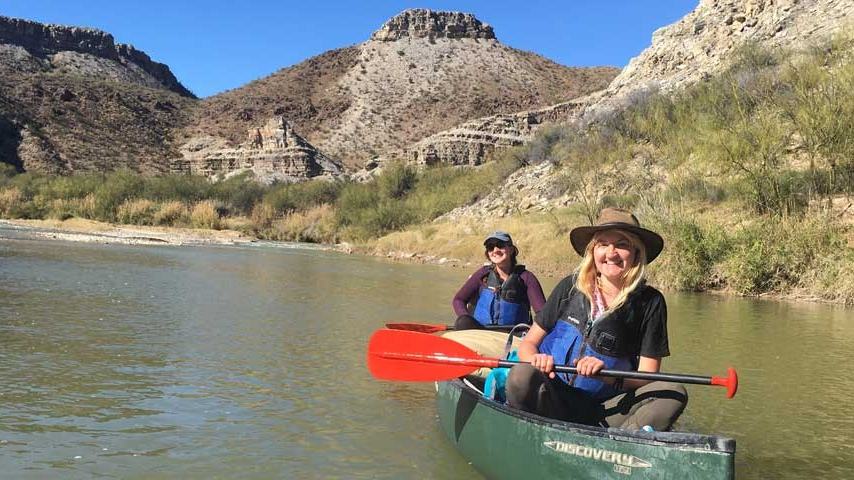
The Rio Grande in Big Bend National Park offers canyon scenery and wilderness paddling, but visitors need to plan around river levels, permits and the realities of a remote border river.
See Big Bend from the water
The Rio Grande flows through the dramatic landscape of Big Bend National Park, offering views that are difficult to appreciate from a road or overlook. Some stretches pass beneath canyon walls that rise hundreds of metres above the river, while others open toward desert plains and wide views of mountains on either side of the international border.
A river trip changes the pace of a visit. Instead of moving rapidly between viewpoints by car, paddlers follow the bends of the water and can notice wildlife along the banks. The National Park Service describes possibilities ranging from short floats to multi-day excursions, depending on river conditions.
River level determines what is possible
The Rio Grande does not provide an identical boating experience every week of the year. Rainfall and upstream conditions affect flow, and a stretch that looks straightforward in one season may be too shallow or challenging at another time. A trip should be chosen after checking the latest information about water levels.
Lower water can mean dragging a canoe over shallow sections, while increased flow can create more demanding currents and fewer easy places to stop. The length of the proposed itinerary is not enough to judge its difficulty. Local guidance and up-to-date conditions matter more than an old photograph or a friend's account from a different month.
Choose a day trip or overnight route
A short outing may allow visitors to enjoy canyon scenery without committing to an extended wilderness journey. Longer routes introduce questions about camping, equipment storage, food and the ability to deal with delays. Remote river corridors can offer little immediate access to roads, making a conservative schedule particularly valuable.
Not all crews need to attempt an ambitious canyon passage. First-time paddlers may benefit from a guided route selected to suit their skill and the current flow. Those planning a self-guided trip should evaluate experience, rescue capability and the available take-out locations before making bookings.
Backcountry permits are part of the preparation
The National Park Service requires backcountry permits and specified equipment for certain day-use and overnight river trips. These arrangements help visitors understand applicable conditions and ensure that their intended activity fits the park's management rules.
Permits and regulations should be checked well before departure, especially when the trip involves camping. Visitors should not assume that an ordinary park entrance ticket grants permission for every form of river use. Current requirements may change, and the official park service remains the best source for the latest details.
An international border runs through the river
The Rio Grande forms the boundary between the United States and Mexico through this region, with the border generally following the deepest channel. As a result, paddlers may cross the international boundary while travelling along the water. This geographical fact does not remove the need to understand the laws that apply to landing or travel.
The park notes that encounters with people on the Mexican bank are generally part of the region's lived landscape. Visitors should treat all communities with respect and follow current border and park guidance. A scenic paddling itinerary is not a reason to ignore any applicable entry or customs requirements.
Watch for wildlife without disturbing it
The river corridor supports birds and other animals that may be difficult to see from a vehicle. Herons, kingfishers and waterfowl may use the riverbanks, while turtles can be seen resting on exposed rocks or logs. Quiet observation from an appropriate distance is part of the attraction.
Wildlife encounters are never guaranteed, and approaching a nest or resting animal to obtain a photograph is unwise. A paddler needs to remain aware of current and obstructions while enjoying the scenery. Good wildlife watching begins with safe boat handling and patience rather than trying to force an encounter.
Prepare for the desert as well as the river
Big Bend can be hot and remote, and a canoe journey provides limited shelter from sun and heat. Carry adequate drinking water, protection from exposure and food suited to the duration of the trip. The group should have a plan for delays rather than assuming that the intended landing place will be reached at exactly the expected time.
River equipment should be secured so it cannot be lost during a capsize. Suitable flotation is essential, and paddlers should know the basic recovery procedures for their craft. A boat that is easy to handle on a calm pond may require greater skill when current, rocks or unfamiliar banks are involved.
Arrange the take-out before leaving
A downstream river trip is different from a paddle that returns to its launch. Transport at the finishing point needs to be arranged in advance, and the crew should understand who will collect the equipment and when. The location of access roads and possible delays matter when planning an itinerary in an isolated area.
Visitors using authorised guides can clarify which transport and equipment are included. Independent groups should confirm that their intended launch and take-out points are available. An otherwise excellent route can become complicated if the vehicle is waiting somewhere that is inaccessible when the river journey ends.
Leave riverbanks and campsites undisturbed
River corridors provide important habitat and can also contain cultural features that deserve protection. Paddlers should use permitted areas for landing and camping, pack out rubbish and avoid damaging plants when moving equipment ashore. A quiet wilderness atmosphere depends on visitors leaving little evidence of their presence.
Special care is needed with sanitation and waste on overnight trips. The park's current backcountry guidance explains applicable requirements, which should be reviewed before packing. Environmental responsibility is an operational task, not something to consider only after the picnic or campsite has been cleared.
A final decision on whether to launch
Check river levels, the current weather outlook, park permits, transport arrangements, border guidance and the capability of the least experienced paddler. Let somebody ashore know the intended route and return time. If conditions do not match the plan, choose a different activity or postpone the trip.
Big Bend rewards travellers who are willing to adapt. A brief, well-managed float may be more memorable than a long journey undertaken in unsuitable conditions. Its remarkable canyons and quiet stretches deserve to be enjoyed with sound judgement and respect for the river.
Source
National Park Service