
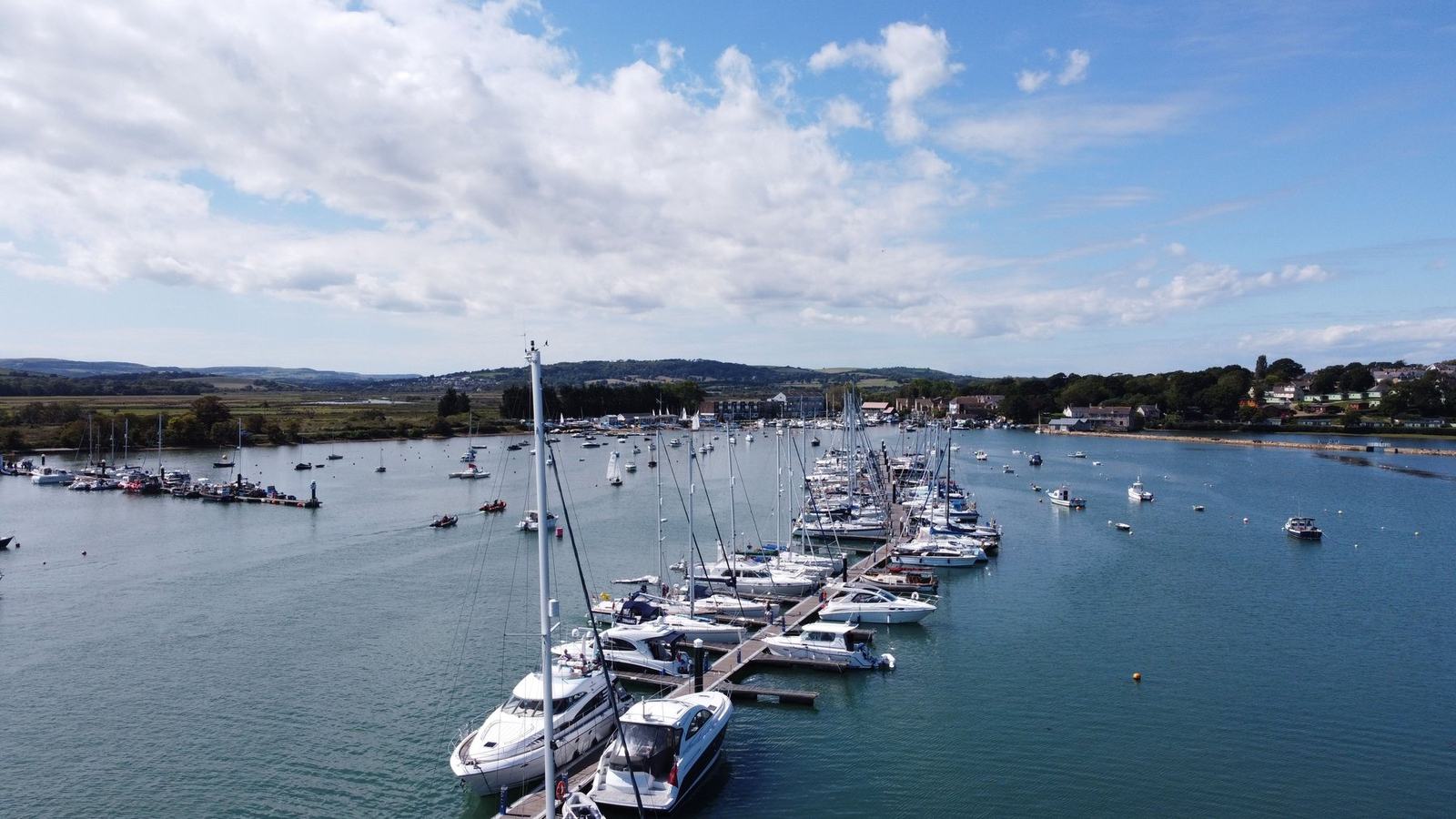
Bembridge Harbour offers a distinctive Isle of Wight stop for cruising boats. This guide explains Duver Marina, official 2026 visitor booking arrangements, tidal considerations, shore-side activities and responsible harbour visiting.
An Isle of Wight harbour to plan for the tide
Bembridge on the Isle of Wight is the sort of destination that rewards careful preparation before arrival. Its harbour is reached by a channel where water levels and tidal timing matter to small-boat skippers, and its main visitor facility, Duver Marina, offers a practical base for exploring the eastern end of the island. It is attractive for a short sailing break, a coastal motorboat trip or a club rally, provided the passage is planned around the vessel and the conditions on the day.
Bembridge Harbour Authority publishes detailed visitor berthing terms, navigation information and a live indicator of depth over the harbour bar. Those tools are useful, but the authority itself warns that real-time depth readings have limitations. No article or single screen reading can replace current charts, local notices, tidal calculations and sound judgement. This guide draws on the harbour's published 2026 information and focuses on making the most of a visit without blurring the line between holiday inspiration and official navigation advice.
Duver Marina and the visitor berths
The harbour authority identifies Duver Marina as the main berthing area for visiting craft. Its 2026 visitor page says the marina was dredged to an average depth of 1.7 metres below mean low water springs, according to an April 2026 bathymetric survey. It describes finger berths arranged along a main pontoon spine, providing walk-ashore access for many vessels. That specific information is valuable when considering the broad type of boat that may be accommodated, although it is not an individual berth-depth guarantee.
Skippers should never apply an average dredged depth indiscriminately to a particular berth, access channel or tidal state. A vessel's draft, beam, manoeuvrability and planned arrival time all affect whether a visit is appropriate. The authority allocates berths according to availability and operational requirements, and its terms explain that an allocated berth may be changed for safety or management reasons. A confirmed booking is therefore a commitment to an authorised visit, not a promise that a preferred pontoon position will always be available.
Online booking and when to call the office
Bembridge Harbour Authority directs most visiting crews to an online berthing portal. Its published arrangements allow online bookings up to 08:00 on the day of arrival, with contact to the Berthing Office needed after that time. This is a useful detail for holidaymakers planning a short coastal passage, because deciding to visit on a whim may not be the same as obtaining a confirmed berth. It is sensible to make the request early and keep the confirmation accessible aboard.
The authority distinguishes between ordinary online bookings and vessels that require direct discussion. Boats over 18 metres overall, multihulls and vessels with a beam over five metres are directed to the Berthing Office rather than the standard online process. The precise eligibility rules, discounts and booking conditions should be checked on the live authority site before committing funds. Larger and unusually wide craft may have fewer suitable spaces, making a short conversation with the harbour team especially valuable when organising a holiday itinerary.
What the 2026 prices actually mean
The published 2026 visitor tariff calculates overnight berthing according to the vessel's overall length and the type of space required. For example, the authority's summer schedule distinguishes finger berths for boats up to 12.8 metres from alongside spaces used by larger vessels. It also differentiates peak-period and quieter-night rates. That complexity is a good reason not to rely on a single price found in an old forum post. The actual total depends on the booking date, boat dimensions and current terms.
Bembridge's visitor page also advertised a five per cent online booking discount for eligible reservations during the published 2026 summer period, but this should not be assumed to apply indefinitely. The terms say water, harbour dues, VAT and specified shoreside facilities are included in the relevant berthing fees, with electricity charged separately. Crews should ask what is included in their confirmed booking and keep an allowance for services. Comparisons between harbours are only meaningful when like-for-like costs and facilities are considered.
A short stay can be different from an overnight
Not every visiting boat needs to remain for a full night. Bembridge's 2026 information includes short-stay charging based on the vessel's length and a period described as a tide, as well as separate beach-related arrangements. These options may interest people making a day excursion from another Isle of Wight port or the nearby mainland. However, the availability and suitability of any short-stop space must be established with the harbour rather than inferred from the existence of a tariff.
Day trips can feel less demanding than longer cruises, yet they are often more sensitive to timing. A crew that wants lunch ashore must still allow for the approach, berthing, the intended time off the boat and a safe departure. If local tidal constraints narrow the practical window, a realistic plan may involve staying overnight instead. Contact with the harbour authority before setting out can prevent disappointment and make sure the outing fits the boat, its crew and the expected conditions.
Timing an arrival with local rules
The official terms published for 2026 give arrival at the berth from midday or the next available high water where the tide is earlier than 07:00. They also set a corresponding expectation for departure, subject to the detailed conditions. The authority asks crews planning movements near the limits of a tide to notify its berthing team. That is not merely a matter of courtesy. Harbour movements are easier to coordinate when staff understand roughly when visiting yachts expect to reach or leave their assigned spaces.
Safe navigation involves more than following a booking clock. Crews must review the latest tide tables, official navigation information, weather and their own draft before approaching the harbour. The authority's website provides buoyage, channel and tidal resources, but conditions on a particular day can differ from a general description. If a skipper is uncertain about access, seeking direct local advice is preferable to pressing on in the hope that a published average depth or previous experience will be sufficient.
Exploring the Duver and the harbour surroundings
Once the yacht is safely alongside, Bembridge offers the pleasures of a relatively compact coastal destination. The harbour authority lists local walks, restaurants, cafés and shore-side facilities, allowing different members of a crew to enjoy the stop in different ways. A walk after a day afloat can be as welcome as a formal tourist excursion. There is also the appeal of observing the changing estuary landscape as the tide reveals and covers the banks around the water.
The Duver setting encourages a relaxed itinerary, with time for a simple meal, a waterfront stroll and perhaps an early evening aboard. It is sensible to check the availability and opening times of any specific business separately, especially outside peak holiday periods. Families should think about how everyone will move between the boat and land, and where to regroup before returning. A successful boating holiday is often made from these ordinary moments rather than a crowded list of attractions.
Wildlife and the responsibility of visiting boaters
Bembridge Harbour Authority says its waters are designated a Site of Special Scientific Interest because of their importance for wildlife. Its information identifies saltmarsh, mudflats, sand dunes and other habitats, with feeding areas for wintering and migrating waterfowl. That environmental context matters to anyone arriving for leisure. A harbour can be both an attractive cruising destination and a sensitive ecosystem that deserves care from visiting crews.
Responsible visitors should follow the harbour's local environmental guidance, respect marked navigation areas and avoid unnecessary disturbance to wildlife. Sound speed choices, careful waste management and appropriate use of facilities help make a stay compatible with the wider estuary. The best destination experiences usually include an appreciation of the place beyond the mooring fee and the harbour view. Spending a little time understanding what makes the water and shore ecologically important can enrich a short visit.
Club rallies and the social side of boating
The published terms include specific arrangements for organised rallies, with groups of five or more boats expected to nominate a rally organiser. This reflects the harbour's role as a destination for sailing clubs and cruising groups. A coordinated visit can offer newcomers reassurance, introduce people to a different stretch of coast and provide a chance to compare practical cruising experiences. It also places greater pressure on berth allocation if several yachts arrive around the same time.
A useful rally plan starts early, giving the organiser time to discuss likely boat numbers, lengths, any wide-beam craft and the expected arrival window with the harbour office. Individual skippers remain responsible for the safety of their vessels, whatever the group itinerary suggests. Once ashore, a rally can be as informal as a shared meal or a walk. The attraction lies in enjoying the destination with others who appreciate boating, without turning the entire stop into a rigid schedule.
Before you cast off for Bembridge
Crews contemplating a visit should begin with the harbour authority's current visitor berthing page and navigation resources. Check whether the boat is suitable for the approach and available berthing, whether the proposed arrival matches the tide and whether an online or direct-office booking is required. Read the cancellation and amendment terms, which can affect plans when forecasts change. Keep the harbour's contact information available and use the authority's published working VHF channel, currently listed as Channel 80, for berthing arrangements.
Bembridge is a rewarding example of an accessible boating destination that still expects proper seamanship. Its appeal is a combination of walk-ashore facilities, a distinctive Isle of Wight setting and the possibility of an unhurried stay. The best visit is one that begins with a realistic assessment of tides, draft and the harbour's rules, leaving the crew free to enjoy time on land once the yacht is secure. All prices, booking conditions and operational details in this independent feature should be checked against the latest official information before departure.
Source: Bembridge Harbour Authority — Visitor Berthing and Terms 2026.