
The Ballard Locks make a memorable Seattle boating trip, but planned November and winter 2026–27 maintenance closures demand careful timing. Our guide explains lock-choice rules, safety preparation, family visits and where to confirm authoritative navigation notices.
Why the Ballard Locks are more than a Seattle landmark
The Hiram M. Chittenden Locks, better known as the Ballard Locks, are an unusually memorable part of a Seattle boat trip because the working waterway is also the attraction. Between Puget Sound and the inland waters of the Lake Washington Ship Canal, a vessel is raised or lowered as the lock chamber balances two different water levels. For a family arriving by private boat, watching the gates move from inside the chamber can be as engaging as any shore excursion.
Unlike a scenic cruise where the boat simply follows the shoreline, a lock passage depends on shared space, crew preparation and the judgement of the lock staff. Recreational craft mingle with working vessels, while spectators look down from walkways beside the gates. This is precisely why it deserves a little preparation even if the captain has handled plenty of marina manoeuvres.
The surrounding grounds include a fish ladder and the Carl S. English Jr. Botanical Garden, so guests who do not want to make the water passage can still understand the place from ashore. The U.S. Army Corps of Engineers runs the navigation facility, and current official operating notices are the relevant authority for a captain. Tourist information and photographs help with the visit, but they are not replacements for a mariner's live briefing.
The 2026 maintenance dates boaters need now
The current autumn calendar contains an important pair of planned shutdowns. The U.S. Army Corps of Engineers lists a Large Lock maintenance closure beginning on 2 November 2026 and ending on 20 November, with the posted announcement specifying the morning start and late-afternoon end. A voyage planned for the first three weeks of November must therefore not assume that the larger chamber is available simply because the grounds appear open.
A separate Small Lock closure is scheduled from 7 December 2026 to 18 January 2027 for work involving the emergency closure system. The dates are especially relevant to winter marina transfers, small-boat deliveries and visiting skippers who might otherwise expect to choose whichever chamber has the shorter queue. During each planned closure, it is essential to confirm whether the other chamber can accommodate the particular vessel and what temporary operating directions apply.
Published closure dates are planning information, not a guaranteed transit slot. Engineering work, unexpected faults, priority traffic and navigation advisories can change the practical situation before a skipper reaches the approach. Check the Corps' current Lock Operations page and the federal Notices to Navigation Interests system, then seek the lockmaster's direction if a date or vessel restriction remains unclear.
Choosing a chamber and understanding the boat's limits
The complex has two navigation chambers that serve different traffic needs. The smaller chamber is designed for relatively compact boats and has floating side walls that move with the water level, an arrangement many first-time visitors find easier to understand. The larger chamber can handle substantially larger traffic, but its greater capacity should never be mistaken for unrestricted access during maintenance.
Before departure, establish your vessel's length, beam, draft and any clearance concerns using the real dimensions rather than the model's marketing label. The local Ballard Locks boater information advises that the small chamber normally serves boats under one hundred feet, while large vessels must consider the bigger chamber. The lockmaster, not a general guide, should confirm whether a boat fits the operational limits in force on the day.
There are also important differences for personal watercraft and paddlers. The published boater guidance says jet skis and non-motorised vessels such as kayaks must use the smaller lock rather than the Large Lock, while paddleboards are not allowed in either chamber. Families towing a kayak or bringing a stand-up paddleboard on a larger cruiser should plan around those rules and should never assume that every tender or toy can follow the mothership through.
Prepare the crew for a calm passage
A sensible lock briefing starts before a vessel enters the queue. Put correctly sized fenders where the crew can deploy them quickly, prepare suitable lines, brief the roles of each person aboard and keep loose belongings clear of work areas. Everyone should understand that the lock staff control the sequence and that boats may be directed to wait while traffic with higher priority passes.
The local boater information states that emergency and commercial vessels receive priority, and that a normal transit does not carry a passage fee. The facility generally operates around the clock outside maintenance or repairs, but that does not mean a boat will be admitted immediately on arrival. Patience and good communication are much more useful than trying to save a few minutes by crowding the approach.
Once the crew is called forward, follow the instructions of the attendants on chamber position, line handling and when to move. A first-time skipper should be especially cautious about the changing water level and the forces that can develop if a line is handled badly. Life jackets are a wise choice on a crowded passage, particularly for children, and the local guidance points visiting crews toward a lock-through instructional video before they attempt it themselves.
A shoreline visit for non-boaters and families
The attraction works equally well from land. Watching a small cruising boat become level with an upper or lower gate makes the engineering easy to grasp without having to take the helm. The fish ladder provides a separate view of how the waterway accommodates migrating salmon, though fish activity naturally changes with the season and should not be promised as a guaranteed spectacle in late October.
The botanical garden offers a quieter counterpoint to the clatter of gates and engines, while the pedestrian areas provide places to watch operations from a safe distance. A family might combine a boat transit with an independent shore visit later, especially if children would benefit from seeing the movement of the water chamber from both perspectives. Respect all barriers and staff directions; this remains essential infrastructure and not an interactive playground.
Because outdoor paths, visitor facilities and interpretation may have seasonal operating arrangements, confirm the day-specific public information before making a tightly timed reservation elsewhere. A boat party should also think ahead about where guests will disembark after the transit rather than improvising at a busy waterfront. The best experience has a simple start, a clear end point and enough room for a delay.
How to make the locks part of a proper Seattle boating day
For visitors based around Shilshole Bay or another suitable marine departure point, the locks can connect a saltwater outing with a different perspective on Seattle's inland waterways. A thoughtful programme gives the captain time to assess traffic and allows the guests to enjoy the mechanics rather than feeling hurried into a restaurant booking. Depending on actual conditions, a return voyage may require another lock passage and therefore another allowance for waiting.
Late October makes the 2026 maintenance timetable particularly important. At the time of writing on 26 October, the advertised early-November Large Lock closure is still ahead, while the planned December-January Small Lock works are a further consideration for winter navigation. Skippers should not rely on the date of this feature as a substitute for the latest official operating status; notices and locks staff must always take precedence.
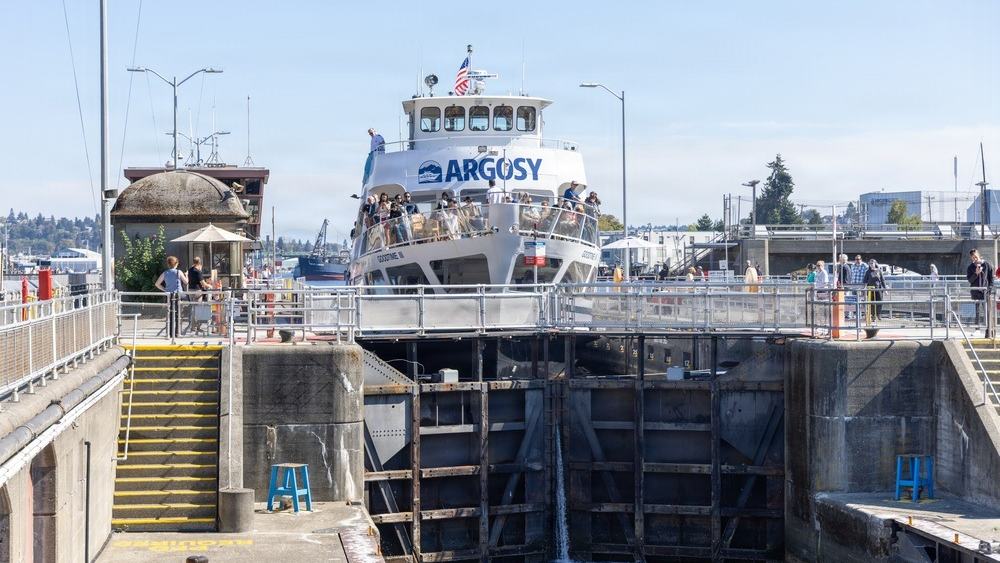
Reliable sources for this itinerary are the Corps' current operations information, the Ballard Locks boater briefing and the national navigation notices. The accompanying image is a public-domain U.S. Army photograph by Travis England dated 17 September 2026, showing passengers looking toward a closed gate from a vessel inside the Ballard Locks.
Successful lock passages are remembered for their quiet confidence, not for speed. When the captain gives the team a clear plan, the vessel has appropriate lines and fenders, and everyone listens to the lock attendants, this piece of working Seattle infrastructure becomes a distinctive and rewarding part of the voyage. Above all, boating safely and treating other traffic with consideration remain more important than completing a proposed itinerary on the clock.