
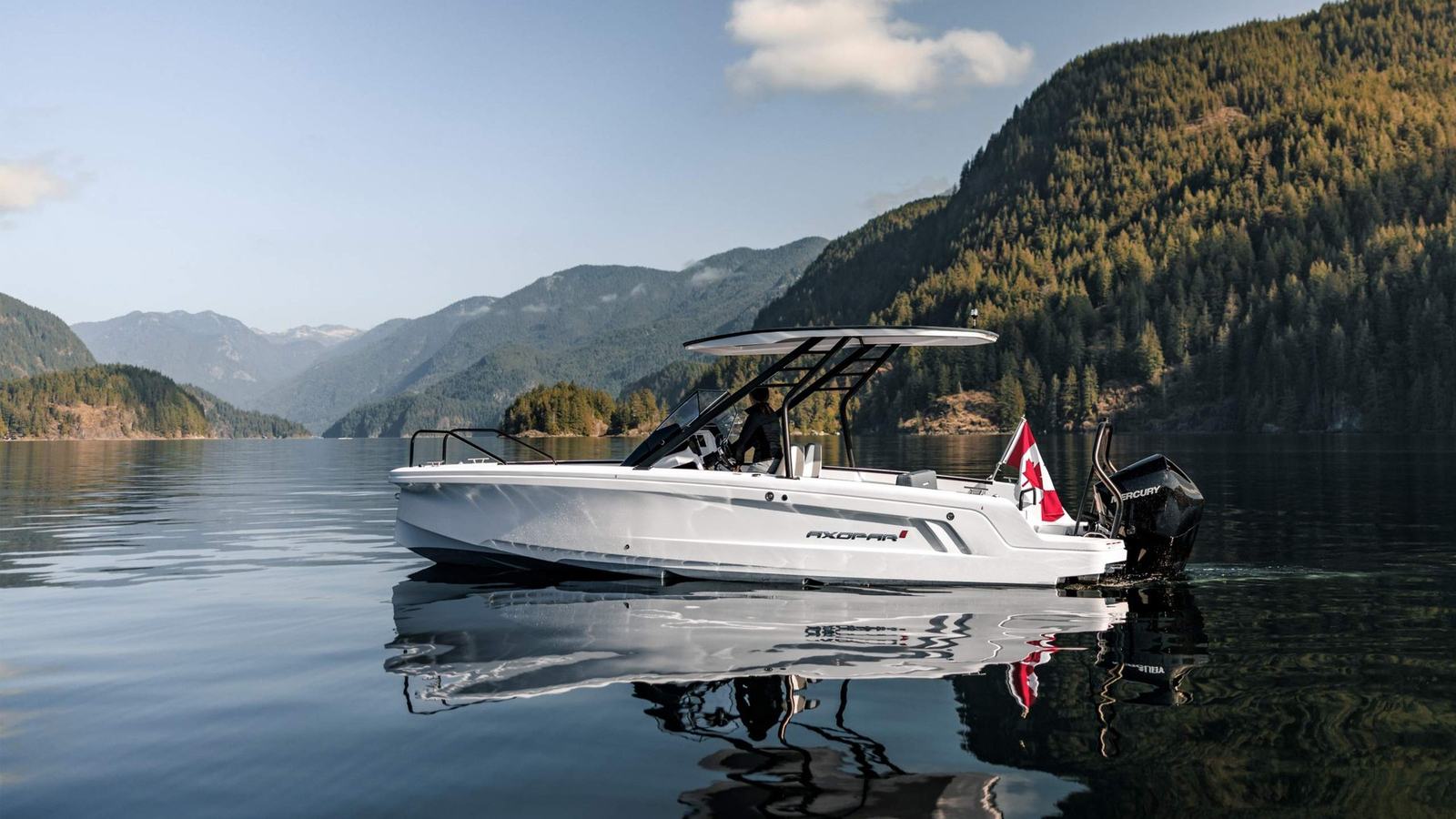
The 7.2-metre Axopar 22 T-Top pairs a protected helm area with an agile walkaround layout, convertible seating options and a coastal cruising brief.
A small boat with an adventurous layout
Axopar's 22 T-Top takes the outline of a compact open centre-console boat and adds a permanent roof structure over the driving area. At 7.2 metres overall, excluding the engine, and 2.23 metres wide, it is positioned for owners who want agile day trips without stepping up to a larger enclosed cruiser. The T-top protects part of the crew from direct sunlight and occasional spray while retaining the open-air atmosphere that makes a small boat appealing.
The walkaround deck is a key feature because passengers can move around the console without negotiating a narrow, enclosed corridor. That arrangement can simplify putting out fenders, reaching the bow or changing seats while stopped. It also means a family can spread out when relaxing at anchor, although movement around the boat should still be limited or carefully supervised in rough conditions.
Axopar describes a twin-stepped sharp-entry hull with a 22-degree V, a combination intended to deliver responsive handling and an engaging ride. These design terms are useful starting points but do not make the boat immune to uncomfortable impacts in short waves. Speed and trim must still be adjusted to the people aboard and the conditions, especially on trips where younger children or less experienced guests are present.
The manufacturer's model page lists a category C coastal rating and a maximum of seven passengers. That is an important reminder that space and certification are separate questions: the skipper must keep within the limits on the particular boat, account for gear and fluids and avoid treating a nominal passenger rating as a desirable cruising load in all weather.
How the T-top affects the day
The roof changes the boat's character by creating a more usable standing and seating zone around the helm on bright days. Anyone who has spent several hours in open sunshine knows that even partial shade can improve concentration and passenger comfort. Nevertheless, the T-top does not enclose the sides, so wind, driving rain and colder air remain part of the experience.
The standard wheelhouse-and-cockpit specification includes two adjustable front seats with flip-up bolsters, a tidy helm panel and splash-resistant charging provision. Those details make frequent short passages less laborious, especially when the driver alternates between seated and standing control. It is still essential to check sightlines for the individual skipper and ensure passengers have secure handholds during acceleration and turns.
Axopar offers alternative aft layouts, including a standard sofa and several configurations with U-shaped seating or a multi-storage compartment. Owners who often take friends swimming may prioritise lounge space, while someone carrying fishing equipment or diving gear may find the storage arrangement more valuable. The ability to choose between them is attractive only if the selected plan matches the daily activity.
Apart from the permanent T-top, the boat remains oriented toward the outside environment. There is no claim that the roof turns it into a full-season cabin cruiser, and a family heading far from its home harbour should plan for weather changes. Proper lifejackets, dry clothing, clear communications and a route with sensible alternatives remain part of every adventure.
What the figures say about cruising
Axopar lists 200–250 horsepower outboard installations and an advertised maximum-speed range reaching around 45 knots. The official technical data also includes a fuel-consumption reference of approximately one litre per nautical mile at 27 knots with a 200-horsepower Mercury, under the stated conditions. Those numbers are model guidance, not a promise about every boat or day, and owners should verify their own fuel use before planning longer trips.
A 230-litre fuel tank is relatively generous in this compact category, yet useful range depends on leaving sufficient fuel to return safely if the weather changes or an intended stop becomes unavailable. The manufacturer quotes a draft to the propellers of about 0.8 metre. Shallow-water access therefore requires more than glancing at the hull's apparent profile; the propeller and lower unit remain vulnerable.
The company gives an approximate hull weight of 1,250 kilograms excluding the engine. That matters to owners contemplating trailer storage, but it is not a ready-to-tow figure. The real package includes engine, fuel, battery, optional equipment and trailer, and local road-width or towing restrictions may be as important as the dimensions in the brochure.
The integrated swim platforms and concealed bathing ladder are useful for relaxed coastal stops. A skipper should still establish a clear swimming procedure with the engine off, maintain an accurate count of people in the water and assess current and boat movement before allowing entry. Small open boats can be wonderfully flexible, but they place more of the practical safety burden directly on the crew.
Configuring the boat for real people
The manufacturer's options include a forward seating area, water-sports equipment and several aft seating treatments, allowing the 22 T-Top to accommodate different habits. It is tempting to specify every desirable accessory, but a practical layout should begin with what is carried on a typical outing. Extra cushions and lounge furniture can take space that might otherwise hold essential gear and fenders.
One useful feature listed by Axopar is extensive in-floor storage, including an aft compartment with a gas-strut-assisted hatch. A tidy storage scheme improves safety when everybody is moving between swimming stops and marina berths. Heavy items should be secured low, access to emergency equipment preserved and the weight distribution kept within the boat's approved limits.
Owners should also think carefully about marina use. The hull's relatively narrow beam can make the craft manageable in crowded spaces, but windage from the roof and the performance of the chosen outboard will shape close-quarters behaviour. A proper familiarisation session, including reversing and slow-speed turns, is worthwhile before inviting guests on an ambitious trip.
The Axopar 22 T-Top demonstrates that a smaller dayboat can offer genuine character without trying to behave like a miniature yacht. Its open deck, partial shade and configurable storage make it a natural choice for coastal exploration, while the sporty hull and outboard performance add flexibility. The right purchase decision still depends on a realistic sea trial and an honest assessment of how often the family wants to boat in less-than-perfect conditions.