
New Ocean Cleanup modelling explores how plastic originating overseas may affect Australian beaches by 2050. We examine the scenarios, geographic sources and practical lessons for coastal boaters.
A cleaner beach can still receive more plastic
Australia's beaches have become a telling case study in why keeping the coastline clean is more complicated than picking up the litter people leave behind. New modelling released by The Ocean Cleanup in October 2026 suggests that rubbish arriving from overseas rivers could increase substantially even as local action brings down waste generated nearer home.
For people who enjoy coastal cruising, paddling, fishing and swimming, that is a useful change of perspective. A sheltered bay can feel far removed from another country's drainage system, yet floating debris does not recognise political borders or the edge of a marina.
What the modelling actually says
The Ocean Cleanup estimates that roughly 440 tonnes of overseas-origin plastic reached Australian beaches in 2020. Under a scenario in which today's trends continue without stronger action, the group projects that figure could climb beyond 850 tonnes per year by 2050.
This is a conditional model result rather than a direct measurement of future litter, and it is not a claim that Australian beachgoers are already seeing twice as much plastic. The researchers combine estimates of river emissions from more than 200,000 watersheds with models of wind-driven movement and ocean circulation to examine where material may travel.
Three possible futures, not one forecast
The analysis sets out three policy scenarios that depend on what governments and communities do over the next quarter-century. Its business-as-usual case reaches approximately 850 tonnes a year by 2050, while a stronger regional response brings the projection to more than 570 tonnes.
Under a more coordinated global response, the model suggests the volume of foreign-origin plastic reaching Australian shores could fall towards 300 tonnes a year. The important message is the range between these outcomes, not the illusion of an exact figure that can be guaranteed decades in advance.
Where the floating waste may originate
The modelling identifies Southeast Asia as a major contributor to the overseas plastic expected to reach Australia, estimating about 170 tonnes in its baseline analysis. Indonesia accounts for more than 110 tonnes of that amount, while several Pacific island nations contribute an estimated 140 tonnes.
Other material is modelled as arriving from much farther afield, including roughly 90 tonnes from South America and 40 tonnes from Africa. Those estimates illustrate how wind, currents and elapsed time can connect shorelines that appear unrelated on a local boating chart.
Local improvements are still worthwhile
The report also points to evidence that Australia has made progress with litter close to home. It cites CSIRO research showing a 39 percent reduction in national coastal debris density over the decade ending in 2023, alongside an increase in areas where surveys found no debris.
The same release estimates only around seven tonnes of plastic a year reach the ocean through Australian rivers in its comparison. These numbers use different measurement and modelling methods, so they should be read in context rather than combined into a single simple balance sheet.
The small-boat connection
Loose items aboard a leisure boat are unlikely to make the headlines, but they are part of the same preventable category as shore-based rubbish. A snack wrapper left on a cockpit seat or a light plastic bag beside an open hatch can be lost before anybody notices it has gone.
Simple checks before departure reduce that risk: close storage compartments, secure bins and make sure disposable items have a safe place to go. If a marina's bins are full or unavailable, keeping waste contained until a suitable collection point is found is an uncomplicated contribution.
What coastal clubs can learn
Boat clubs and waterfront businesses can treat river-to-sea plastic movement as a reason to cooperate beyond their own pontoons. Litter surveys, appropriate shoreline cleanups and practical information for visiting crews can complement local public waste systems when organised with the landowner or responsible authority.
Environmental claims deserve the same care as navigation instructions. Clubs should distinguish debris physically collected at a particular beach from plastic amounts estimated by regional models, because confusing the two makes it harder to tell whether local interventions are working.
Why upstream action remains important
The Ocean Cleanup argues that improving waste collection and interception near the rivers releasing plastic can reduce pollution before long-distance transport begins. The model's purpose is partly to show that action in one location may bring benefits to coastal communities elsewhere.
That does not mean river interceptors alone can solve the issue or replace affordable waste services and lower plastic consumption. Equipment needs local operators, maintenance arrangements and responsible handling of recovered waste, while effective prevention reduces the burden placed on any collection system.
A photo with its own geography
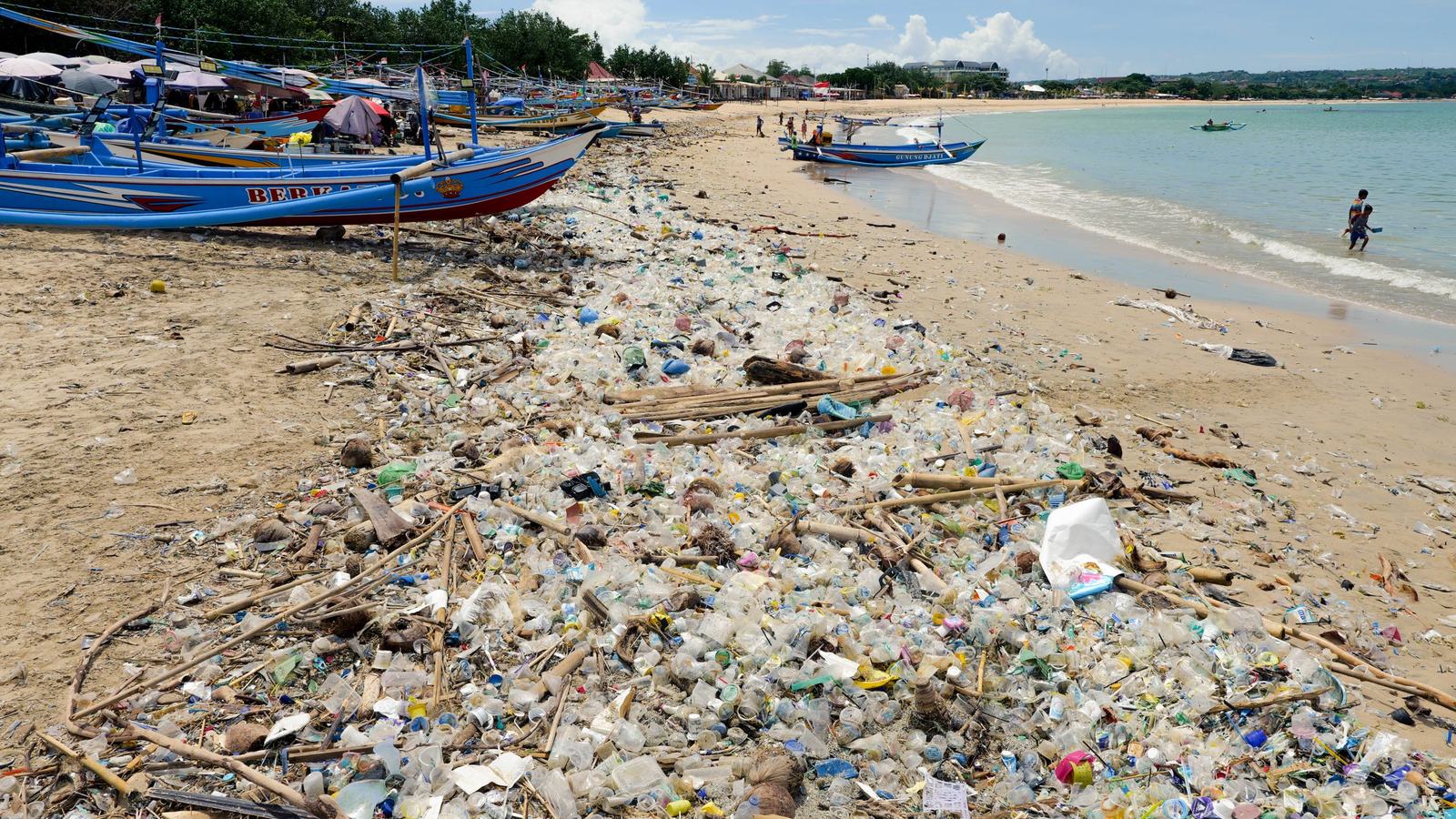
The Ocean Cleanup's accompanying official photograph shows plastic pollution on an Indonesian beach, not a new measurement taken on an Australian shore. It is a relevant illustration of the upstream and regional challenge highlighted in the report, but the distinction matters when viewing a story about debris travelling across the sea.
Boaters increasingly encounter environmental images alongside claims about climate, wildlife or ocean health. A useful habit is to check what a picture actually records, where it was taken and whether the accompanying numbers describe observations, estimates or scenarios.
The long view from the water
The figures will be refined as more monitoring is carried out, and the future of Australian beaches will depend on more than any one modelling exercise. Even so, the study makes a practical case for combining cleaner local boating habits with international work on pollution sources.
For leisure boaters, the implication is straightforward: enjoy and look after the waters you can reach, while recognising that marine debris can be a shared responsibility across an entire ocean basin. Cleaner coastlines are not simply a matter of tidying the final destination; they also depend on what never enters the water upstream.