
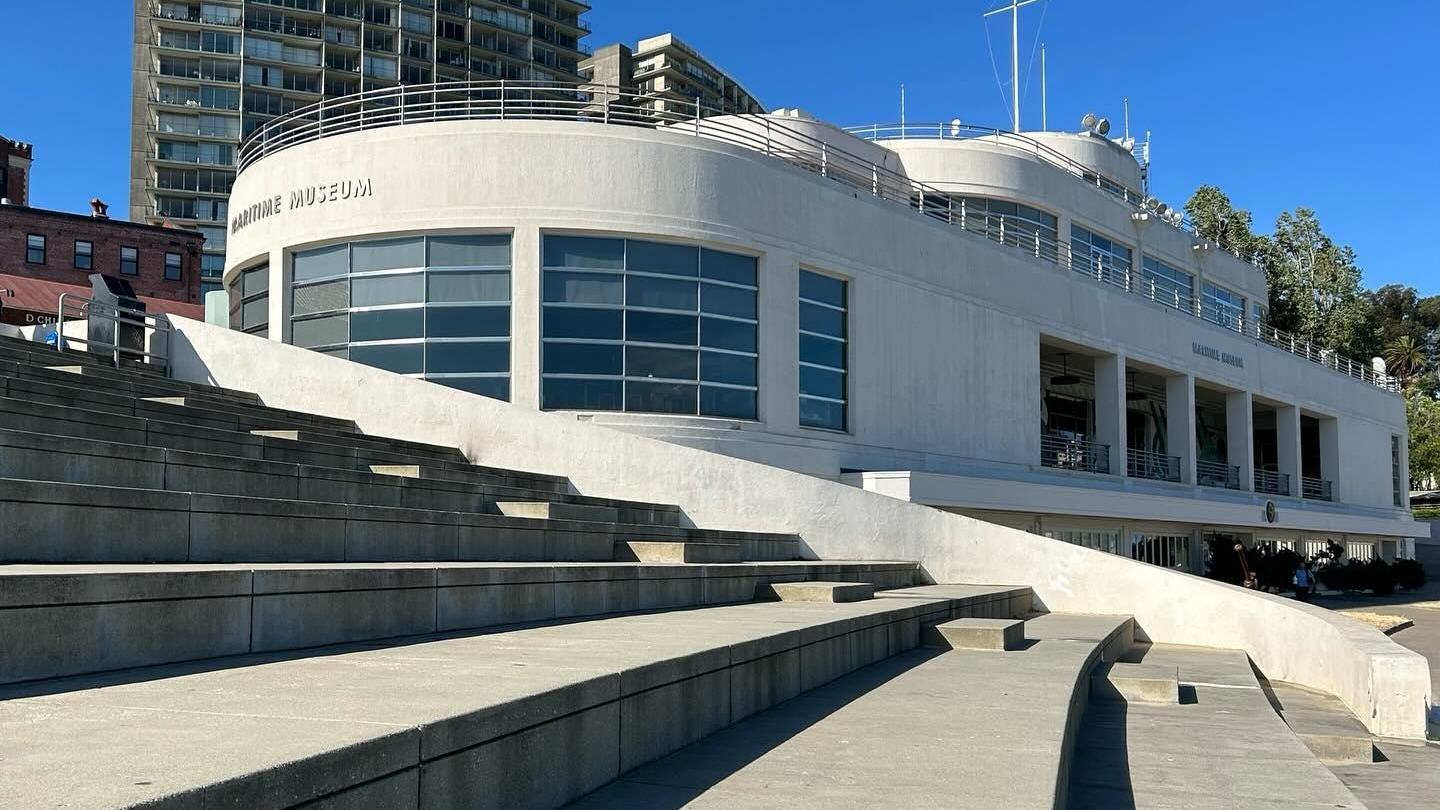
Aquatic Park Cove pairs a semi-protected place to paddle with San Francisco Maritime National Historical Park’s waterfront. Respect swimmers and bay conditions on every visit.
A paddling place in the middle of a major city
San Francisco is surrounded by water, but much of its bay presents currents, traffic and exposed conditions that demand advanced judgment from small-boat crews. Aquatic Park Cove offers a different perspective: a semi-protected waterfront space within San Francisco Maritime National Historical Park, close to the historic vessels and streets of the northern waterfront. The National Park Service identifies kayaking, rowing and stand-up paddleboarding among its recreational activities, alongside open-water swimming.
The long arm of Municipal Pier provides some protection from the movement of the wider bay, creating an inviting view across the water towards the maritime setting. That protection has limits, however, and should not be understood as a promise of calm conditions. Wind, tidal currents and the movement of other people and boats can change an outing quickly. A visitor unfamiliar with the city’s waterways should keep the planned paddle inside a clearly understood and suitable area.
There is a particular appeal to exploring this waterfront without an engine. From a kayak, the line between San Francisco’s historic commercial harbour and today’s recreational shoreline becomes visible in a different way. Yet the cove is a shared public space, not a private paddling basin. On busy days swimmers, families at the beach and different kinds of small craft may be close together, so considerate control is more important than speed.
Sharing space with swimmers and rowers
The National Park Service says that the cove attracts swimmers and boaters, including paddleboarders and rowers. Every person on a craft should keep a careful lookout, moderate speed and leave generous clearance from people in the water. A swimmer’s head is small and can be hard to see against reflections, especially at a low angle from a kayak. Avoid sudden turns and never let a board or paddle drift into a crowded part of the beach.
The agency warns that no lifeguards are on duty, and that water users must take responsibility for their own safety. This is a reason to bring a properly fitted flotation device, paddle with a companion and remain within the ability of the least experienced person. Before launching, check the weather, marine conditions and any posted notices or restrictions. A sheltered-looking cove is still salt water and can become uncomfortable when wind rises or an inexperienced paddler becomes tired.
Wildlife and other hazards also deserve respect. The park advises swimmers to be aware of marine animals and boaters; paddlers should likewise avoid disturbing animals and remain alert to submerged obstacles. Be especially cautious if arriving with children or someone learning the basics of balance and steering. A lesson in a protected area is best taken with appropriate instruction and supervision, not improvised among busy traffic or outside the cove into more exposed bay water.
Make the waterfront visit work smoothly
Aquatic Park Beach is beside the paved promenade, with access to the sand across a relatively firm but uneven surface. Carrying a kayak or board to the water will be part of the visit, and the suitability of that access depends on the craft and the person handling it. The NPS identifies restrooms at the Maritime Museum, but no showers or changing rooms at the beach. Plan for wet gear and an orderly departure without expecting full marina-style visitor facilities.
The nearby maritime setting is worth building into the schedule. Historic vessels and exhibits tell the story of shipping, maritime labour and San Francisco’s connections across the Pacific, while the bathhouse and waterfront form part of a distinctive urban landscape. A day can include a modest paddle and then time ashore to understand the ships rather than treating the cove as an anonymous stretch of seawater. Check museum openings and any relevant entrance fees separately.
Day use of the cove and overnight anchoring are different activities. The National Park Service manages overnight anchoring in Aquatic Park Cove through a permit system and applies specific vessel rules. Visiting kayakers should not assume that a beach paddle grants permission to anchor or remain overnight, nor that motor-powered craft may operate freely. Refer to the current park water-use and anchoring guidance before planning anything beyond an ordinary short daytime paddling outing.
Keep the adventure proportionate to the conditions
A simple day afloat still deserves a plan: arrive with suitable flotation equipment, agree on a sensible route and turnaround point, and check whether the cove is unusually crowded. A launch made in strong wind or unfamiliar tidal conditions may result in a much harder return than anticipated. If the weather is marginal, the promenade and historic waterfront offer worthwhile alternatives to an unsafe trip. There is no need to leave the shore to appreciate this national historical park.
Those bringing personal gear should confirm current launch access and local operating restrictions before travelling. Rental and instruction are not guaranteed by the NPS activity description, so make separate arrangements and verify that any operator is permitted to use the intended area. Keep valuables secure, plan how wet equipment will be transported and never block pedestrian routes with a craft. Respect for other park users makes the water safer and the waterfront more enjoyable for everyone.
The value of Aquatic Park Cove is the rare combination of an accessible urban waterfront and a maritime history that can be seen from both shore and water. Its protection from some bay turbulence makes it different from an open San Francisco crossing, but it is not risk free. Enjoy a modest paddle, preserve room for swimmers and other boats, and stay alert to weather and changing conditions. For visitors who plan well, it can be a memorable addition to a city visit.
Primary planning source: National Park Service Aquatic Park Cove recreation guide. Consult the original National Park Service guidance and current notices before departure.