
The Apostle Islands offer memorable paddling among Lake Superior's islands and sea caves, but cold water, exposed cliffs and waves demand careful route selection.
A collection of islands shaped by a great lake
Wisconsin's Apostle Islands National Lakeshore provides a distinctive small-craft holiday among forested islands, sandstone cliffs and the open waters of Lake Superior. The park includes 21 islands that can be reached by paddlers under suitable conditions, with caves, beaches and historic features contributing to the attraction. A kayak offers an intimate view of the shoreline, but the scenery should never disguise the scale of the lake or the speed with which conditions can change.
The National Park Service emphasises that kayaking here requires preparation, even for people who are comfortable on smaller inland waters. A short distance on a map may cross exposed water where wind generates considerable waves. Visitors can avoid unnecessary risk by choosing a route matched to their skills and regarding sheltered beaches as destinations rather than obstacles on the way to a more dramatic photograph.
Sea caves are beautiful and potentially dangerous
The sea caves are among the best-known features of the national lakeshore, particularly around Devils Island, Sand Island and the mainland coast near Meyers Beach. Water and weather have shaped the sandstone into openings and recesses that can look especially dramatic from a low craft. Visiting these features safely depends on the conditions of the day, not merely the distance from the nearest launching area.
The Park Service warns that waves and wake can rebound from rock faces, producing confused water around cave entrances. This is one reason the agency does not recommend ordinary open boats, canoes, open-cockpit recreational kayaks, sit-on-top kayaks or paddleboards for these cave outings. A suitably equipped sea kayak and an experienced paddler or authorised guide are a more appropriate starting point.
Cold water remains a factor in summer
Lake Superior can stay remarkably cold even during the warmer part of the year. The NPS notes that surface temperatures may rarely exceed around 60 degrees Fahrenheit late in summer, with much colder conditions common in spring and early summer. Immersion can therefore become dangerous well before a person has time to reach shore.
A paddler should use clothing suited to the possibility of cold-water immersion rather than relying on a warm afternoon forecast. Appropriate personal flotation equipment, rescue skills and a reliable means of communication are necessary. A wet suit or dry suit may be warranted according to the conditions, and newcomers should seek competent instruction before attempting exposed sections of the lakeshore.
Guided tours simplify the first experience
The national lakeshore does not itself operate guided kayaking tours, but authorises independent outfitters to offer full- and half-day trips, rentals and training. This distinction is useful to visitors planning a holiday: an official park webpage can explain the rules, while a separate authorised operator handles the boat, guide and booking arrangements.
An organised trip may also help a group select a suitable location when the most famous caves are unsafe. A good operator explains the weather decision, the equipment required and whether the planned route is appropriate for beginners. Visitors should ask about cancellation arrangements and avoid pressure to proceed when winds or waves are unsuitable.
Twenty-one islands do not mean unlimited access
Different Apostle Islands offer opportunities for exploring on land, visiting historic lighthouses or enjoying designated campsites. Reaching them by kayak can be rewarding for more experienced groups, but crossing between islands demands accurate navigation and an awareness of changing conditions. Not every beach or narrow approach is suitable for landing, particularly when waves are breaking against the shore.
Overnight camping within the national lakeshore requires the correct permit, and reservations may be available through Recreation.gov. Campsites can be limited, so a proposed journey should be planned around confirmed access rather than an assumption that any shore can be used after dark. The combined weight of tents, food and clothing also affects how a kayak handles on an exposed crossing.
Alternative waterways are part of a sensible plan
When Lake Superior is too rough for the intended trip, the Bayfield Peninsula offers more sheltered inland lakes, rivers and quieter waterways. Choosing a different route can preserve the pleasure of the holiday without turning the day into a test of endurance. An enjoyable paddle does not require entering a sea cave or attempting to reach a distant island.
The NPS advises paddlers to evaluate actual wind and wave conditions before entering the water. Forecasts give a useful indication, but local observation matters because a cove can look calm while the open lake beyond is not. Being prepared to change plans is a hallmark of an experienced small-craft crew.
A real photograph from the national lakeshore
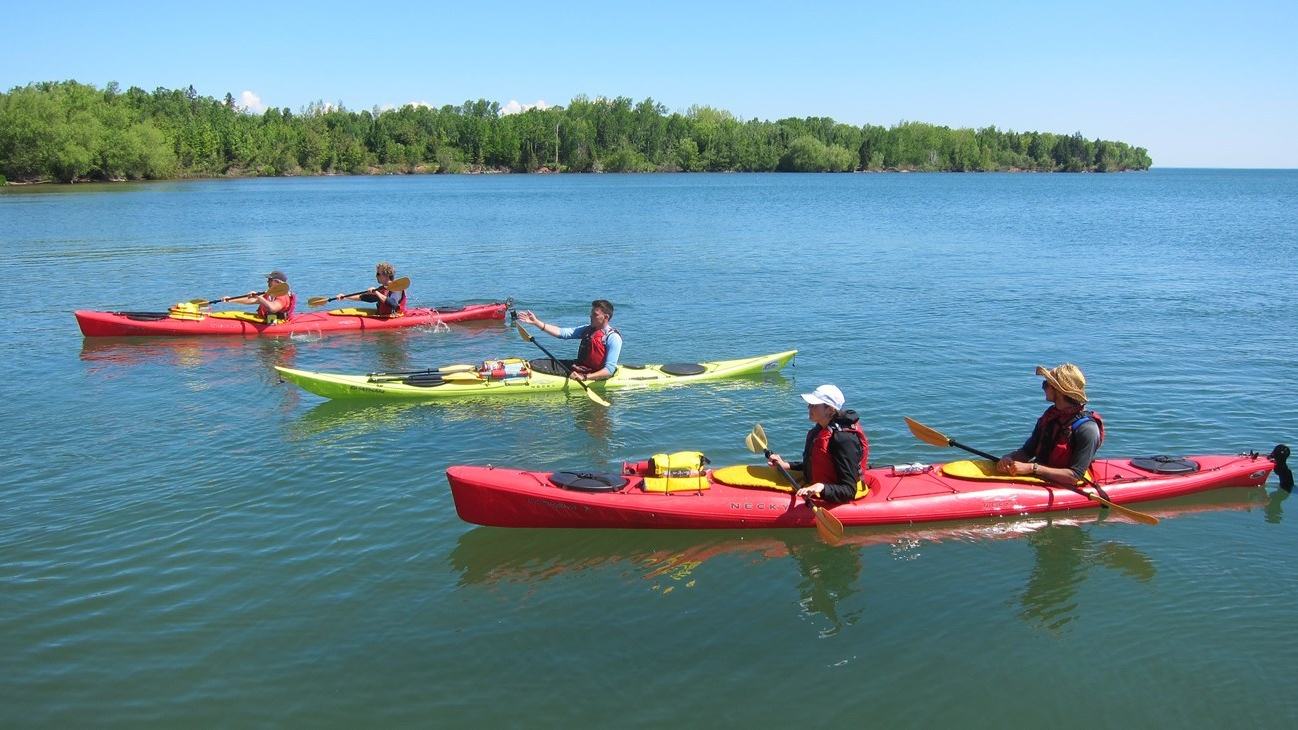
The article's photograph comes from the National Park Service's own paddling guidance and shows a group in tandem and single kayaks on calm water. It depicts the sort of conditions and craft associated with an appropriate recreational outing rather than substituting a generated image or unrelated location. The choice also reflects the park's practical message: calm conditions and well-prepared paddlers matter more than promotional drama.
Photographs of caves can inspire travel, but viewers should not infer that the weather shown will occur on their visit. The source image is a document of a real outing, while the park's current conditions and authorised operators should determine the actual itinerary. Using a verified place photograph helps present the destination without overstating what the trip will guarantee.
Respect the islands and bring everyone home
Good small-boat travel protects the surrounding environment by avoiding wildlife disturbance, keeping waste aboard and using permitted landings. A carefully written float plan should identify the intended launch, route, crew and time of return, especially when moving out of sight of the mainland. Communication equipment and a realistic emergency plan are part of the preparation.
The Apostle Islands reward patience and sound judgement. Paddlers may remember the view of a sandstone arch, the sound of waves against a distant island or the shared satisfaction of a safe return. The most successful visit is one in which the day is shaped by conditions, training and respect for Lake Superior rather than by the pressure to reach every famous landmark.