
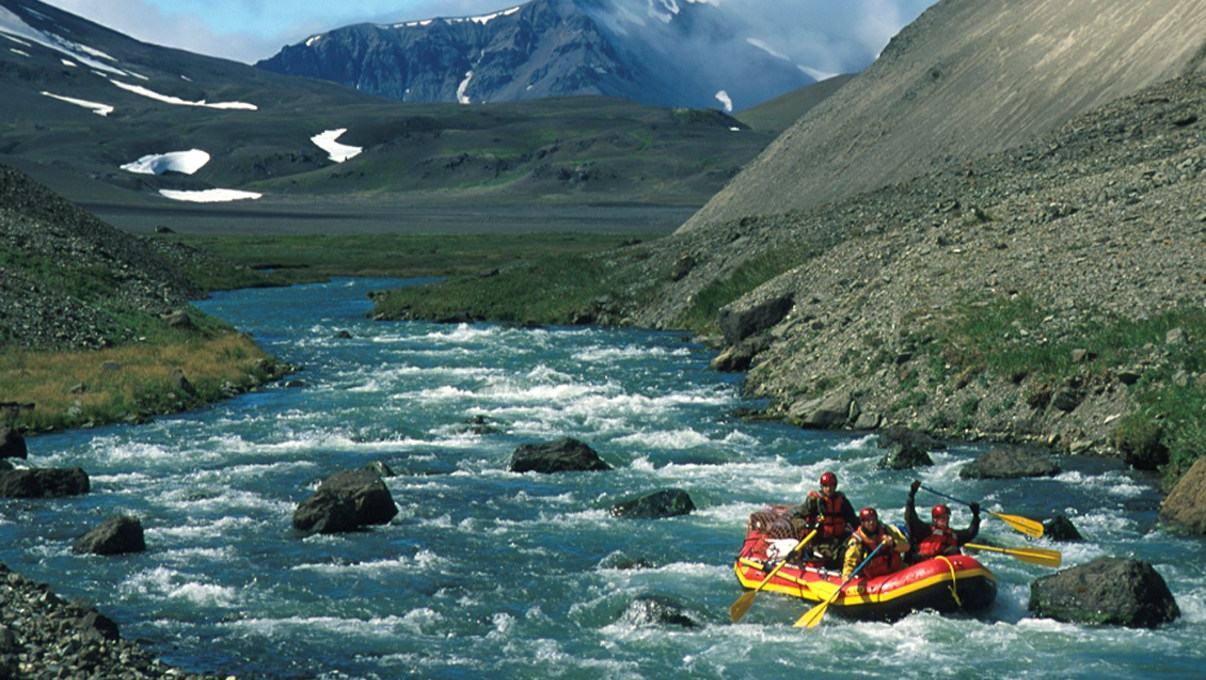
The Aniakchak River begins inside an Alaskan volcanic caldera and runs to the Pacific. Its fierce weather, technical passages and extreme isolation put it firmly in expert territory.
From volcanic lake to the Pacific Ocean
The Aniakchak River in Alaska is one of the rare rafting routes that begins inside the bowl of a volcano. At Surprise Lake, a river journey can start in the vast Aniakchak caldera before squeezing through the dramatic opening known as The Gates and continuing to the Pacific coast. The landscape is extraordinary, but its isolation and changing conditions make this an expert expedition rather than a casual holiday on moving water. Even experienced crews need deliberate preparation.
Aniakchak National Monument and Preserve has no conventional road network leading to the start of this float. Visitors generally arrange charter aircraft to reach remote locations, with the logistics heavily dependent on weather and landing conditions. Flights can be delayed for days, and the cost of a suitable aircraft is part of the undertaking. A simple three-day journey on a brochure therefore needs a much longer overall travel window and sufficient supplies to absorb changes.
The National Park Service estimates a float of approximately three to four days from Surprise Lake to Aniakchak Bay, but that estimate does not include delays getting into or out of the area. River conditions can change rapidly, and the chosen landing place must be agreed with the air operator. The surrounding scenery rewards patient observation, yet every decision should reflect the possibility that there is no quick road exit when the weather deteriorates.
The Gates and the danger below Hidden Creek
The first mile from Surprise Lake is comparatively peaceful before the river enters The Gates, a narrow opening cut through the caldera wall. Here the National Park Service identifies a steep gradient of about seventy-five feet per mile and rock formations requiring precise manoeuvring. A wide raft has little room to correct a poor line once committed to powerful water. This is a place for experienced whitewater crews to scout thoroughly from safe ground before deciding whether to proceed.
Farther downstream the river relaxes for a stretch, but that respite does not mark the end of the serious water. At its meeting with Hidden Creek, large boulders, constricted channels and abrupt bends create another technical obstacle. The park specifically advises scouting this area too. An earlier group’s successful run or an old river description is no proof that present conditions, boulder placement or flow will permit the same manoeuvre without significant risk.
The river eventually widens and slows as it meanders towards Aniakchak Bay, where marine wildlife and coastal birds add to the experience. Still, the easier-looking lower water comes after challenging upper passages, not instead of them. It is dangerous to plan the route backwards from its scenic coastal finish. The skill test occurs early and again at difficult bends; a party must be ready before the aircraft leaves, with no expectation of a convenient training section.
Wind, cold and self-reliance
Severe winds can develop inside the caldera, especially around The Gates, while rain and cold can become hazardous at any time. The National Park Service warns that extreme conditions may prevent aircraft rescue and even damage tents. Those are expedition-level risks that deserve proper camp anchoring, weather-resistant shelter and clothing suitable for a cold-water accident. Life jackets are required on the river, and dry suits are recommended for the demanding conditions.
The park notes that sturdy inflatable rafts with rowing frames, often around twelve to thirteen feet long, are popular for this route. However, no craft dimension can substitute for a suitably experienced crew and tested rescue skills. Carry a practical repair kit, spare components and protection for medical and communication equipment. Food must cover likely aircraft delays, not merely the nominal float time. An agreed emergency and overdue plan is essential before flying in.
Brown bears and other large wildlife live in the region, and correct storage of food and scented supplies is indispensable. Respect wildlife from a distance and keep camps on suitable terrain, avoiding damage to fragile vegetation. The park suggests sandy gravel bars as potential camping places because floodwaters can erase some traces of visitors, though river height and sudden rises must be evaluated carefully. A remote camp is never safe simply because it appears flat and sheltered.
A rare expedition that should not be rushed
A serious itinerary includes conversations with NPS staff in King Salmon and with the exact aircraft and guiding operators, rather than depending on a travel account from another season. Find out about recent route changes, current volcanic or weather restrictions, appropriate access and required safety equipment. The agency itself cautions that the Aniakchak is dynamic and that unexpected change is normal. If a member lacks the relevant whitewater or wilderness experience, an alternative guided river is the responsible choice.
Even accomplished rafters should leave generous time on both sides of the trip to accommodate weather cancellations. The temptation to keep moving towards a booked return flight can become dangerous when encountering strong wind or an uncertain rapid. A reliable expedition plan allows the crew to stop, scout or wait without immediately exhausting its provisions. Travel operators and contacts ashore should know that safety takes priority over an inflexible schedule.
Aniakchak offers a remarkable journey from volcanic rock through open tundra to an ocean bay, with solitude that few places can match. It also demands the discipline associated with real wilderness: tested gear, proven teamwork, conservative route choices and an acceptance that a planned journey may be postponed. For the right crew, the experience can be exceptional. For the unprepared, this is not a place to discover the limits of a small boat.
Primary planning source: National Park Service Aniakchak River rafting guide. Consult the original National Park Service guidance and current notices before departure.