
A NOAA team has tested research enclosures in Alaska's Kasitsna Bay, adapting a pollution-study technique to extraordinary tides. We explain what the pilot means for coastal science and boaters.
The small research enclosures facing very big tides
A quiet inlet can look deceptively simple from the deck of a cruising boat. Yet the water rushing over a mudflat, the temperature just below the surface and the animals sheltering near the bottom can all influence how a coastal ecosystem responds to pollution. New work by scientists in Alaska shows why those details matter when researchers try to understand the effects of oil and other contaminants.
On 20 October 2026, the United States National Oceanic and Atmospheric Administration reported a successful pilot deployment of experimental enclosures in Kasitsna Bay, near Seldovia in Alaska. The devices are called mesocosms: controlled field structures that hold selected organisms while allowing surrounding seawater to flow through. Their purpose is to help investigators study exposure and biological effects in a setting closer to nature than a conventional indoor tank.
A useful idea moved north
NOAA's National Centers for Coastal Ocean Science has used field-deployed mesocosms for years in warmer American waters. The agency says earlier work involved coastal fish and invertebrates in South Carolina, Texas and Louisiana, where teams can place a contained group of local animals into a natural marine environment and observe their responses over time.
Researchers are now adapting the method for subarctic conditions. Scientists from NOAA's Hollings Marine Laboratory in Charleston and its Office of Response and Restoration travelled to the Kasitsna Bay Laboratory to see whether the equipment could work in a very different tidal and seasonal setting. This was a test of the experimental system rather than a report of an oil spill at the site.
The distinction matters because a successful method in one habitat may become unreliable somewhere else. Temperature changes, tidal currents, access at low water and the animals found locally can all alter the logistics of field experiments. Transplanting a scientific technique responsibly means validating its practical limits rather than assuming a cage designed for warmer estuaries will behave identically in Alaska.
The challenge of a thirty-foot tidal range
NOAA identifies the size of the tidal movement as a key obstacle. At the Alaskan study location the tidal range can reach about 30 feet, compared with roughly six feet in the southeastern United States and under two feet in the Gulf region discussed by the research team. That comparison concerns the conditions relevant to this project, not every coastline in those broad regions.
To a leisure sailor, large tides immediately suggest berth clearance, drying ground, current and the changing height of a pontoon against a fixed quay. The same forces complicate a scientific experiment. An enclosure that remains submerged for a full tidal cycle somewhere else might be left exposed, displaced or made difficult to reach as the local sea retreats.
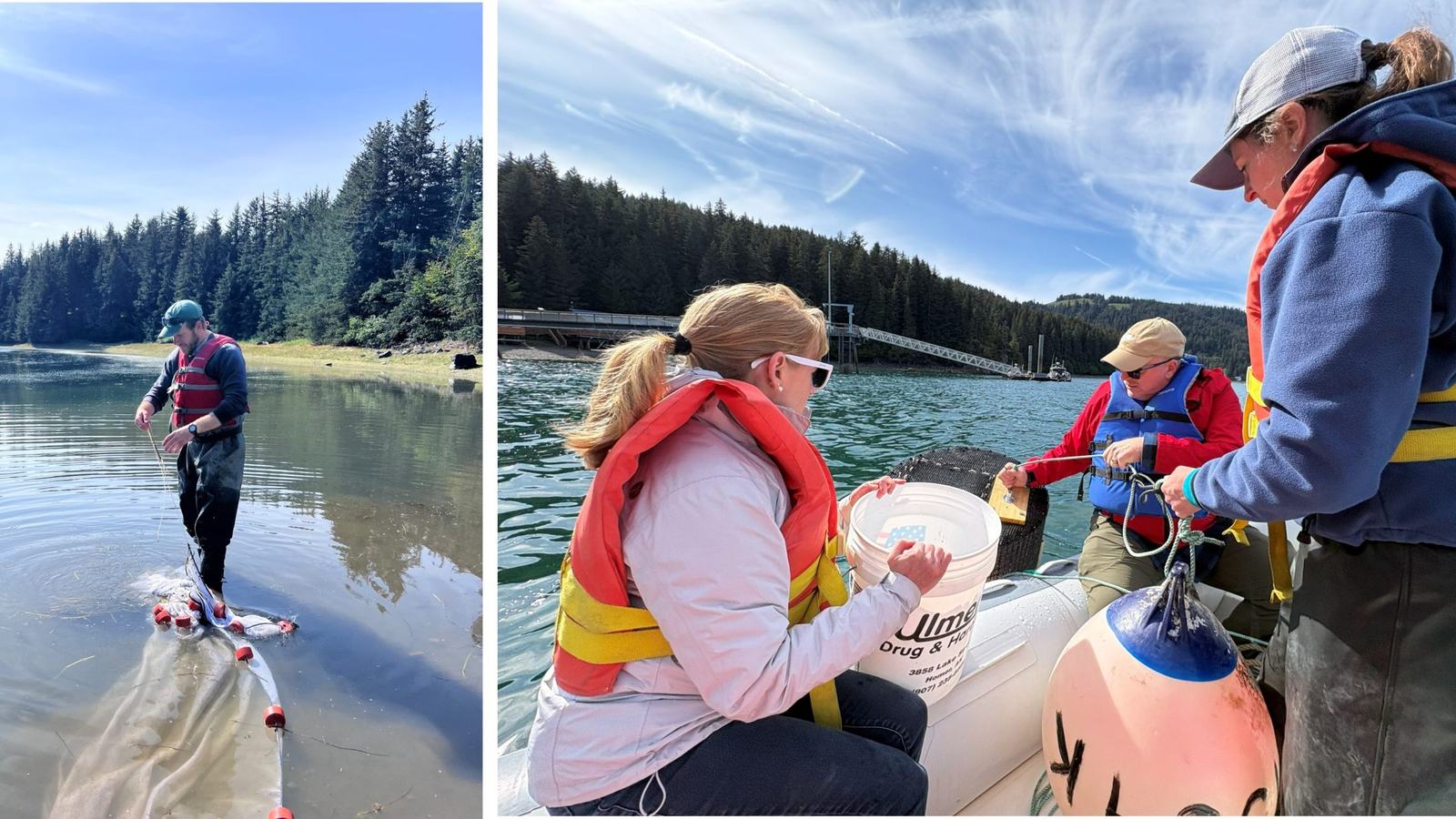
The scientists therefore evaluated both anchored equipment in the intertidal zone and a modified floating arrangement on a mooring. NOAA says the floating design was tested during a successful 24-hour field deployment in Kasitsna Bay, within the wider Kachemak Bay area. The pilot helped establish whether the equipment could remain operational in that setting; it is not evidence that a full pollution-response study has already been completed.
Fish and crabs as local environmental indicators
The team collected native animals for the experimental work, including cod, sculpin, three-spine stickleback and pygmy rock crab. Different species occupy different places in coastal food webs and may respond differently when their surroundings change. Using animals from the study area makes the research more relevant to local habitats than simply relying on organisms familiar from warm-water laboratories.
Mesocosms provide an intermediate scale between a laboratory aquarium and a whole bay. Researchers can keep track of a defined set of organisms while the surrounding seawater supplies many natural conditions. That arrangement can support questions about how contaminants affect health or survival, although careful controls and analysis are still needed before conclusions can be drawn.
For boat owners, this is a reminder that pollution is not simply the appearance of an oily film on the surface. The environment below the hull contains organisms that interact with currents, sediments and food sources. Understanding their responses can help agencies evaluate cleanup strategies and restoration priorities after an incident rather than relying only on what can be seen from the shoreline.
Why coastal science matters to everyday boating
Most recreational skippers will never handle a scientific mesocosm, but they share the water in which this research is conducted. Marina activity, harbour approaches, fuel transfer and cruising all depend on a coast that remains usable and healthy. The best contribution a private boat can make is to avoid causing preventable pollution and to respond promptly if something goes wrong.
Practical routines include securing the fuel nozzle, watching tank vents while refuelling, maintaining engine and bilge systems and disposing of oily waste through approved shore facilities. These are sensible operating precautions, not findings from the Alaska experiment itself. The NOAA report is about research methods; it should not be presented as a new set of recreational boating regulations.
The broader connection is that an accident in a remote inlet can be difficult to assess. Weather, access and a highly variable tide may constrain the response, while wildlife and fishing habitats continue to be exposed. Evidence gathered through carefully designed field studies can inform later decisions, although no single experiment can predict all the effects of an actual spill.
Reading the pilot for what it proves
NOAA reports that the adapted system performed successfully over the 24-hour pilot period and says a larger deployment is planned for US fiscal year 2027. That is an encouraging technical result, but the full study lies ahead. It would be premature to claim the method has already demonstrated the effectiveness of a new oil-spill treatment in Alaska.
The agencies involved include NOAA's National Centers for Coastal Ocean Science and its Office of Response and Restoration. Their respective expertise in biological effects and incident response is important to the design of the work. The pilot links scientific monitoring to the practical questions authorities may face when deciding how to assess damage and support recovery.
Even the photographs tell a useful story about field science: people working in shallow water, equipment prepared on a vessel and structures lowered into an environment that will change dramatically with the tide. These are not dramatic laboratory breakthroughs announced at a distance. They show the ordinary, exacting work required before scientists can claim that a new instrument is reliable.
A different way to look at an anchorage
Visitors to spectacular places such as Alaska often remember the cliffs, glaciers, wildlife and unusual light. A closer look reveals an equally interesting world of mudflats, sheltered coves and small animals shaped by the rhythm of the sea. The scientific attention given to that world is a reason to approach remote cruising grounds with care rather than treating them as empty playgrounds.
Skippers can apply the same respect through local navigation planning: consulting up-to-date charts, understanding tidal windows, keeping clear of marked research areas and using established waste-handling facilities. None of those precautions substitutes for competent seamanship, and the existence of one research pilot does not imply new restrictions for boaters in Kasitsna Bay.
NOAA's October announcement is modest in scope, which makes it informative. A well-adapted experimental tool may eventually help researchers understand how pollution affects subarctic marine life and guide future restoration decisions. For anyone who loves being on the water, the lesson is that protecting a coast begins with understanding what lives beneath it and how profoundly its conditions change.