
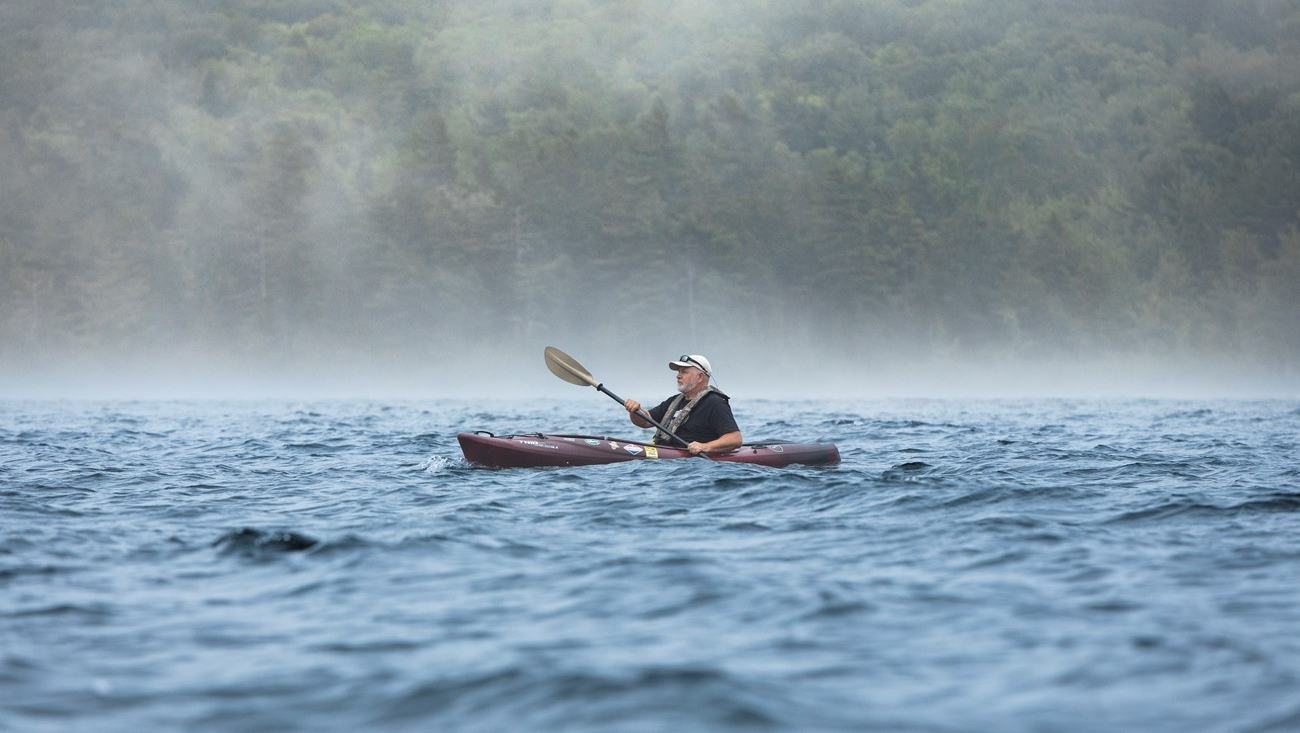
Acadia offers two very different paddling experiences: calm freshwater lakes on Mount Desert Island and more demanding sea kayaking along the Maine coast.
Two landscapes in one park
Acadia National Park in Maine combines freshwater lakes, granite shorelines, wooded hills and an Atlantic coastline of considerable character. For small-boat visitors, this creates an unusually broad choice: a gentle paddle amid morning mist on Eagle Lake or an experienced sea-kayaking outing near Mount Desert Island. The National Park Service's boating guidance makes clear that the two environments are not interchangeable, even when photographs of both look peaceful.
The park protects coastal landscapes across Mount Desert Island, the Schoodic Peninsula, Isle au Haut and surrounding islands. A kayaking holiday can therefore be built around several distinct scenes, but it is important to select one appropriate to the crew and not simply follow the most striking social-media image. Experienced visitors often choose a familiar launch and explore it thoroughly rather than attempt to see the entire coast in a day.
Eagle Lake offers a different rhythm
Eagle Lake is one of the park's well-known inland waters and can make a beautiful place to begin a day afloat. The official NPS photograph by Brady Richards shows a kayaker travelling through mist with a forested shoreline fading into the background. The atmosphere reflects the appeal of slow paddling: a close connection with the light, sound and seasonal changes around the lake.
Freshwater paddling often feels more predictable than coastal kayaking, but it still requires caution. Fog can reduce the visibility of shore landmarks, and wind may build even on an inland lake. A paddler should know which parts of the water are open to their craft, carry appropriate navigation information and allow plenty of time to return if the weather changes.
Individual lakes have different rules
The Park Service notes that boating is permitted on a number of lakes and ponds on Mount Desert Island, subject to restrictions specific to each waterbody. A boat that is welcome on one lake may not be permitted on another, or certain activities may be limited to protect habitat and drinking-water resources. This makes advance research especially important for visitors transporting their own kayaks.
There is no benefit in arriving with equipment only to discover that a planned launch is closed. The most reliable information comes from current park guidance, official signage and authorised local operators. A renter should also confirm where the kayak may be taken, because a craft supplied for one lake may not be intended for exposed seawater or a different launch site.
Frenchman Bay can be explored with a guide
The coastal side of Acadia is popular for sea kayaking, including guided trips in Frenchman Bay. A knowledgeable operator can help newcomers appreciate the coastline while accounting for tides, traffic, wildlife and the proper handling of a sea kayak. Public ramps around Bar Harbor, Northeast Harbor and Southwest Harbor provide access in the region, although parking arrangements and local restrictions vary.
An organised coastal trip can be especially helpful when the crew has experience only on inland water. It may introduce paddlers to how swell changes around headlands and how currents interact with an island shoreline. The guide should also explain where landing is permitted and how the group will return if wind or visibility deteriorates.
The Maine coast requires proper skills
The Park Service warns that tides, fog, rough seas and cold water make independent ocean kayaking hazardous for inexperienced visitors. The difference between high and low tide may reach around twelve feet, which can transform a beach or dock approach. A place left dry at one part of the day may be under water later, creating difficulties for both boats and any possessions left near the shoreline.
The agency specifically recommends that independent sea kayakers know self-rescue techniques and travel with a partner. These are practical measures rather than abstract advice. An appropriate sea kayak, clothing designed for cold-water exposure, communication equipment and a reliable route plan all contribute to the crew's ability to handle the unexpected.
Choose accommodation around the planned launch
Visitors often underestimate how much time is lost moving a kayak between accommodation, car parking and a permitted launch. Staying close to an appropriate starting point can make early or late outings more relaxed, particularly when the aim is to enjoy changing light rather than cover a long distance. A rental or guided trip may also reduce the need to bring a large craft on holiday.
Accommodation and boating arrangements should be considered together. A hotel with secure equipment storage can be more useful than one that looks closer to the water on a map but lacks practical access. For a self-contained small-boat holiday, knowing where the boat can be carried and stored each evening is as important as the scenic route.
Respect wildlife and shoreline access
Acadia's coastal and freshwater habitats support many birds and other animals, making quiet observation part of the attraction. A kayak can bring a visitor closer to the scene without the noise of an engine, but that is not permission to approach wildlife closely or land on restricted shores. Binoculars offer a better way to appreciate animals that are feeding or resting.
Paddlers should keep rubbish and fishing line out of the water and avoid disturbing other visitors who are using the shoreline. A calm paddle is an opportunity to see the park from a different perspective, but the craft remains a visitor in an environment with conservation priorities. Following the rules helps preserve that experience for the next group.
A practical Acadia paddling itinerary
A visitor could begin with a shorter permitted freshwater outing and reserve a separate day for a guided coastal paddle if the forecast is suitable. The two experiences complement one another without requiring an ambitious continuous journey. Weather changes may make it necessary to exchange a boating day for a hike or a visit to one of the park's interpretive sites.
Acadia rewards that flexibility. The official NPS boating page provides a foundation for checking access and suitable activities, while local outfitters can advise on current conditions. Whether the memory is of a misty lake or the rocky coast of Frenchman Bay, the most valuable part of the trip is the chance to experience this Maine landscape at paddling speed.