
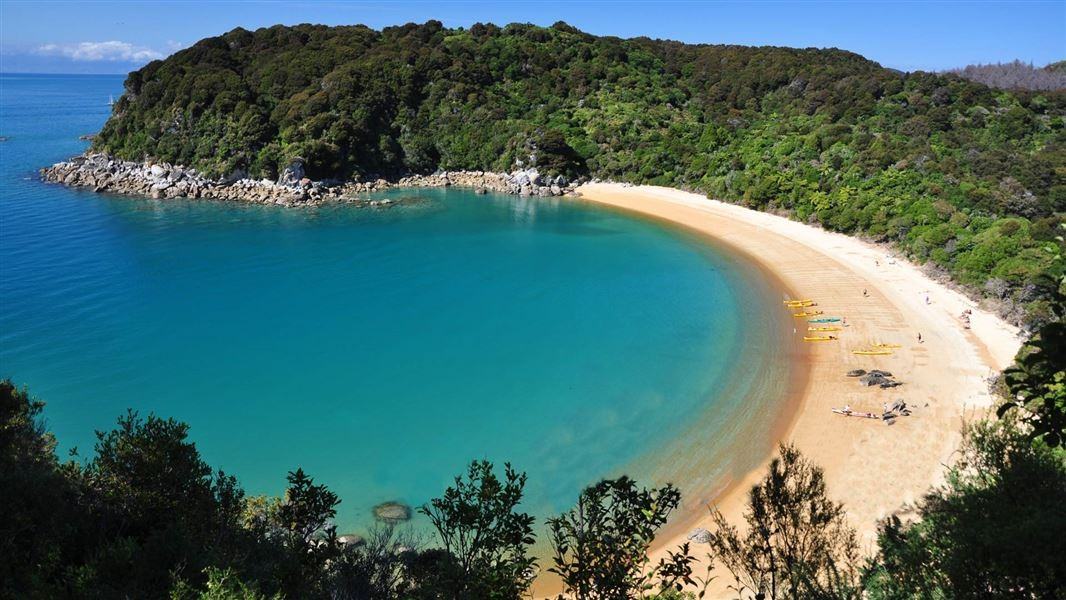
New Zealand's Abel Tasman coastline is famous for golden beaches and sheltered-looking coves, but kayak travel here needs a realistic appreciation of sea conditions. The Department of Conservation provides detailed route guidance for the coast, including suggested leg times and areas unsuitable for casual paddling. This guide explains how to turn that information into a safer and more rewarding waterside holiday.
Why the coast invites exploration by kayak
Abel Tasman National Park sits along a striking stretch of New Zealand's South Island coast, where forest meets pale beaches and clear-looking bays. From a sea kayak, the distances between headlands and coves feel personal and immediate. The scenery is enticing, but its apparent gentleness should never be confused with a guarantee of calm water.
The New Zealand Department of Conservation publishes route information for the Abel Tasman Coastal Track and associated kayaking sections. That official material is a useful starting point because it addresses practical travel between places, not merely scenic highlights. A successful trip begins by matching plans to current advice and individual ability.
Kayakers often dream of landing on a quiet beach for a picnic before paddling on to the next sheltered bay. The coastline can provide beautiful opportunities, subject to conditions and permitted access. However, each crossing and landing needs to be considered, including what happens if wind or swell increases before the return.
For first-time sea kayakers, a guided day tour may provide a better introduction than carrying equipment across several days. A guide can explain local features, manage group pace and help assess changing weather. Choosing the shorter option is not a compromise if it leaves everyone comfortable and curious to explore further.
Understanding the official route guidance
The Department of Conservation identifies familiar coastal legs such as Marahau to Anchorage, Anchorage to Bark Bay and Bark Bay to Onetahuti. Its published approximate paddling times are reference points for appropriate conditions and experience, not guaranteed schedules. Stops, group ability and sea state can all make a day longer.
Official guidance places important restrictions on how far kayaking should be treated as a straightforward coastal option. In particular, paddling north of Onetahuti is not recommended in the department's planning information. Visitors should follow this advice rather than assuming an uninterrupted kayak route exists along every part of the coastal track.
Even on a frequently travelled section, wind and swell can change the effort required for a crossing. A headland that looks small on a map may feel exposed from a low craft. Turn-back decisions are easier when the day's plan includes spare time and realistic alternatives.
Independent travel demands more than the ability to steer a kayak on flat water. The department's advice highlights experience and appropriate group arrangements, and novices are better served by professional guidance. Anyone organising their own trip should consult current official material and locally qualified operators before departure.
Tides, landings and accommodation
The Abel Tasman coastline is a tidal environment, and the timing of a beach landing or walking connection can affect an itinerary. Water level changes the shape of bays and the distance to dry ground. Study the current tide information alongside route notes instead of relying on a photograph taken at a different stage of the tide.
Some coastal walking sections are affected by tidal crossings, so kayakers combining walking and paddling need to coordinate both activities. A comfortable water arrival is not always enough to guarantee a safe onward walk. Official track guidance should be checked for the exact route chosen and the recommended crossing windows.
Camping and hut arrangements also deserve early attention, particularly in a popular national park. The Department of Conservation has a booking system for designated accommodation, and availability can vary by season. Do not assume that arriving by water removes the need for a reservation or permission.
Pack for wet transitions between shore and kayak, with clothing and essential equipment in suitable dry storage. Carrying less can make boat handling easier, but it should not mean omitting water, food, weather protection or safety essentials. Follow your guide or outfitter's equipment list for the specific route.
Wildlife and the pleasures of moving slowly
Part of Abel Tasman's appeal comes from observing its coastline at close range without racing through it. Birds, rock textures and the colour of shallow water can reward a careful paddler. The best encounters happen when people remain within the agreed route and avoid disturbing animals.
Seals and other wildlife may be present in coastal areas, but a sighting should not lead visitors to approach too closely. Keep the distance advised by local authorities, avoid separating animals from resting places and follow the guide's instructions. A respectful viewpoint is more valuable than an intrusive close-up.
Photographers should choose manageable equipment and consider how quickly conditions can change. A heavy camera loose in a cockpit is a distraction when launching through small waves. A secured waterproof bag protects gear and allows the paddler to concentrate when boat handling becomes important.
A stop on a sandy beach may be the most memorable part of the day, even if it produces no dramatic wildlife encounter. Allow time to listen to the water and watch other paddlers arrive, while keeping the landing area tidy. Leaving no litter and respecting park facilities are basic parts of enjoying the place.
Planning a realistic Abel Tasman holiday
Choose the duration of the kayak trip before filling the rest of the holiday diary. An introductory half-day or day may be suitable for some travellers, while multi-day paddling demands more experience and preparation. The fact that a coastal route appears in a brochure does not mean every group should attempt it.
Check weather and sea forecasts close to departure, and understand the operator's cancellation or rescheduling arrangements. If wind makes the route unsafe, the right response is to change the plan. There are many ways to appreciate Abel Tasman from shore without forcing a departure.
Anyone combining boats, water taxis, walking and accommodation should allow generous time between connections. Departure beaches and tide-dependent access can alter where a transfer takes place. Confirm arrangements with the individual providers rather than assuming all services connect automatically.
Abel Tasman rewards visitors who respect the difference between a beautiful coastline and an easy paddle. Use the Department of Conservation's latest official information, seek qualified local guidance and stay within recommended sections. With realistic expectations, a sea kayak becomes an intimate way to experience the park rather than an unnecessary risk.